Arima Onsen Autumn Leaves 2026: Best Viewing Time and Travel Overview
Arima Onsen is one of Japan’s Three Ancient Hot Springs, known for its iron-rich, salty Gold Spring and its carbonated, radium-bearing Silver Spring. In autumn, red maples add a poetic layer to the hot-spring town.Best Time to See Autumn Leaves at Arima Onsen
The best time to see autumn leaves at Arima Onsen is expected to fall between early and late November 2026, with the area around Zuihoji Park usually peaking in mid-November.
Arima Onsen sits at the foot of Mt. Rokko at a higher elevation, so its leaves turn slightly earlier than in Osaka or Kobe city. That makes it a good stop early in a Kansai autumn-leaves itinerary.
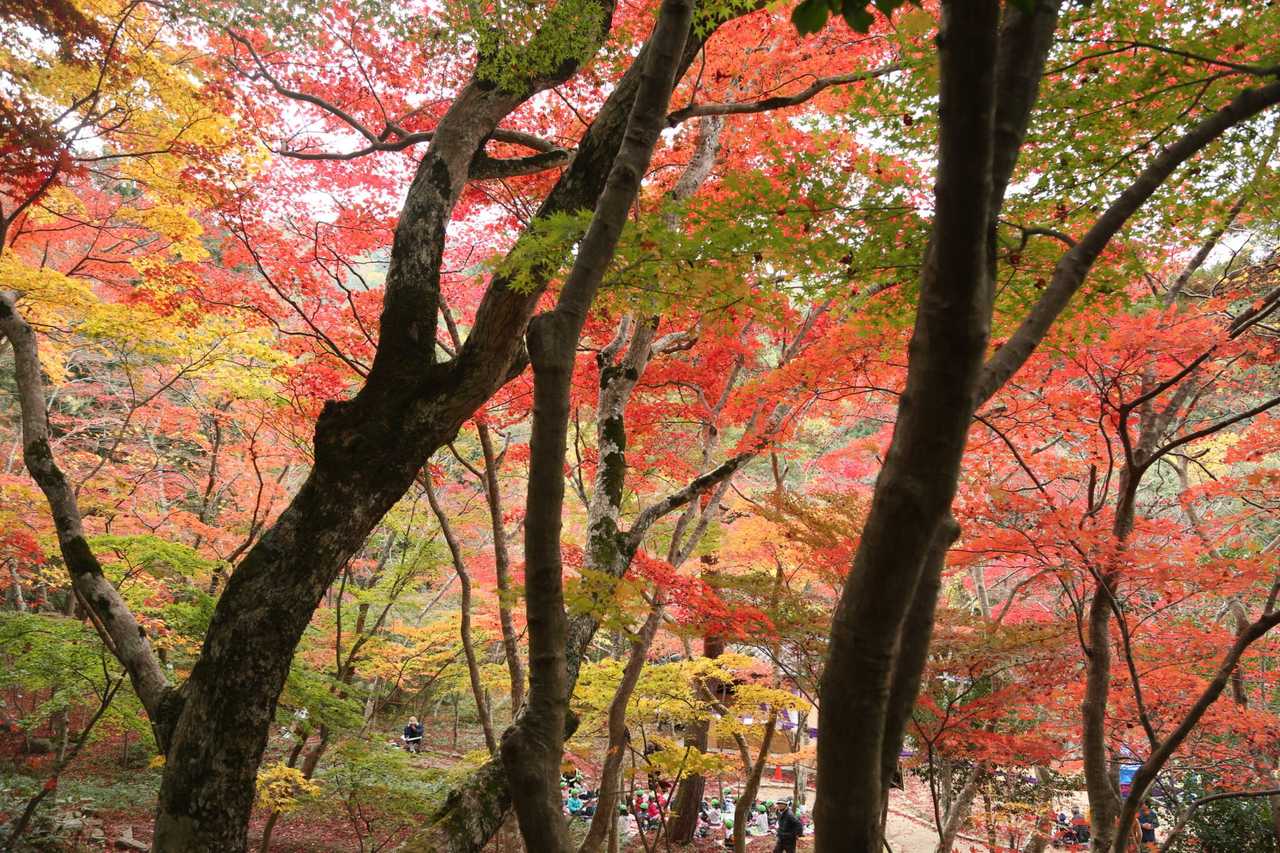
Arima Onsen is compact, and most of the foliage spots are within walking distance. Even half a day is enough to cover Zuihoji Park and the hot-spring town, which makes it an easy stop to fit into a Kansai autumn-leaves trip.
Peak color usually lasts only one to two weeks, so keep your plans flexible.
Why Arima Onsen Is Called One of Japan’s Three Ancient Hot Springs
Arima Onsen ranks alongside Dogo Onsen in Ehime and Shirahama Onsen in Wakayama as one of Japan’s Three Ancient Hot Springs. Its history is said to go back to the Asuka period, making it one of Japan’s oldest hot-spring areas.
Two completely different spring types, Gold Spring and Silver Spring, exist in the same hot-spring area. This is quite rare in Japan and is one of Arima Onsen’s biggest features.
According to the Nihon Shoki, both Emperor Jomei and Emperor Kotoku visited Arima, so it was already an imperial retreat in the Asuka period. Later, Toyotomi Hideyoshi visited many times and invested in rebuilding the town, which brought Arima Onsen to its peak in the Azuchi-Momoyama period, and traces of Hideyoshi can still be found around the district today.
This long history is the biggest difference between Arima and other Kansai hot springs.
Tips for Autumn Leaf Trips to Arima Onsen
Arima Onsen is in the mountains, and the temperature gap between morning and evening is large in autumn. Bring a warm jacket, especially if you plan evening illumination or hiking.
On weekends in peak season, crowds gather at Zuihoji Park and on the main slopes of the hot-spring town, so go on a weekday or early in the morning.
If you plan to hike (Higashi Tafukuyama or the Uoya-michi trail), wear hiking-suitable shoes and bring enough drinking water.
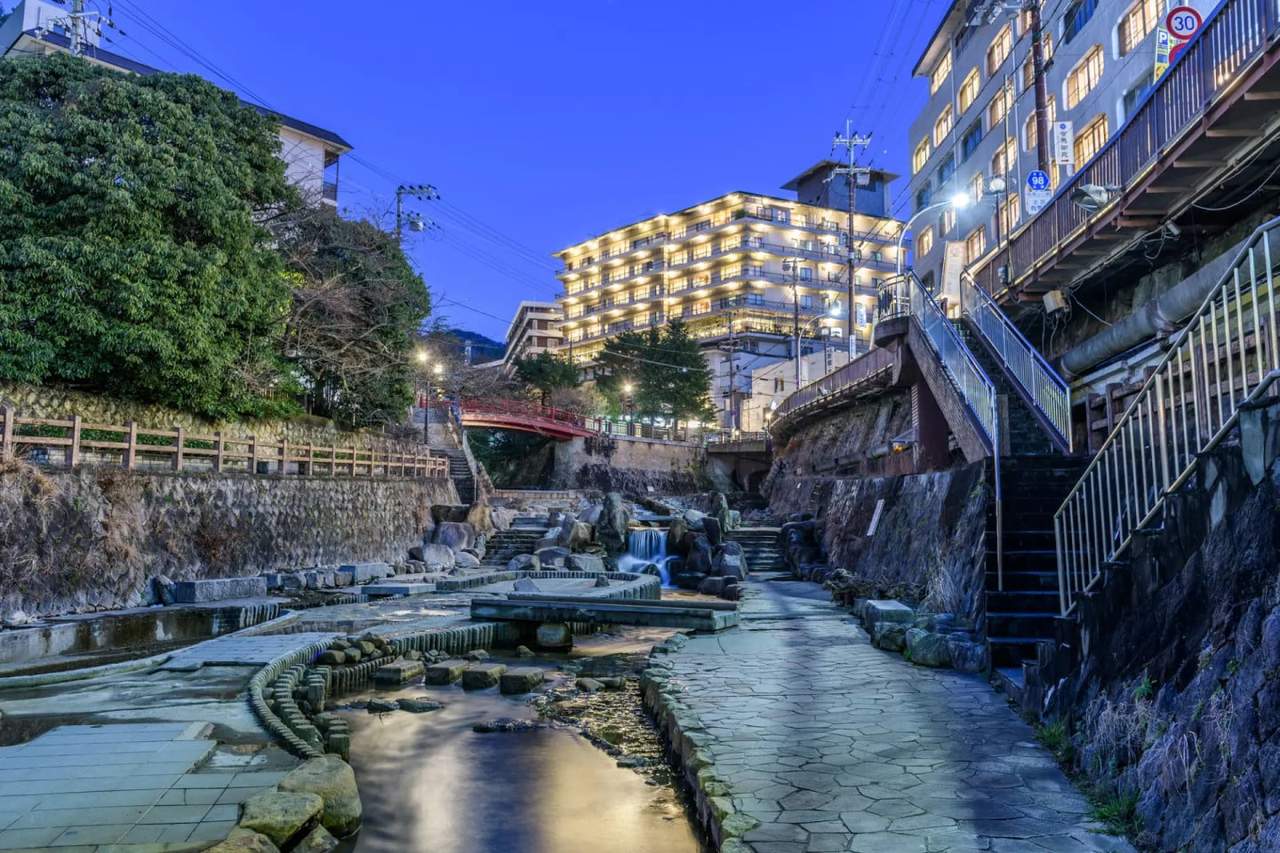
The hot-spring town also has many slopes and the paths are sometimes slippery, so wear non-slip shoes that are comfortable to walk in.
Arima Onsen Autumn Leaves Transport Guide: Getting There from Osaka and Kyoto
The most convenient way to reach Arima Onsen is the direct Hankyu Express Bus.Getting to Arima Onsen: Bus and Ropeway Options in One Line
From Osaka, the Hankyu Express Bus goes direct to Arima Onsen in about 60 minutes for ¥1,400. From Kyoto it takes about 90 minutes for ¥2,050. There are no transfers, which makes this the easiest option.
If you also want to see Mt. Rokko, you can take a train from Kobe Sannomiya to the Rokko Cable Car, then the Rokko Arima Ropeway (about 12 minutes) linking the Mt. Rokko summit with Arima Onsen. Along the way you look down on the red-leaf valley and Osaka Bay.


Must-Visit Autumn Leaf Spots in Arima Onsen: Zuihoji Park, Kin no Yu, Gin no Yu and the Rokko Ropeway
An Arima Onsen autumn trip can be planned in three layers: park and historic sites, bathing facilities and the aerial ropeway. Here are 8 must-visit spots.
Zuihoji Park: The Garden Hideyoshi Praised as Worth Seeing All Day
Zuihoji Park is one of the top autumn-leaf spots in the Kansai region, with about 2,500 red maples. Its predecessor, Zuihoji Temple, was abolished in Meiji 6 (1873) and only the mountain gate remained. The present park was built on the old site in Showa 26 (1951).
Toyotomi Hideyoshi is said to have praised the scenery as never tiring to look at all day, which earned it the nickname Higurashi no Tei (the Garden of the Whole Day). The best viewing period is early to late November, and admission is free.
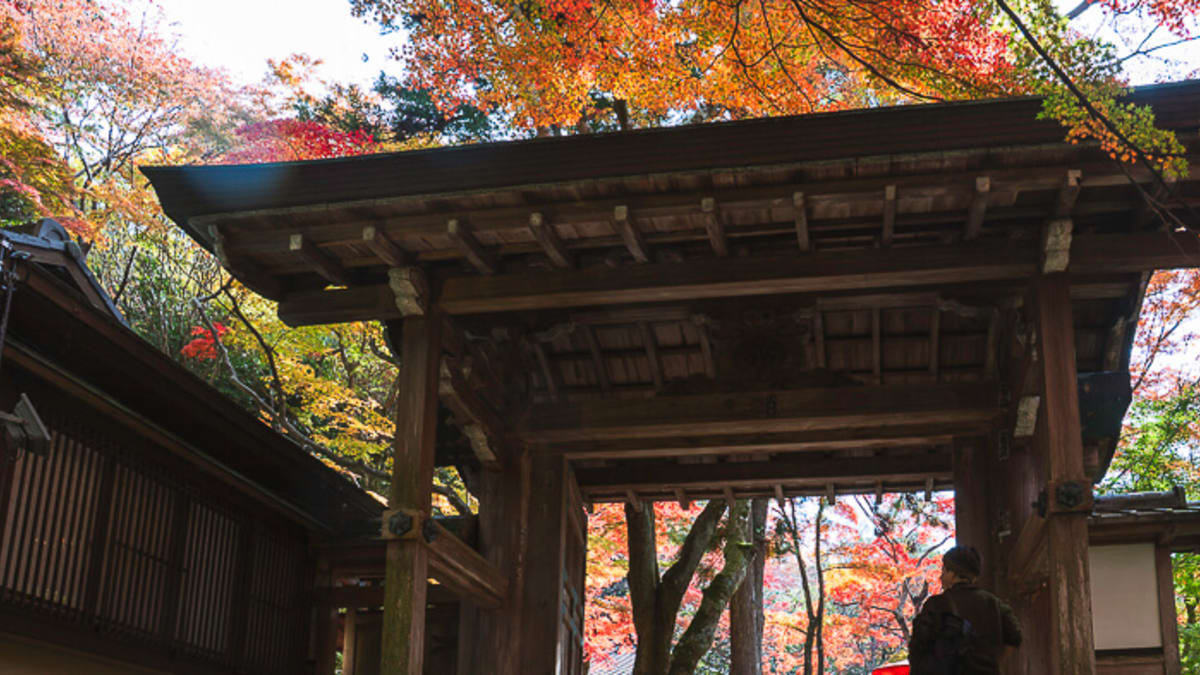

Besides maples, the park has more brightly colored doudan-tsutsuji (enkianthus), which stay colorful longer than maple leaves and are often mistaken for autumn leaves. Taiko Falls, behind the park, can be visited on the same trip.
It takes about 20 minutes to walk from Arima Onsen Station, along gentle slopes the whole way.
Kin no Yu: The Visual Landmark of Arima Onsen
Kin no Yu is the visual landmark of Arima Onsen, and its iron-rich, salty water is a golden brown. It is Arima’s most representative public bath. Admission is ¥650 on weekdays and ¥800 on weekends and holidays. It is open 8:00-22:00 and closed on the 2nd and 4th Tuesday of each month.
There is a free foot bath outside the building, so even if you do not want to bathe you can experience Arima’s spring water. It is a popular rest stop on a stroll through the hot-spring town.
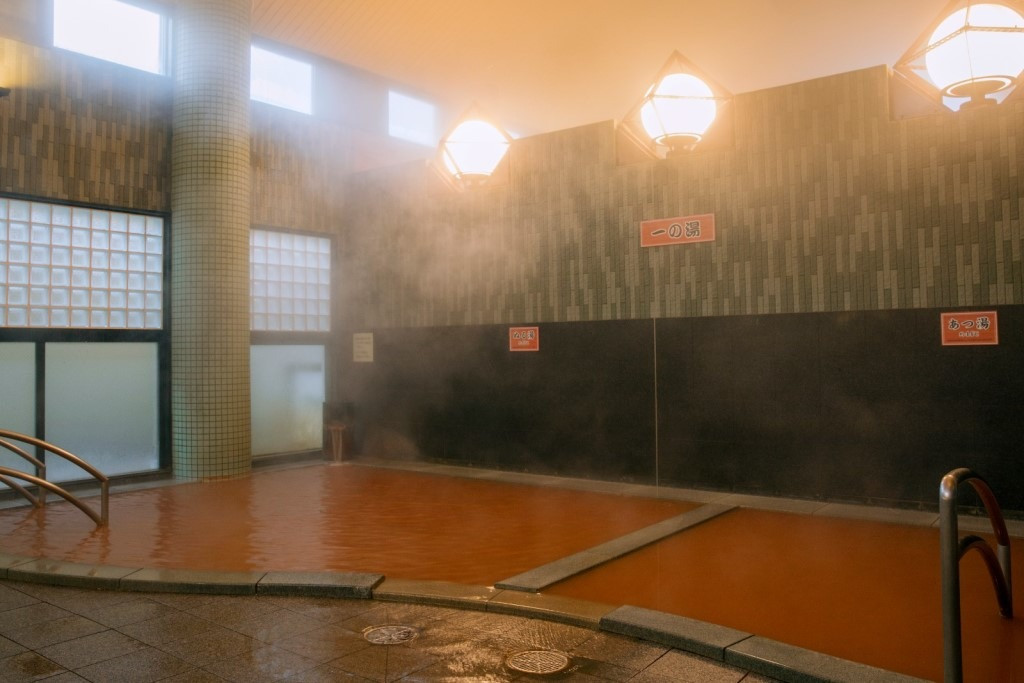

The rust color of the Gold Spring comes from the water oxidizing when it contacts air after surfacing. Its high iron and salt content holds heat especially well, so the warmth stays in your body long after the bath, making it the most popular spring type for autumn and winter visits.
Gin no Yu: The Refreshing Experience of Clear Carbonated Springs
Gin no Yu is known for its clear carbonated and radium-bearing springs, which leave the skin feeling especially refreshed and contrast sharply with Kin no Yu. Admission is ¥550 on weekdays and ¥700 on weekends and holidays. It is open 9:00-21:00 and closed on the 1st and 3rd Tuesday of each month.
The combined ticket for both baths is a fixed ¥1,200, the best-value way to try two very different spring types in one visit.

The Silver Spring contains both carbonated and radium-bearing components, and you feel tiny bubbles clinging to your skin as you bathe. It is said to help promote blood circulation. Visit it after Kin no Yu, and finish your day with the refreshing Silver Spring.
The interior is more spacious than Kin no Yu, and it is usually less crowded.
Rokko Arima Ropeway: A 12-Minute Aerial Autumn-Leaf Ride
The Rokko Arima Ropeway links the Mt. Rokko summit and Arima Onsen in a ride of about 12 minutes. As the gondola moves, you look down on the red and yellow valley and the distant Osaka Bay. A one-way adult ticket is ¥1,400 and a round trip is ¥2,520.
Ride on a clear afternoon, when the light angle is best for photographing the whole valley of autumn leaves. It is a popular way to enjoy autumn leaves from the air.

The highlight of the ropeway is its double layer of autumn leaves: yellow beech trees near the summit and red maples at the foot of the mountain stack up in one view, a sight you can only see from the ropeway.
The gondolas have large glass windows, so you get a good view even while standing.
Taiko no Yudonokan: Recreated Azuchi-Momoyama Rock Bath Ruins
Taiko no Yudonokan is a history museum on Toyotomi Hideyoshi’s ties to Arima Onsen. It recreates the rock bath ruins of the Azuchi-Momoyama period, and admission is about ¥200.
It is often confused by visitors with Taiko no Yu (admission about ¥2,640-2,860), a large hot-spring facility with a similar name but a different nature. The two are different facilities.
The ruins were unexpectedly unearthed during restoration work after the 1995 Great Hanshin Earthquake. They were identified as the bathroom remains of Hideyoshi’s Yuyama Goten, an extremely valuable primary source for studying hot-spring architecture of the Azuchi-Momoyama period.
The museum also displays excavated items such as tenmoku tea bowls and roof tiles, which are worth a close look.
Takimoto Shrine: A Ginkgo and Amulet Hideaway 10 Minutes’ Walk Away
Takimoto Shrine is about a 10-minute walk from the hot-spring town. It is a hidden ginkgo spot few tourists visit, with ginkgo trees planted inside and outside the grounds, and in late autumn the ground is covered in gold like a carpet. Admission is free and it is open all day.
The shrine office offers amulets for money luck and safe travel, and you can also request a handwritten goshuin as a keepsake. The best viewing period is November to early December. Go early in the morning for the best light and fewer visitors, and wear non-slip shoes because the fallen leaves on the path are slippery.
Because it lies slightly off the main tourist route, it stays quiet even in peak autumn-leaf season. It suits visitors who want to avoid crowds and slowly take in Arima’s local faith and simple charm, and it can be linked with Yuzen Shrine and Tsuzumigataki Park for a short walking route.
Higashi Tafukuyama: The Only Pampas Grass Meadow in the Rokko Mountains
Higashi Tafukuyama is the only grassland mountain in the Rokko range, with Japanese pampas grass scenery spreading near the summit. In autumn the grass sways in the wind. It is currently being conserved and restored by a local research group, hiking is free, and you should allow 2-3 hours.
The hiking route can start from Ashiyagawa or Okamoto and connect to Zuihoji Park via Ametoge, on an even, easy path. You can also take a Hankyu bus to the Higashi Tafukuyama Tozanguchi stop.
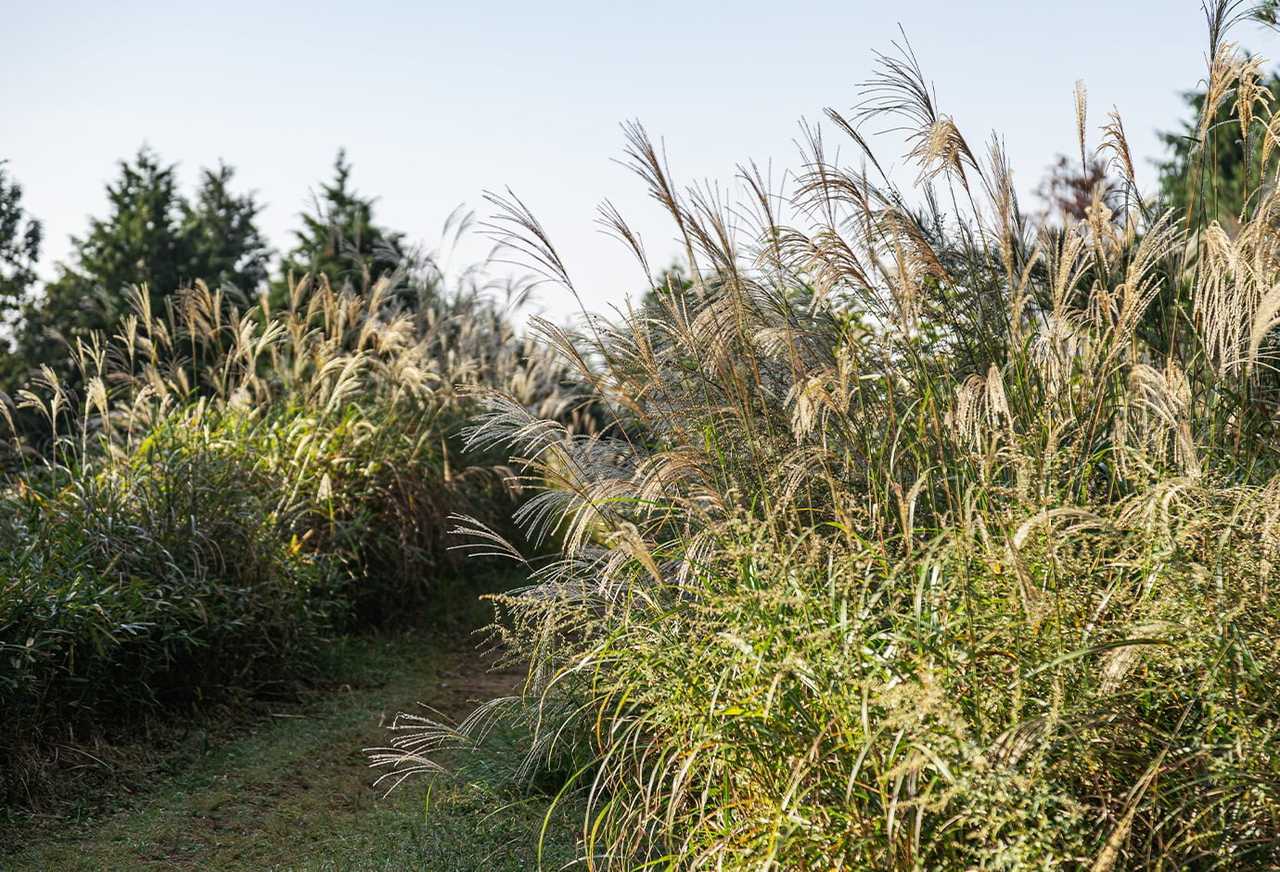
Before the war, this meadow once covered more than 80 hectares and was used to harvest thatch for roofs. After the war demand fell and it was left to turn into dwarf bamboo, and it is now being restored with the aim of conserving the pampas grass, which gives a walk through it a historical feel.
The waves of grass plumes backlit on an autumn afternoon are a favorite subject for photographers.
Yumotozaka: The Oldest Sloping Shopping Street in the Hot-Spring Town
Yumotozaka is the oldest sloping shopping street in Arima Onsen, lined on both sides with long-established shops selling souvenirs such as onsen manju and carbonated senbei. The slope ends at Kin no Yu, and strolling is free.
Nenne Bridge and Yukemuri Square along the way are popular photo spots. Go at dusk, when the lanterns are lit and the atmosphere is at its most charming.
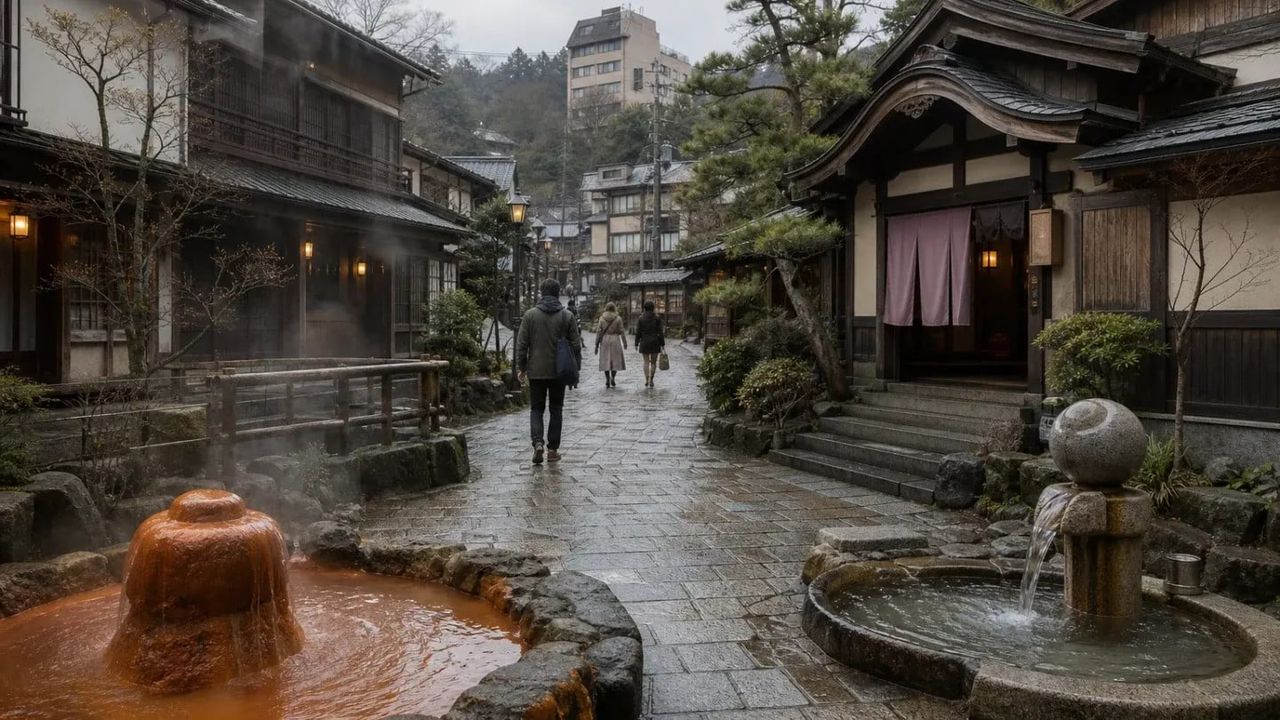
Along the way are several cafes and craft shops in converted old houses, good for browsing slowly as you walk.
Many shops offer samples, and tasting as you walk is the biggest pleasure of strolling Yumotozaka.
Arima Onsen Food and Souvenirs: Carbonated Senbei and the Autumn-Leaf Teahouse
Besides bathing and autumn leaves, don’t miss the food from Arima’s century-old shops. Here are 6 must-visit places.
Carbonated Senbei: Mitsumori Honpo
Mitsumori Honpo was founded in 1907 and is the original shop for Arima’s carbonated senbei. It makes thin, crisp crackers with local natural carbonated spring water, and they are one of the most representative souvenirs.
The shop has an attached Japanese confectionery workshop, Wagashi Kobo Arima, where you can watch artisans make wagashi by hand. Freshly steamed sake manju and freshly fried to-manju are also popular.
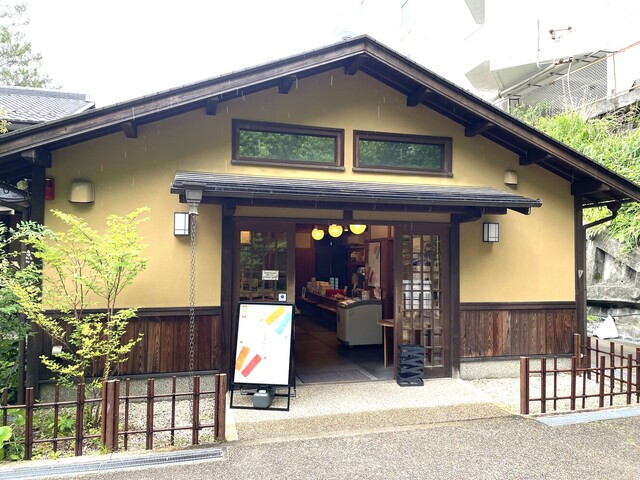

The origin of carbonated senbei is closely tied to Arima’s carbonated springs. In the Meiji period, locals added carbonate-rich spring water to batter and baked it, accidentally making thin, crisp crackers that became Arima’s most representative souvenir.
The elegant packaging tins also make a respectable and generous gift.
- 🍪 Must-order: Original carbonated senbei, freshly steamed sake manju
- 💰 Price: about ¥500-1,500
- 🚉 Access: about 5 minutes’ walk from Arima Onsen Bus Terminal
Autumn-Leaf Season Dessert: The Momiji Teahouse
The Momiji Teahouse is a temporary autumn-only teahouse in Zuihoji Park that opens only during the autumn-leaf season. The park sets out about 10 seats under red umbrellas, where visitors enjoy grilled dango and matcha sets while viewing the leaves.
Find a seat first, then order, and after paying you wait for your number to be called to pick up your food. Pets are also allowed in the grounds. It is a rare chance to feel the local autumn-leaf atmosphere.
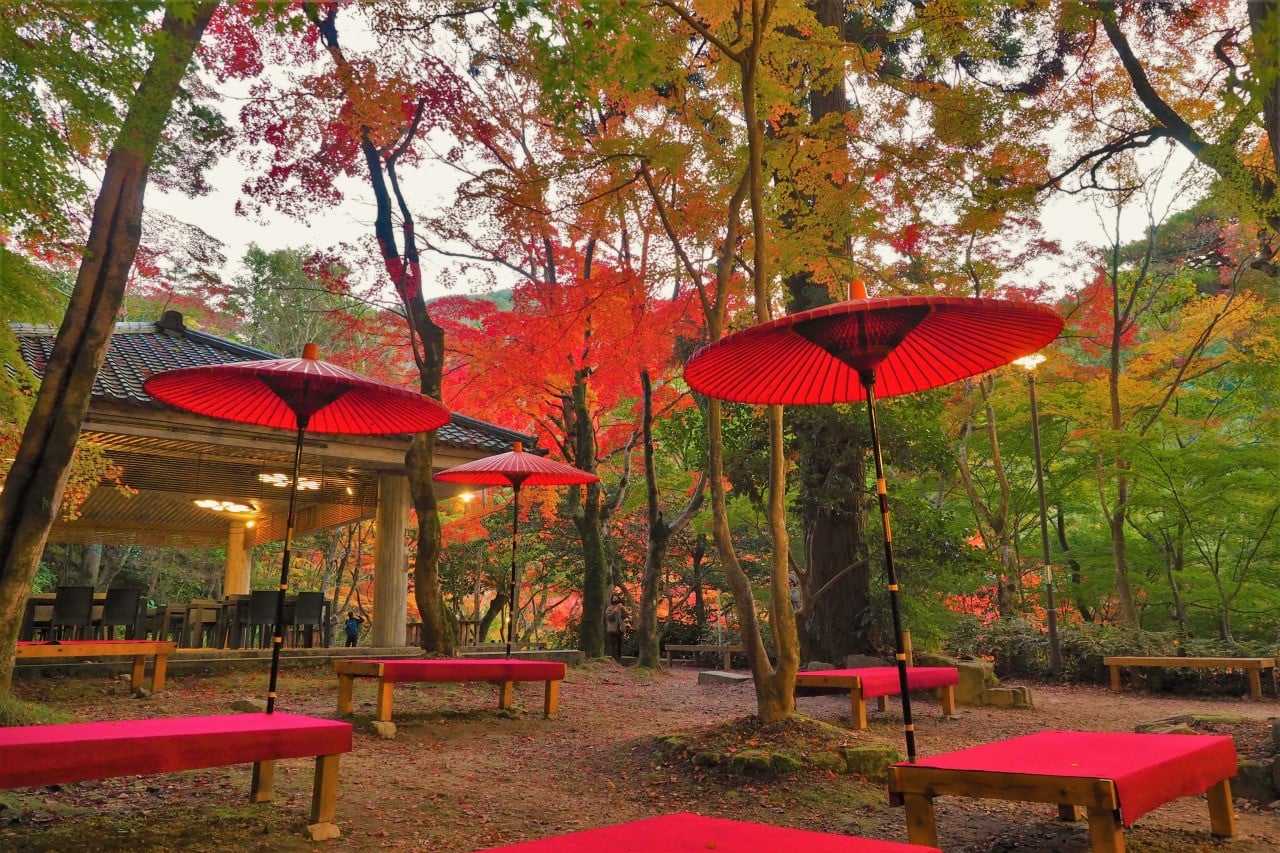
The price is on the high side, but many travelers still find it worth trying as a seasonal experience, with freshly grilled dango under red umbrellas and a dedicated leaf-viewing seat.
Because it opens only in autumn-leaf season, if you miss it you must wait another year.
- 🍡 Must-order: Grilled dango and matcha set
- 💰 Price: about ¥1,200
- 🚉 Access: inside Zuihoji Park, about 20 minutes’ walk from Arima Onsen Bus Terminal
Sansho Akashiyaki: Arima Juhachiban
Arima Juhachiban is known for akashiyaki made with jitsu-sansho (sansho berries), an Arima specialty. The soft outer layer wraps octopus, and you dip it in warm broth. The fresh aroma of sansho adds a local touch to this traditional Kansai snack.
The shop is small and often has a line at mealtimes, and it is a must-visit for Arima’s version of akashiyaki.
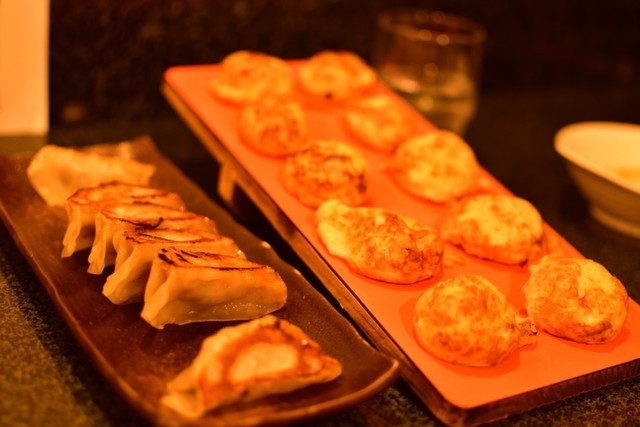
Arima has long been famous for sansho, and Arima sansho was even offered as a tribute in the Edo period. Adding jitsu-sansho to akashiyaki is the shop’s way of using a local specialty, and it gives this Kansai snack an Arima-only flavor.
The shop also sells sansho-related seasonings, which you can take home.
- 🐙 Must-order: Jitsu-sansho akashiyaki
- 💰 Price: about ¥800-1,200
- 🚉 Access: about 8 minutes’ walk from Arima Onsen Bus Terminal
Freshly Baked Raw Senbei: Yunohanado Honpo Taiko-dori Store
The Yunohanado Honpo Taiko-dori store specializes in freshly baked raw carbonated senbei with a five-second shelf life, handed to customers hot as soon as they leave the mold. It is an in-store-only experience you cannot get with takeaway souvenirs.
The thin, crisp, freshly baked texture is completely different from packaged senbei, and it is a hot-spring-town specialty worth queueing for.
Freshly baked senbei quickly absorb moisture and go soft after leaving the grill, so the five-second shelf life is not exaggeration but the actual best moment for the texture. This melt-in-the-mouth crispness can only be enjoyed on the spot, which is why long lines often form.
The shop also sells packaged senbei, so you can try one fresh and then choose souvenirs.
- 🍪 Must-order: Freshly baked raw carbonated senbei
- 💰 Price: about ¥100-300 per piece
- 🚉 Access: along Taiko-dori, about 6 minutes’ walk from Arima Onsen Bus Terminal
Kobe Beef Teppanyaki: Takenaka Nikuten Shokujidokoro Sojiro
Takenaka Nikuten is a long-established butcher in Arima Onsen with nearly 110 years of history. Its attached restaurant, Shokujidokoro Sojiro, serves teppan dishes such as Kobe beef chateaubriand steak, with tender meat and even marbling.
Reserve in advance, especially on weekends in autumn-leaf peak season, when mealtimes fill up easily.
Takenaka Nikuten is also a well-known Arima butcher, where you can buy vacuum-packed Kobe beef to take back to your lodging or as a gift. The shop is strict about meat grades and is one of the long-established places locals trust most for buying Kobe beef.
If you do not want a sit-down meal, the shop also sells snacks such as Kobe beef croquettes and fried meat patties outside, a more affordable eat-as-you-walk option.
- 🥩 Must-order: Kobe beef chateaubriand steak set meal
- 💰 Price: about ¥6,000-12,000
- 🚉 Access: about 10 minutes’ walk from Arima Onsen Bus Terminal
Matcha Sweets: Bécassine
Becassine is a modern-style teahouse in the hot-spring town. Its Matcha Arima Soda, made with matcha from a long-established Kyoto shop, is refreshing, and its sansho mitarashi dango makes a distinctive sweet-and-savory combination.
The interior is bright and new, a pleasant contrast with the nostalgic old shops around it, and a rest stop where old and new mix on your walk.
There are few seats, so in autumn-leaf peak season avoid the early-afternoon rush to enjoy it at leisure.
- 🍵 Must-order: Matcha Arima soda, sansho mitarashi dango
- 💰 Price: about ¥600-1,200
- 🚉 Access: reachable on foot along Yumotozaka
Arima Onsen Autumn Leaves Itinerary Suggestions and Ticket Information
When planning an Arima Onsen autumn-leaf trip, you can choose single-day tickets or combined tour packages depending on your needs. Here are 4 common options.
Gold and Silver Combined Ticket: A Good-Value Way to Try Both Springs
The combined ticket for both baths is a fixed ¥1,200, better value than buying Kin no Yu (¥650-800) and Gin no Yu (¥550-700) separately, and suits visitors who want to try both spring types in one visit.
For planning, bathe at Kin no Yu in the morning, walk to Zuihoji Park for the leaves in the afternoon, and return to bathe at Gin no Yu in the evening for a smooth route.

Note that the two baths have different closing days: Kin no Yu is closed on the 2nd and 4th Tuesday of each month, and Gin no Yu on the 1st and 3rd Tuesday. If your trip falls on one of those days, the advantage of the combined ticket is reduced.
The combined ticket has no expiry limit, and it is no problem to visit the two baths at different times on the same day.
Taiko no Yu Tickets: A Large Hot-Spring Theme Facility
Taiko no Yu is the largest hot-spring facility in Arima Onsen, combining many themed baths with bedrock bathing. Admission is about ¥2,640-2,860, and it suits visitors who want to experience a full hot-spring facility rather than only public baths.
The facility has more than 20 kinds of baths and bedrock bathing, plus a rest area and dining space, so you can spend a whole afternoon bathing. Towels and facility clothing can be rented, so you can enjoy it without bringing anything, and it makes a good rainy-day backup.
Taiko no Yu and the similarly named Taiko no Yudonokan are completely different places. When booking, check the official site name and address carefully to avoid going to the wrong place.
Rokko Arima Ropeway Combo Tickets: The Best Way to See Autumn Leaves from the Air
Consider a combo ticket that pairs the Rokko Cable Car with the Rokko Arima Ropeway, linking the Mt. Rokko summit observatory with Arima Onsen. It is a popular way to enjoy autumn leaves from the air and the Osaka Bay night view, and combo tickets are usually cheaper than buying single tickets.
Ride on a clear day, when good visibility gives the best views.

If you start from central Kobe, take the Rokko Cable Car up the mountain, visit the Mt. Rokko summit observatory, then transfer to the ropeway down to Arima Onsen for a bath. This creates a smooth one-way route with no backtracking, and lets you take in mountain views, autumn leaves and hot springs in one trip.
In autumn, some weekends have extended evening operation, so you can also enjoy Kobe’s night view.
Kobe and Osaka Day-Trip Packages: A Time-Saving All-in-One Tour
If time is limited, you can also consider a one-day Arima Onsen tour departing from Osaka or Kobe. It usually includes round-trip bus transport and some admission tickets, suits visitors unfamiliar with local transfers, and takes about 7-8 hours in total.
Some packages let you add Taiko no Yu or a Kobe beef meal voucher, so you can combine them to suit your itinerary before departure.
Group tours usually fix a meeting time to control the pace. The advantage is that you will not miss the return bus, but free time is relatively limited. If you want to photograph slowly at Zuihoji Park, traveling independently with the express bus is more flexible.
Where to Stay Near Arima Onsen
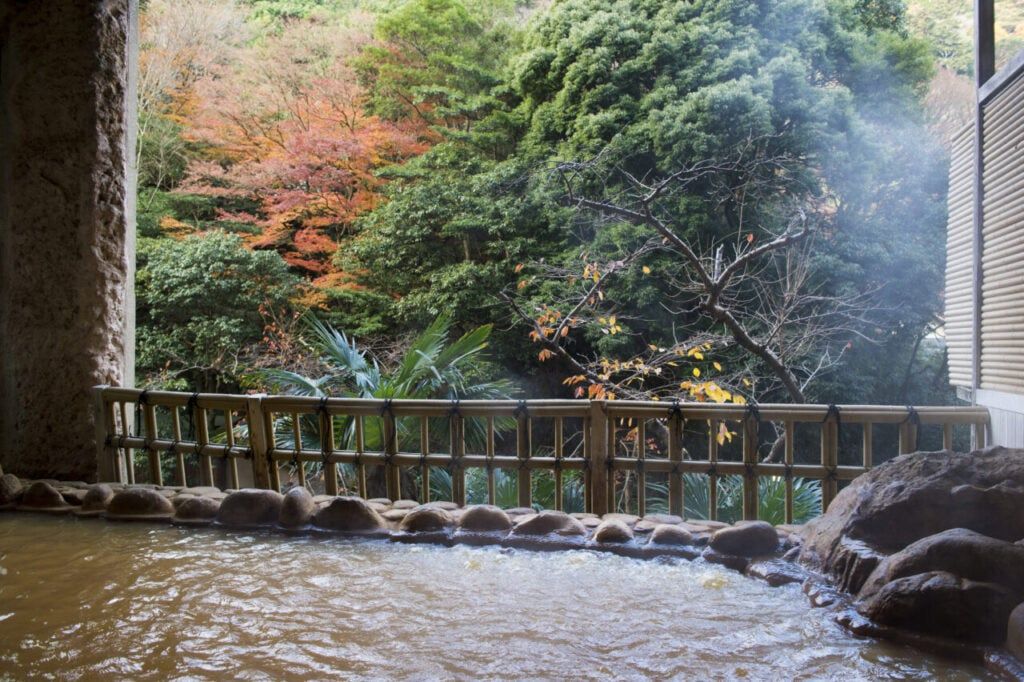
If you want a slower pace on your autumn-leaf trip, staying one night at a hot-spring inn is more relaxed than a same-day round trip.
Choosing Between the Arima Onsen Area and Central Kobe
If you want to stay near Zuihoji Park, Kin no Yu and Gin no Yu, there are several traditional hot-spring inns around the town, such as Arima Negiya and Arima Hanamusubi. A night stroll to Yumotozaka to see the lanterns lit is especially charming, and it suits visitors who want a deep hot-spring-town experience.
If you want more lodging choices and easier transfers, you can stay in central Kobe, such as at ANA Crowne Plaza Kobe, then take a bus or ropeway to Arima Onsen the next day, about 1 hour away. It suits an itinerary that also covers city sights such as Kobe’s Kitano Ijinkan.
Further Reading: Kansai Autumn Leaves Roundup

Arima Onsen Autumn Leaves 2026 FAQ
Here are the Arima Onsen autumn-leaf questions readers ask most often.Q1: When Is the Best Time to See Autumn Leaves at Arima Onsen in 2026?
The best viewing period is expected to run from early to late November 2026, with the area around Zuihoji Park peaking around mid-November. Actual dates still depend on that year’s weather.
Q2: How Much Are Kin no Yu and Gin no Yu Tickets?
Kin no Yu is ¥650 on weekdays and ¥800 on weekends and holidays; Gin no Yu is ¥550 on weekdays and ¥700 on weekends and holidays. The combined ticket for both baths is a fixed ¥1,200, the best value, and suits visitors who want to try both spring types.
Q3: What Is the Difference Between Taiko no Yudonokan and Taiko no Yu?
Taiko no Yudonokan is a museum on Toyotomi Hideyoshi’s history, with admission of about ¥200. Taiko no Yu is a large hot-spring facility with admission of about ¥2,640-2,860. The names are similar but they are completely different places, so check before booking.
Q4: What Is the Easiest Way to Get to Arima Onsen from Osaka or Kyoto?
The Hankyu Express Bus goes direct: about 60 minutes and ¥1,400 from Osaka, and about 90 minutes and ¥2,050 from Kyoto. There are no transfers, which makes it the easiest option.
Q5: How Can I Avoid the Crowds at Arima Onsen?
Go on a weekday, or aim for the time before 10 a.m. after opening or after 8 p.m. in the evening. On weekends and in autumn-leaf season, Zuihoji Park and Yumotozaka get crowded, so set out early.
Q6: Is Arima Onsen Better as a Day Trip or an Overnight Stay?
A day trip is enough if you only want Kin no Yu, Gin no Yu and the shopping street. If you want to explore Zuihoji Park, Takimoto Shrine, the Higashi Tafukuyama hike and the Rokko ropeway in depth, a two-day, one-night trip is more relaxed.
Q7: What Bathing Etiquette Should I Follow?
Before entering the bath, wash your body thoroughly in the shower area. Towels must not go into the bath and should be placed on the edge or on your head. Visitors with tattoos should check the facility’s rules in advance to avoid being refused entry.