
Okayama Korakuen Autumn Leaves 2026: Best Viewing Period and Trip Overview
Okayama Korakuen is one of Japan’s Three Great Gardens, and in autumn its maples and ginkgo trees layer this Edo-period daimyo garden in seasonal color. William has gathered the Okayama autumn leaves 2026 information here, with the best viewing period expected from mid-November to early December 2026.Best Time to See Autumn Leaves at Okayama Korakuen
The best viewing period for autumn leaves at Okayama Korakuen is expected to fall between mid-November and early December 2026. About 250 maple and ginkgo trees in the garden turn red and yellow in turn, building up rich layers of color.
Okayama has a mild Seto Inland Sea climate, so the leaves turn much later than in Tohoku or Hokuriku. That makes it a good fit for the later part of Japan’s foliage season, and a natural last stop on a leaf-chasing trip.
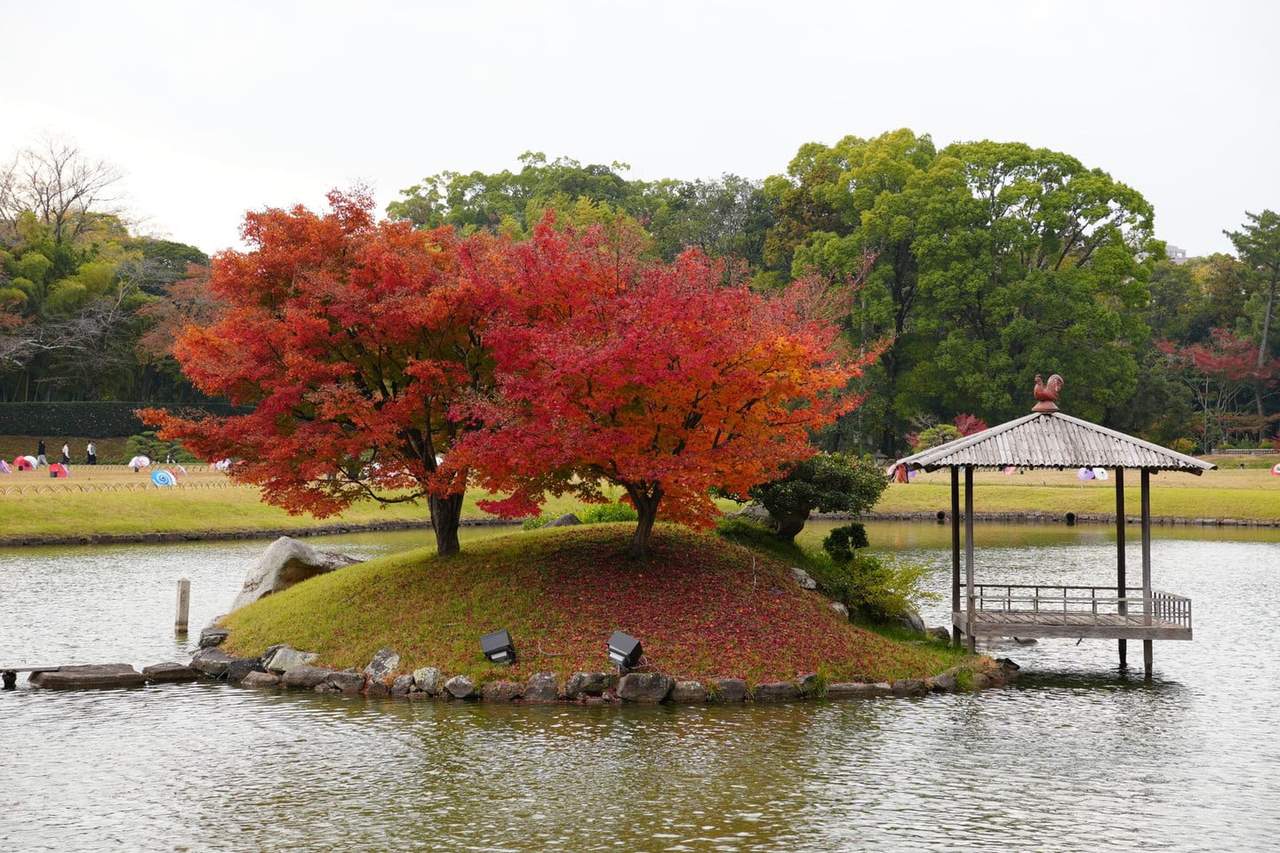
Korakuen covers about 130,000 square meters, but the main foliage areas are concentrated around Chishio no Mori and Yuishinzan. Even one to two hours is enough for a full loop, which makes it a fairly easy foliage stop to fit into a trip around the Chugoku region.
Why Korakuen Is One of Japan’s Three Great Gardens
Korakuen ranks alongside Kenrokuen in Kanazawa and Kairakuen in Mito as one of Japan’s Three Great Gardens. It has three stars in the Michelin Green Guide and is designated a national Special Place of Scenic Beauty, making it one of the signature works of Japanese garden art.
Compared with the other two gardens, Korakuen’s defining feature is its fully preserved Edo-period daimyo garden layout. Wide lawns, waterways and teahouses recreate the setting where the feudal lord entertained guests and relaxed.
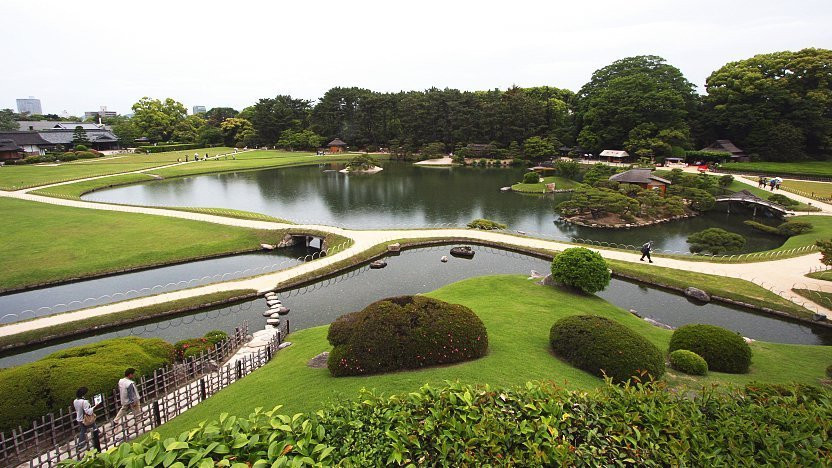
The garden also still keeps rice paddies and a tea field that are actually farmed. This is rare among Edo-period daimyo gardens, and it gives Korakuen a simple, rural feel among the three great gardens rather than being purely ornamental.
Tips for Autumn Leaf Viewing at Okayama Korakuen
In November the garden runs on winter hours, 8:00-17:00 (last entry 16:45), closing one hour earlier than in summer. Keep this in mind when planning, and do not assume you can stay until evening.
The evening illumination is a separate special opening, and you need to buy a new ticket to re-enter. A good plan is to leave the garden for dinner first and come back in.
The grounds are large and mostly lawn and gravel paths, so wear comfortable walking shoes. Autumn mornings and evenings can be much cooler than midday, so bring a jacket too.
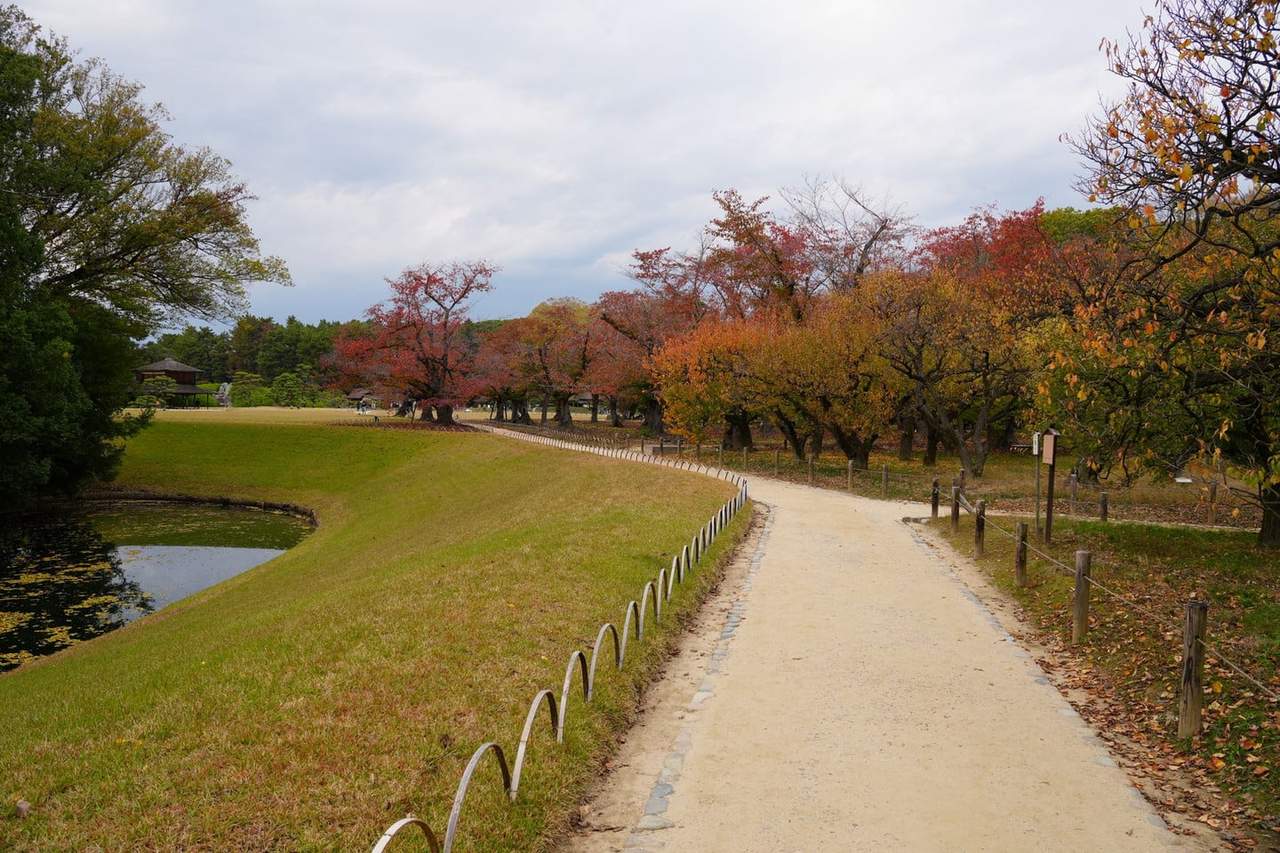
Crowds peak on weekend mornings and late afternoons during the foliage season, so enter right at opening if you want shots without people. There are several restrooms and rest pavilions in the garden, which makes it easy to visit with older relatives or children.
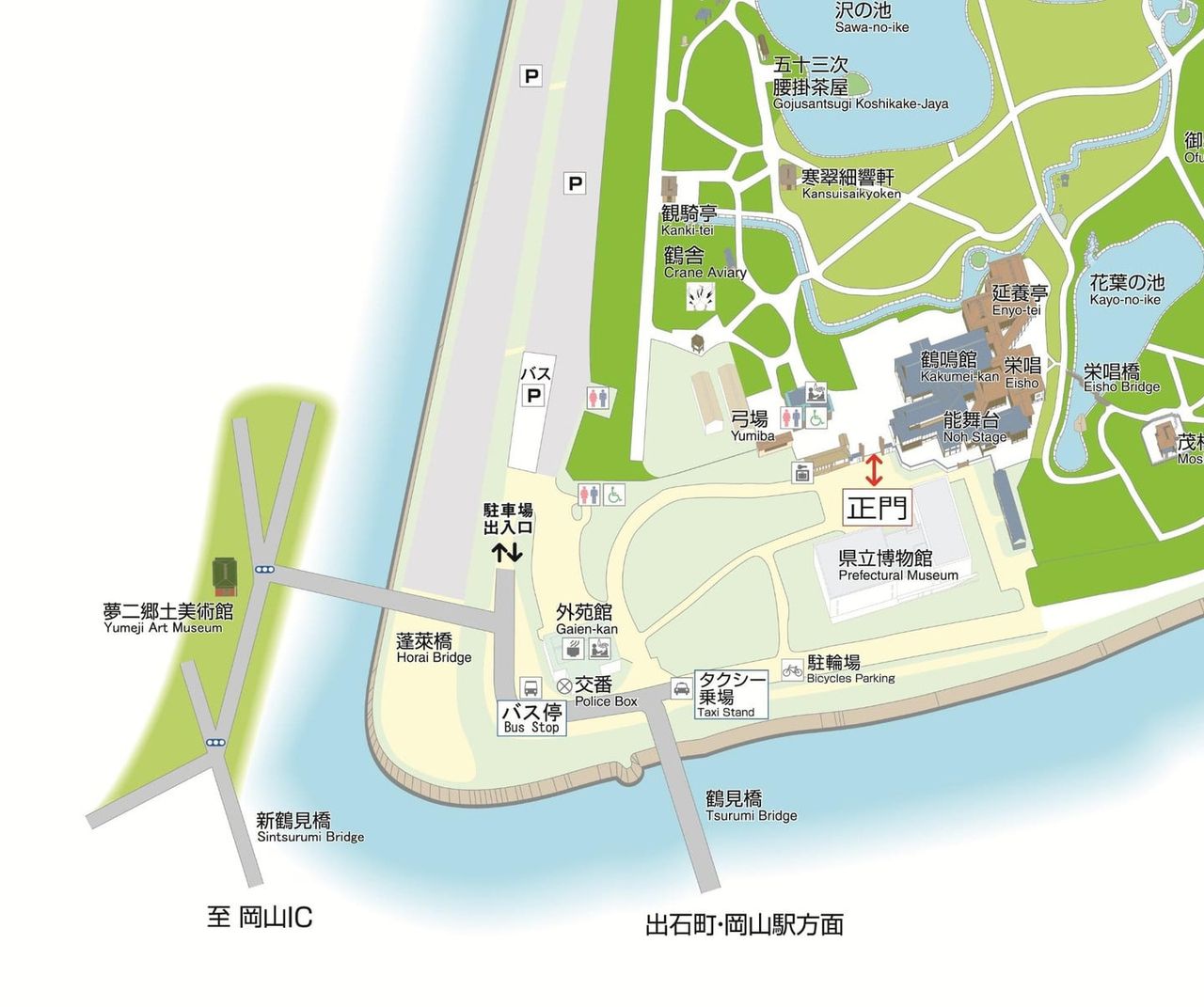
Getting to Okayama Korakuen for Autumn Leaves: From JR Okayama Station
How to Get to Okayama Korakuen: All Options at a Glance
There are four ways to get from JR Okayama Station to Korakuen, depending on your time and energy:
– Bus: East Exit bus toward Fujiwara-danchi, about 15 min to Korakuen-mae; most direct and easiest.
– Tram: Higashiyama Line to Shiroshita, about 10 min walk past Okayama Castle; good for a combined visit.
– Walk: about 25 min along the scenic Asahi River.
– Car: about 20 min from Okayama IC (Sanyo Expwy); park at Ujo Park (about ¥300/hr, ¥150 off with a castle ticket).
Must-See Autumn Leaf Spots at Okayama Korakuen: Chishio no Mori, Yuishinzan and Okayama Castle
You can plan a Korakuen foliage visit on three levels: the classic views inside the garden, the evening illumination and the castle next door. Below are 12 must-see spots. The 2026 Okayama Korakuen illumination, the Autumn Fantasy Garden, is scheduled for November 20 to November 29.Chishio no Mori: A Grove of a Hundred Maples Dyed Layer by Layer
Chishio no Mori is the most popular foliage landmark in Korakuen, made up of about 100 maple trees. In Japanese, chishio means dyeing cloth again and again, describing how the leaves shift from yellow to orange and then to deep crimson, like brocade dyed in layer after layer.
The best viewing period is mid to late November. Stroll the paths through the grove to catch the play of light. Outside the free areas you need a Korakuen ticket to enter.


For photos, shoot from a low angle looking up so sunlight shines through the leaves and turns them a translucent red; this works better than eye-level framing. This is also a key area of the evening illumination, and day and night feel completely different, so it is worth coming once at each time.
Yuishinzan: The High Point Overlooking a Sea of Maples
Yuishinzan is a man-made hill in the garden. It takes only a few minutes to reach the top, yet it offers the best view over all of Korakuen, taking in the red maples, the waterways and the keep of Okayama Castle in the distance in a single frame.
The summit is small, and in peak foliage season you often have to queue for a photo spot. Go shortly after the garden opens in the morning, when crowds are thinner and the light is soft.
Yuishinzan was built by Ikeda Tsugumasa, son of Ikeda Tsunamasa, the second-generation lord of the domain. It added vertical depth to what had been a flat garden and lets visitors read the layout of the waterways and the borrowed scenery from above, making it the best place to understand how a Japanese garden is composed.
The path to the top is a little steep but short, and anyone of average fitness can manage it easily.
Kayo-no-Ike Pond: Quiet Beauty of Red Leaves Reflected on the Water
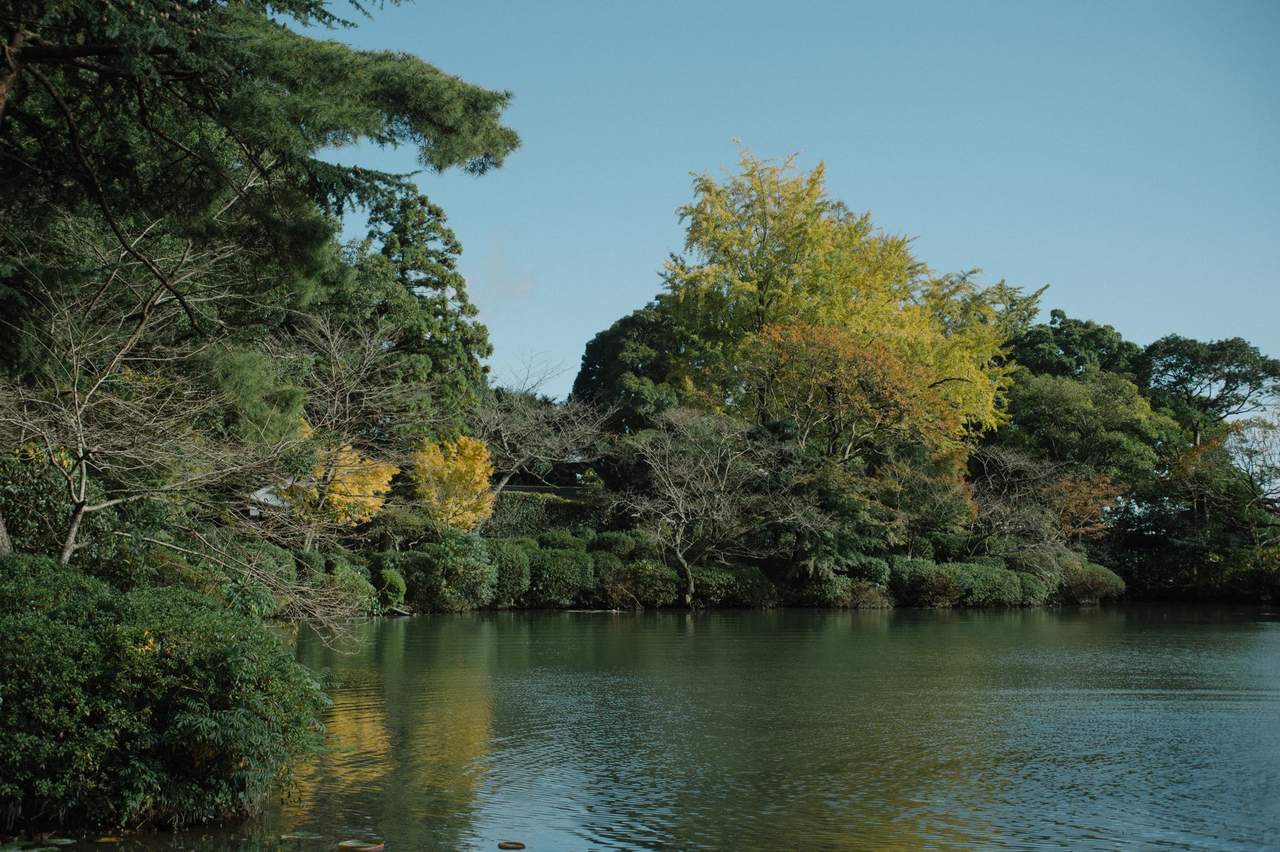
Several maples grow around Kayo-no-Ike Pond. In autumn, red and yellow leaves reflect on the still water, making it one of the best spots in the garden for reflection shots. In summer it is known for its Oga lotus.
Come early on a windless morning, when the surface is like a mirror and the reflections are clearest. The pond is also lit during the evening illumination, giving it a dreamlike mood quite unlike the daytime.
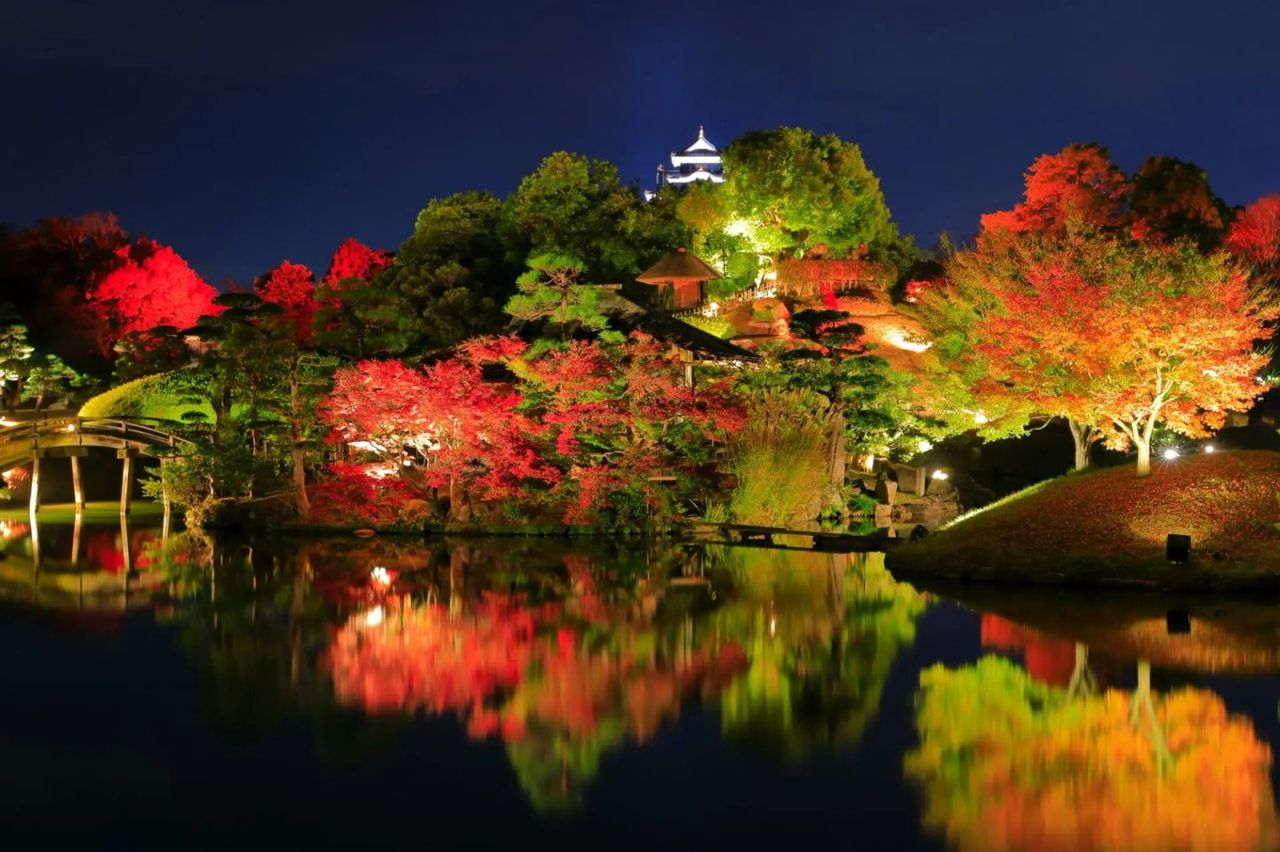
A viewing path and benches line the pond, handy for a rest when your feet get tired. It is also one of the few angles in the garden that frames red leaves, water and the distant Yuishinzan together, and photographers regard it as one of the garden’s golden composition spots.
In summer the pond is known for its huge Oga lotus, and each season has something different to see.
Autumn Fantasy Garden: Korakuen’s Special Evening Illumination
The Autumn Fantasy Garden is Korakuen’s special evening opening held every autumn. In 2026 it is expected to run from November 20 to November 29, 17:00-20:30 (last entry 20:00).
Highlights include the illuminated maples of Chishio no Mori, projection art on Japanese umbrellas with an Edo-period atmosphere, and biwa and flute performances on boats on the pond, adding an elegant touch to the autumn night.
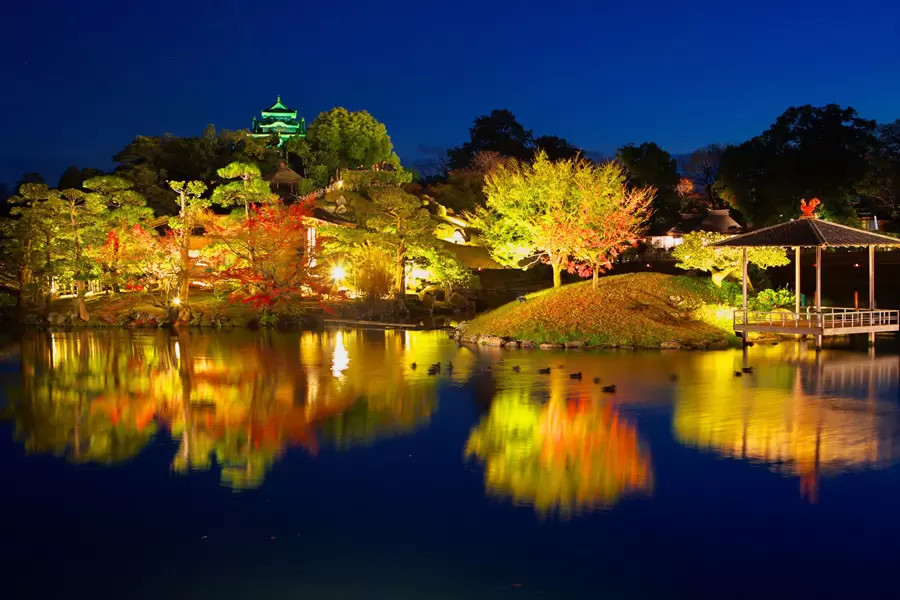

It is dark at night and the garden is mostly lawn and gravel paths, so wear non-slip, comfortable shoes and bring a flashlight or use your phone light. You can also eat outside the garden before going in, so you are not hunting for food after the illumination ends.
Okayama Castle: The Black-Walled Crow Castle and Its Lantern Village
Okayama Castle is nicknamed Ujo, the Crow Castle, for its black outer walls, a striking contrast to white Himeji Castle. It stands across the Asahi River from Korakuen and is a short walk away over Tsukimi Bridge. Admission is ¥500 for adults and free for elementary and junior high school students.
In autumn the castle holds its own evening illumination, Aki no Ujo Togenkyo, on exactly the same schedule as Korakuen’s Fantasy Garden (November 20-29, 17:00-20:30).
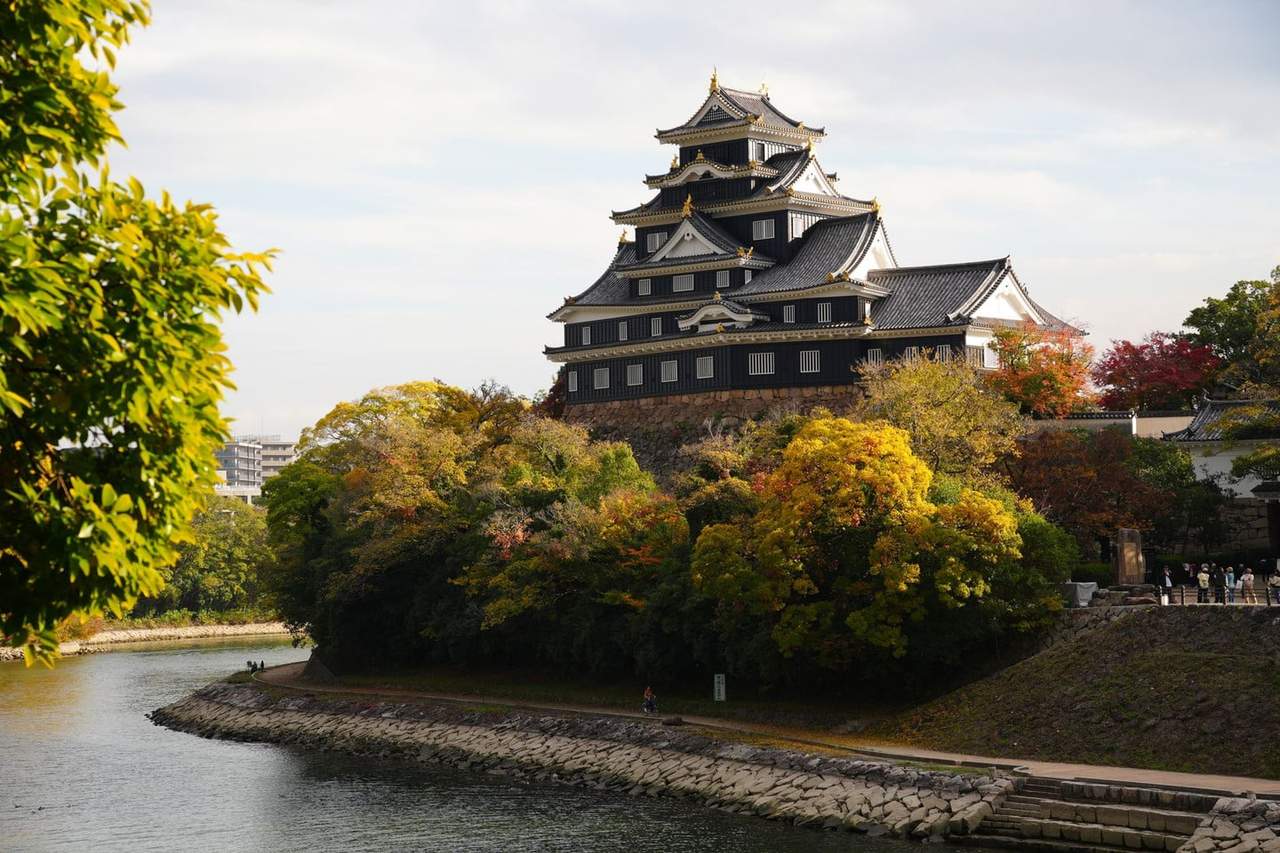

Okayama Castle was first built in 1597 by the Sengoku-period warlord Ukita Hideie. The keep burned down in an air raid during World War II, and the current building is a 1966 reconstruction. Its black clapboard (shitamiita-bari) walls were meant to resist damp and fire, and they make it one of the most recognizable castles in Japan.
There is also a cafe in the castle where you can take a break before moving on.
Okayama Castle Keep: A Viewing Experience That Needs On-Site Registration
After renovation, the keep of Okayama Castle displays historical artifacts from the Okayama domain. The top-floor observation deck looks out over all of Korakuen and the autumn colors along the Asahi River, a superb angle for seeing the garden’s layout from above.
Some floors of the keep use on-site registration with a limited number of slots per hour. As soon as you enter, go to the 2nd floor, fill in the reservation form and collect your exchange ticket, then visit the other floors. This makes your time easier to manage.
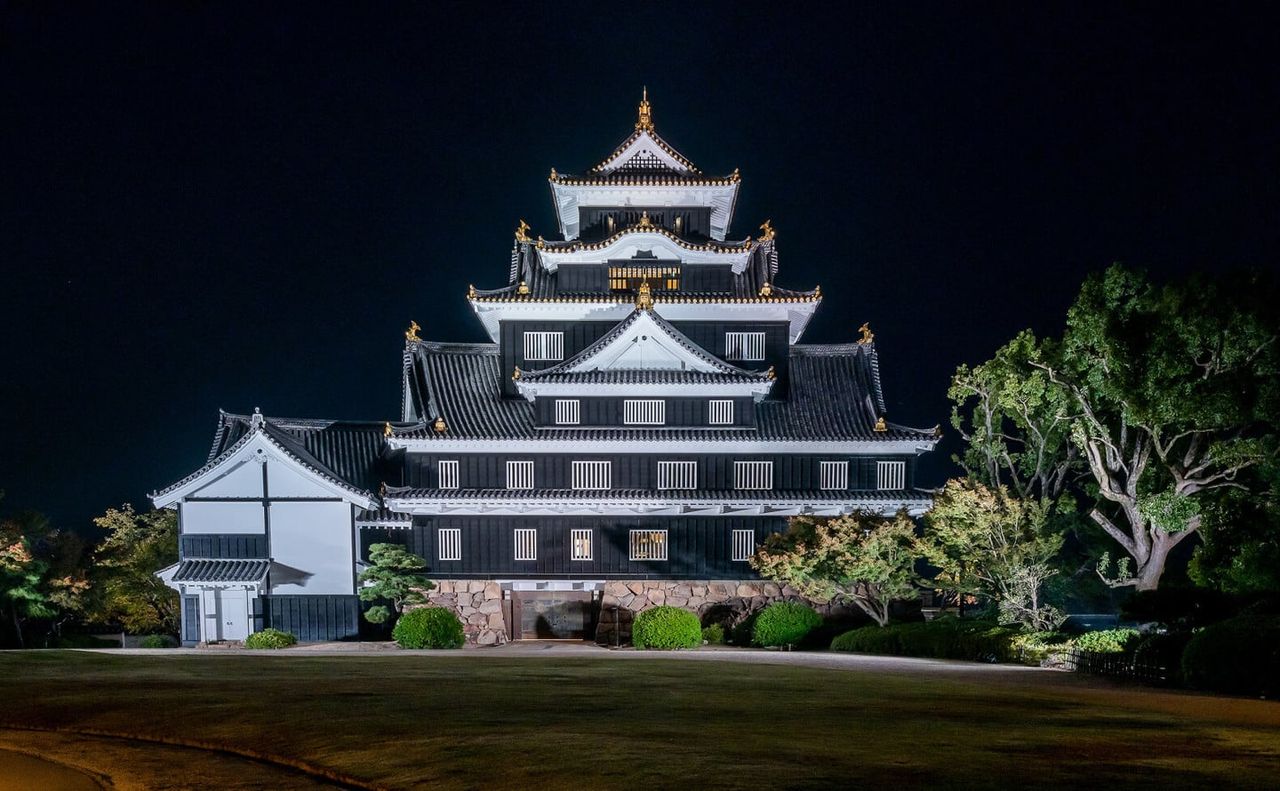

The keep also has a Bizen-ware craft workshop and an interactive area where you can try on samurai armor, which suits families. If time is short, at least go up to the top-floor observation deck: the view over the autumn colors of Korakuen and the Asahi River is the most worthwhile part.
Okayama Prefectural Museum: A Hidden Window View Framing the Leaves
Right next to Korakuen, the Okayama Prefectural Museum is a secret foliage spot that only locals know. Upstairs, large floor-to-ceiling windows frame the red leaves outside like a natural picture frame.
The quiet inside contrasts with the bustle outdoors, so it suits travelers who want to enjoy the leaves away from the crowds. It is also a personal favorite photo spot of Korakuen’s official social media team.
The permanent exhibition focuses on the archaeology, history, art and crafts of Okayama Prefecture, with impressive Bizen ware and Kofun-period excavated artifacts. Admission is separate, and there is a combined ticket with Korakuen, but the combined ticket is not available for senior-rate visitors.
The museum also has a souvenir corner with small Bizen-ware items.
Tsukimi Bridge: The Photo Spot Linking Korakuen and Okayama Castle
Tsukimi Bridge is a pedestrian bridge over the Asahi River linking Korakuen and Okayama Castle. From the bridge you can frame the black keep of Okayama Castle and Korakuen’s red leaves together, the most classic shot of the area.
Come around sunset, when the sky’s color is at its best and you can head straight on to the evening illuminations at both sites. Crossing is free.
The bridge is narrow and crowded in foliage season, so mind the flow of people when taking photos. To avoid crowds, go early in the morning or in the gap before the illumination starts, when the bridge is relatively quiet and you can also capture reflections on the river.
There is also a riverside path along the Asahi River below the bridge, good for a stroll. In autumn the trees along the bank also turn yellow, another viewpoint few people know about.
Enyotei: The Feudal Lord’s Best Seat in the Garden
Enyotei is the central building of Korakuen and was where the lord stayed when visiting the garden. The view from inside was carefully designed to take in the whole garden and the borrowed scenery of Mount Misao in the distance at a glance.
The current building is a postwar reconstruction faithful to the original. The interior is normally closed, but you can admire its simple, elegant sukiya-style architecture from outside, especially lovely with the surrounding red leaves in autumn.
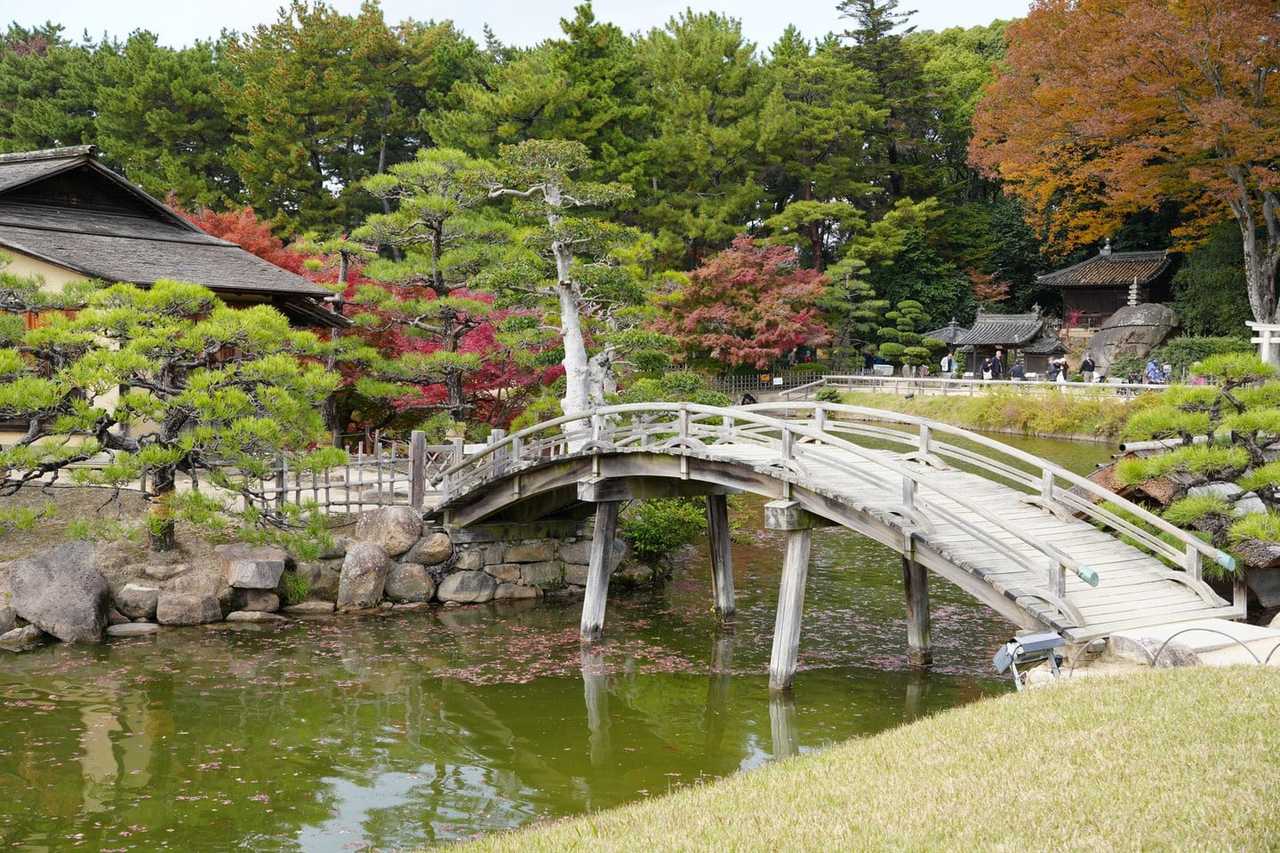
In front of Enyotei lies a broad, level lawn, the feature that most sets Korakuen apart from other Japanese gardens. The large open space was left deliberately so the eye can travel into the distance, and the green lawn makes the autumn reds stand out even more.
The interior opens for special viewing during certain periods each year.
Renchiken: The Waterside Teahouse with the Garden’s Finest View
Renchiken is one of the few buildings in Korakuen that survived the war. Many Japanese garden enthusiasts consider it the spot with the most beautiful view in the garden, and its layout across a small bridge, facing the pond, is cleverly designed.
In autumn, the maples around the teahouse mirror in the pond, a must for photographers. Pick a quiet early morning to visit.
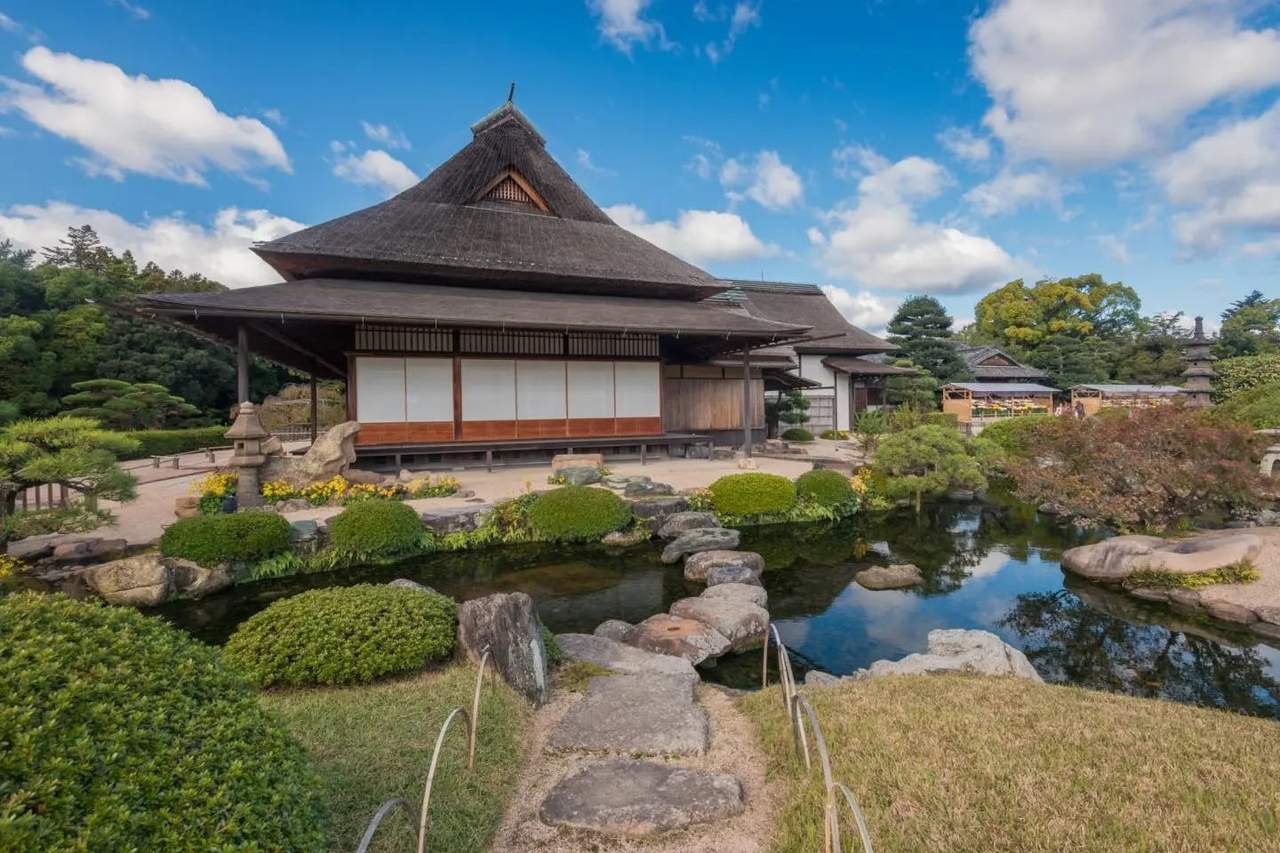
As an original prewar building, Renchiken has wooden framing and roof tiles with the patina of age, looking more venerable than the newer buildings around it. The stone bridge and flowing water outside are also original Edo-period designs of high cultural value.
The water lilies in the pond in front have faded by autumn, but the reflections on the water are still clear and charming.
Ryuten: An Unusual Rest House with a Stream Running Through It
Ryuten is Korakuen’s most talked-about building. Its signature feature is a stream that runs straight through the floor in the middle of the building, with unusual stones of different colors placed in the channel, a structure rarely seen in Japanese gardens.
The second floor was where the lord rested. On the first floor visitors can take off their shoes and sit inside, enjoying the murmuring water at their feet and the red leaves outside the windows. It is the most comfortable resting spot in the garden.
The stones in the channel are said to have been collected from various places, each with its own color and pattern. In summer this is the coolest place in the garden, and in autumn you can listen to the water while viewing the leaves, making it one of Korakuen’s most popular resting spots.
You need to remove your shoes to go inside, so wear footwear that is easy to slip on and off.
Okayama Shrine: An Ancient Shrine Facing Korakuen Across the River
Okayama Shrine was founded in 860 and enshrines Yamatototohimomosohime-no-Mikoto. It is known for blessings in matchmaking and business prosperity. It stands beside Okayama Castle, across the Asahi River from Korakuen, about 4 minutes on foot from Shiroshita tram stop. Admission is free.
The shrine offers as many as 5 kinds of goshuin (shrine stamps), plus seasonal limited editions. There are two goshuin books, one with Okayama Castle (offering fee ¥2,100) and one with a Momo-hime design (¥2,300), making it a top add-on for combining leaf viewing with a goshuin tour.
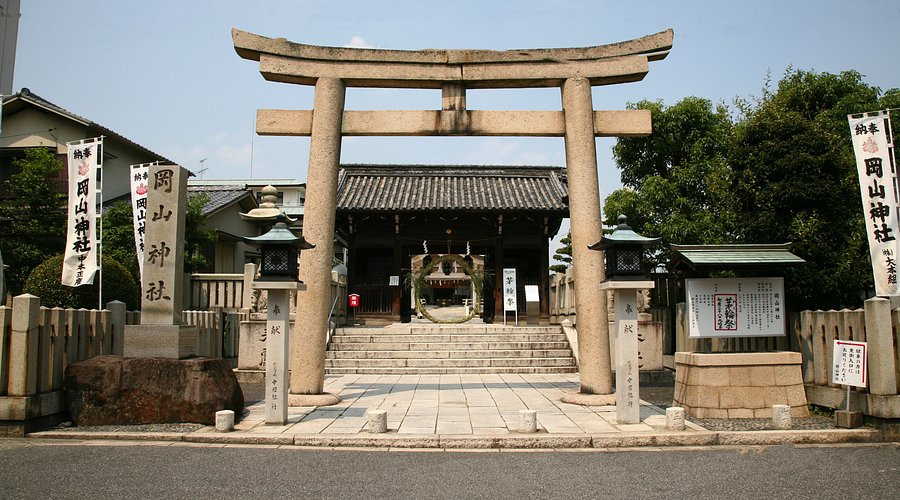
Because it sits right next to Okayama Castle, most visitors drop by after the castle. It is far less crowded than Korakuen, a good place for a quiet visit.
Food Near Okayama Korakuen: Fukuda Chaya and Okayama Specialties
Beyond the leaves, the garden’s teahouse and Okayama’s local specialties are well worth fitting in. Here are 6 must-visit places.Kibi Dango and Matcha Set: Fukuda Chaya
Founded in Showa 21 (1946), Fukuda Chaya is a popular teahouse inside Korakuen with views of Okayama Castle and Yuishinzan, and the most convenient place to rest during a foliage walk.
Its signature An-iri Kibi Dango, billed as the original Korakuen specialty, is closely tied to the Momotaro legend. The soft, chewy dumplings are filled with red bean paste, and a matcha set cuts through the richness nicely.
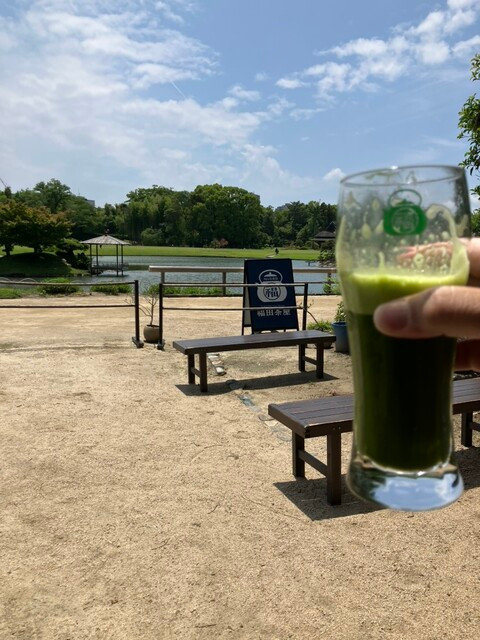
The teahouse has seating with views of the garden, so in foliage season you can sip matcha while looking at the red leaves outside the window, an ideal break when you are tired. Seats are limited, so you may have to wait around midday on weekends and holidays.
The teahouse also sells boxed kibi dango to take away, a good Okayama souvenir.
- 🍡 Must-try: An-iri Kibi Dango matcha set
- 💰 Price: about ¥500
- 🚉 Access: inside Korakuen, about 5 minutes on foot from the Korakuen-mae bus stop
Okayama’s Signature Pork Cutlet Bowl: Demi-Katsudon Specialty Restaurants
Demi-katsudon is a way of eating unique to Okayama: a fried pork cutlet topped with rich demi-glace sauce over white rice. It is completely different from the usual Japanese katsudon with egg, and a local dish you should try in Okayama.
The sauce is sweet, tangy and rich, the cutlet crisp and juicy, and the portions generous, a good way to refuel after Korakuen.
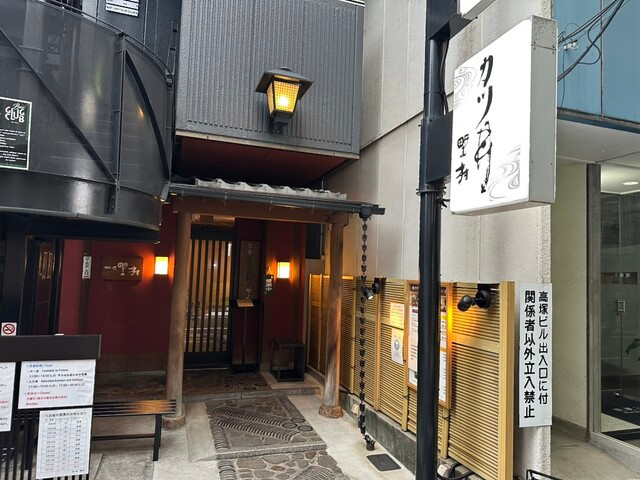
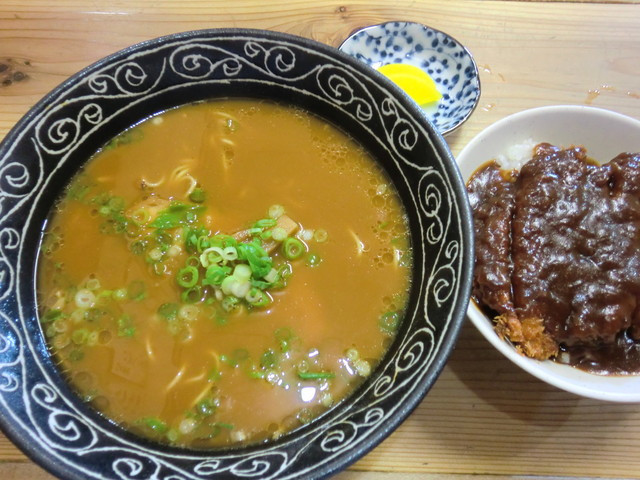
Demi-katsudon dates back to the Taisho era. It is said an Okayama Western-style restaurant owner combined Western demi-glace with the Japanese katsudon. It has since become a local taste Okayama people grow up with, and there are several long-established specialty restaurants in the city to choose from.
Some restaurants also offer a soft-boiled egg as an add-on, making the sauce even smoother and richer.
- 🍛 Must-try: Demi-katsudon
- 💰 Price: about ¥900-1,500
- 🚉 Access: several specialty restaurants around JR Okayama Station
Hinase Oyster Dishes: Okayama Seafood Restaurants
Hinase in Okayama Prefecture is a well-known oyster-producing town. The season runs from November to April each year, overlapping with the foliage season, so you can enjoy oysters at their plumpest.
The famous local dish, kaki-oko, is okonomiyaki cooked with plenty of oysters, sweet and juicy, a local specialty found only in Okayama.
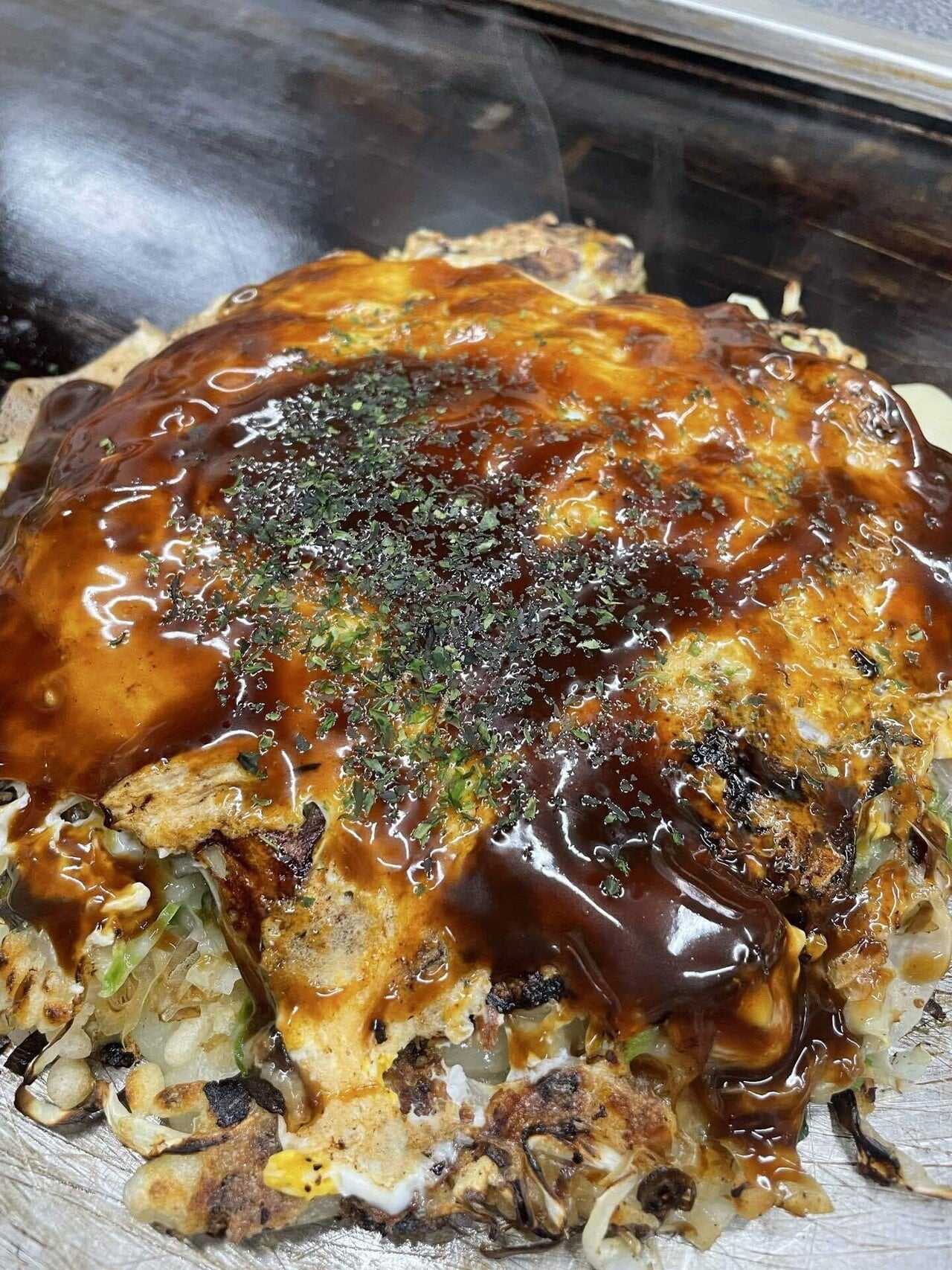
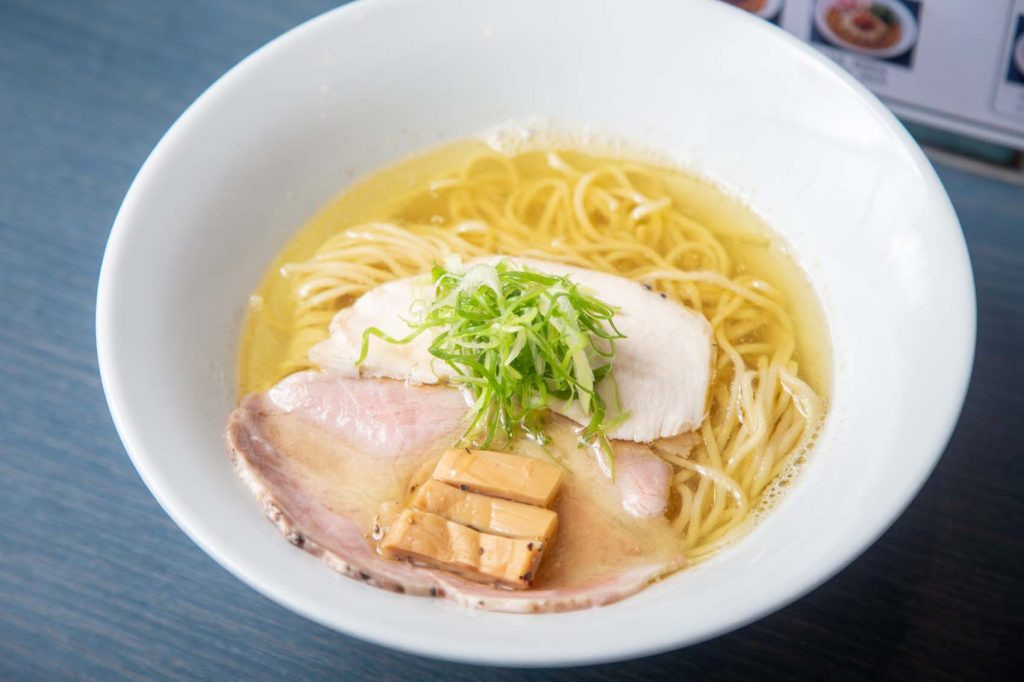
Since the Hinase oyster season starts in November and fully overlaps with Korakuen’s foliage period, an autumn trip to Okayama lets you enjoy both the leaves and seasonal seafood, the best-value combination for visiting Okayama at this time of year.
If you have time, you can also take the JR Ako Line straight to Hinase Station and feast on oysters where they are farmed.
- 🦪 Must-try: Kaki-oko (oyster okonomiyaki), grilled oysters
- 💰 Price: about ¥1,200-2,500
- 🚉 Access: around JR Okayama Station or in the Hinase area
Okayama White Peach Desserts: Fruit Specialty Shops
Okayama is known as the Land of Sunshine and a fruit kingdom, with white peaches and Muscat grapes as its most famous produce. Fruit specialty shops in the city serve desserts such as fruit parfaits and fruit sandwiches.
Autumn is not the main white peach season, but you can still enjoy desserts and souvenirs made with Muscat grapes and other seasonal fruit.
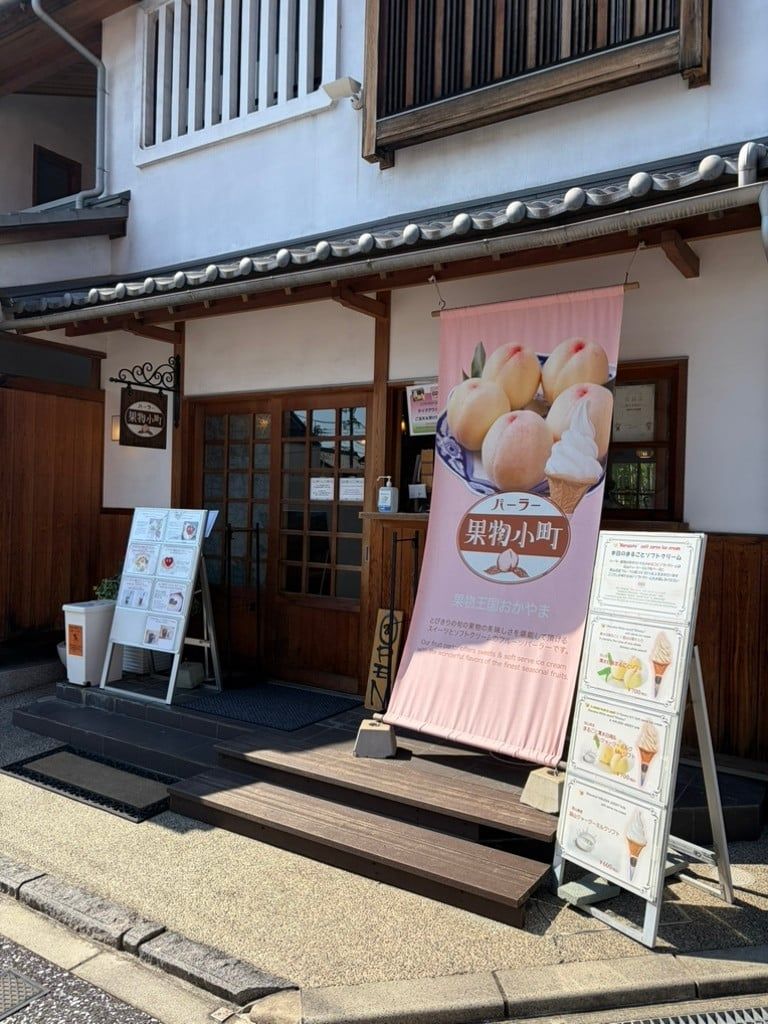
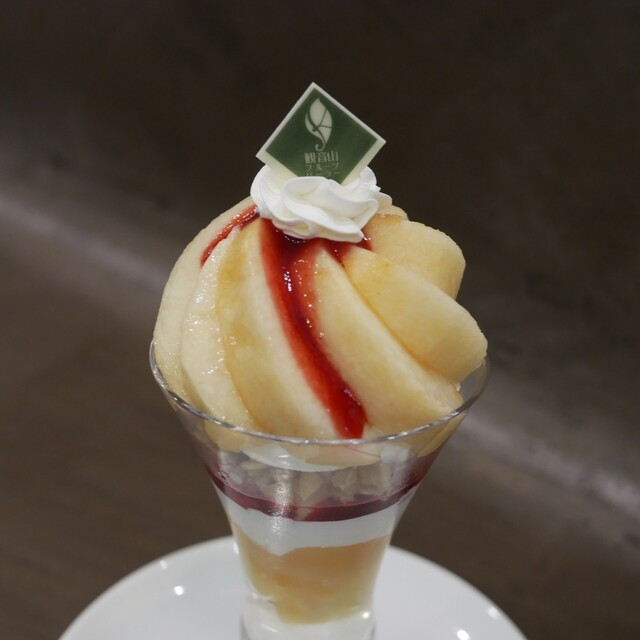
The quality of Okayama fruit is closely tied to its Land of Sunshine climate. Low annual rainfall and plenty of sunshine are ideal for peaches and grapes, which need a lot of sun, and this has made Okayama fruit a symbol of premium gifts in Japan.
Most shops also sell shelf-stable souvenirs such as fruit jellies and jams, easy to take home.
- 🍑 Must-try: Muscat grape parfait, fruit sandwich
- 💰 Price: about ¥1,000-2,500
- 🚉 Access: about 5-10 minutes on foot from JR Okayama Station
Kurashiki Kominka Cuisine: Yuurin-an
Yuurin-an, in the Kurashiki Bikan Historical Quarter, is a hugely popular cafe and eatery in a converted traditional townhouse (kominka). Its signature Happiness Pudding has a smiley face drawn on the egg yolk, a much-discussed photo dessert on social media.
Its other signature, tamago kake gohan (raw egg over rice), uses quality local eggs and lets the ingredients speak for themselves. It is the top choice when extending your trip to Kurashiki.
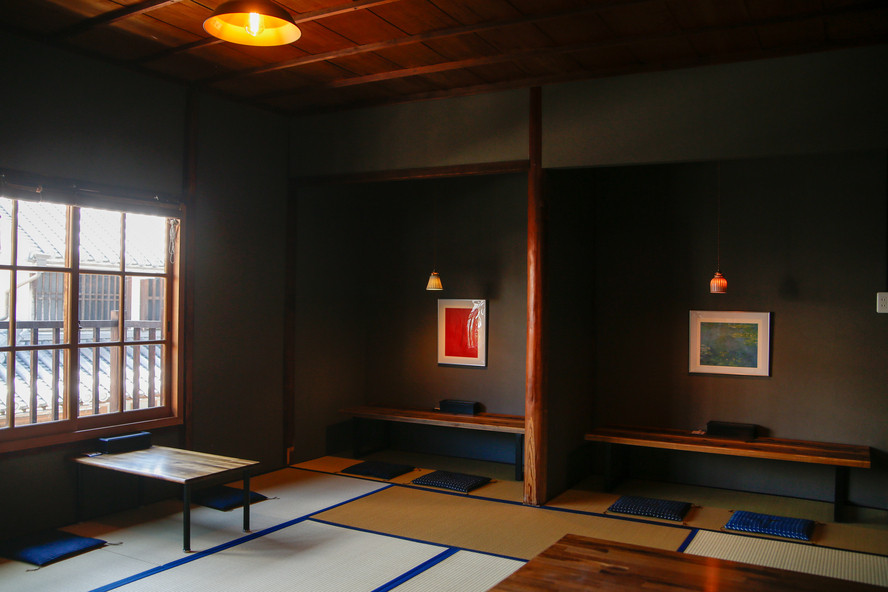
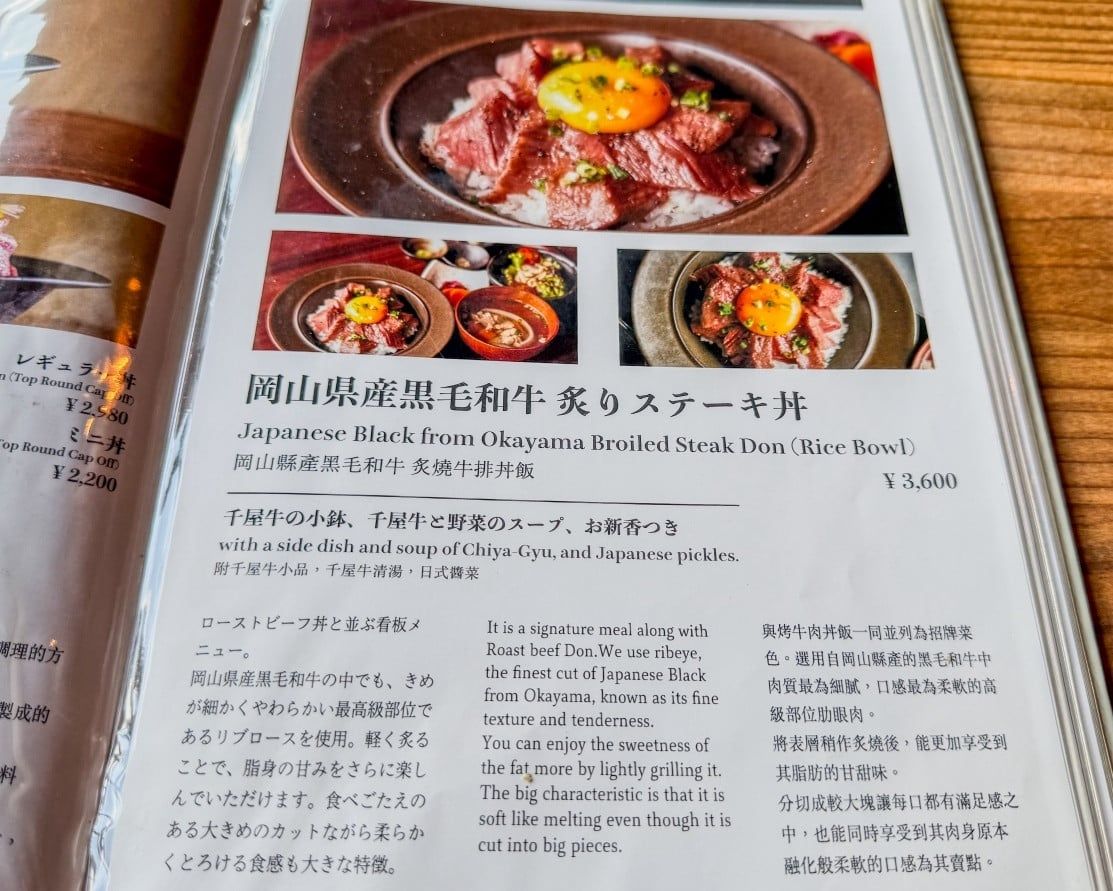
The restaurant is small and very popular, so there is often a wait at mealtimes; avoid weekend lunchtime or arrive early. It keeps the beams, pillars and earthen-floor (doma) structure of the old townhouse, and the space alone is worth seeing.
The Happiness Pudding is also available to take away, so if you are short on time you can eat it as you walk.
- 🍮 Must-try: Happiness Pudding, tamago kake gohan
- 💰 Price: about ¥600-1,500
- 🚉 Access: about 12 minutes on foot from JR Kurashiki Station
Kurashiki Charcoal-Grilled Yakiniku: Yakiniku Hidaya Kurashiki
Yakiniku Hidaya Kurashiki is a charcoal-grill yakiniku restaurant popular with locals too. It serves quality wagyu cuts and affordable set meals in a relaxed, unfussy atmosphere.
If you are staying overnight in Kurashiki, it is a good dinner choice, and better value than restaurants in the tourist area.

There is a wide choice of wagyu cuts, from entry-level beef belly to premium thick-cut beef tongue, suiting travelers who want wagyu on a limited budget. The relaxed setting also works well for families or groups of friends.
- 🥩 Must-try: Wagyu platter, yakiniku set meal
- 💰 Price: about ¥2,000-5,000
- 🚉 Access: around JR Kurashiki Station
Okayama Korakuen Autumn Leaf Itineraries and Ticket Information
When planning a Korakuen foliage visit, you can choose a combined ticket or a packaged tour depending on your needs. Here are 4 common options.Korakuen + Okayama Castle Combined Ticket: Save ¥200
An adult ticket to Korakuen alone is ¥500, and Okayama Castle also rose to ¥500 from April 2026. Bought separately, the two cost ¥1,000, but the combined ticket is only ¥800, saving you ¥200 on the spot.
The two sites are separated only by Tsukimi Bridge, a 5-minute walk apart, and almost every visitor sees both, so this combined ticket is the obvious one to buy.
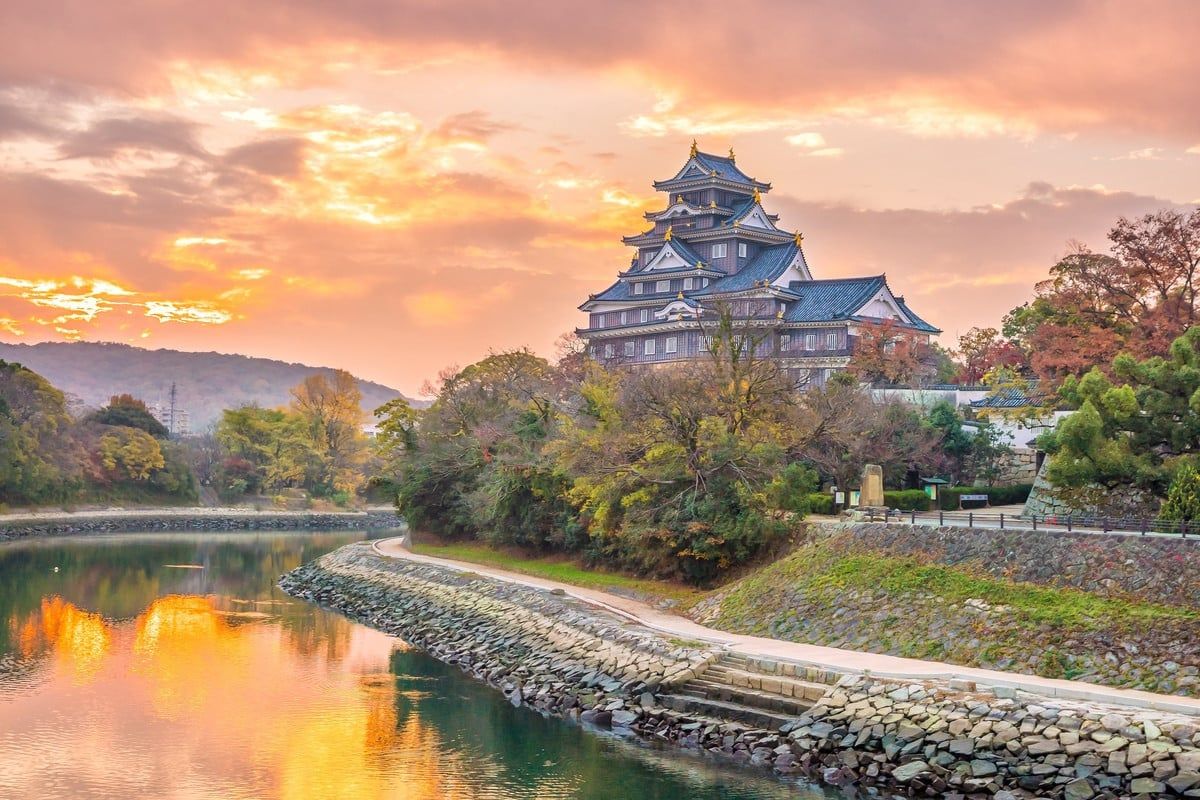
There are also two other combined tickets, Korakuen + Prefectural Museum and Korakuen + Hayashibara Museum of Art. If you are interested in Okayama’s historical artifacts, both are good value; pick whichever matches your interests.
The combined ticket is sold at the ticket windows of both Korakuen and Okayama Castle, with no need to book online in advance, so last-minute plans are no problem.
Korakuen Single Tickets and Senior Tickets: Choose the Cheapest for Your Category
Korakuen tickets are ¥500 for adults (ages 15-64), ¥200 for children (ages 6-14) and ¥200 for seniors (65 and over). Groups of 20 or more get discounted prices of ¥400 and ¥160.
Senior tickets cannot be combined into a set ticket. For visitors 65 and over, buying a Korakuen senior ticket and an Okayama Castle ticket separately actually works out cheaper.
Combined tickets are also suspended while the museum is closed or setting up a special exhibition.
A lost Korakuen ticket becomes invalid and cannot be reissued, so keep yours safe after buying it, especially if you plan to leave and re-enter.
Autumn Fantasy Garden Night Ticket: A Limited Night-Foliage Experience
The Autumn Fantasy Garden is a separate special opening that requires a new ticket. In 2026 it is expected to run from November 20 to November 29, 17:00-20:30 (last entry 20:00).
Pair it with Aki no Ujo Togenkyo at neighboring Okayama Castle. The two events run on exactly the same schedule, so you can plan a seamless day of daytime leaves, dinner at dusk and evening illuminations.
Korakuen’s Fantasy Garden is held three times a year, once each in spring, summer and autumn. The autumn edition, with both red leaves and illumination, is the most popular of the three and the most likely to sell out.
Because it is a special opening, a daytime ticket cannot be used at night and you must buy a new one. Many visitors misunderstand this point.
Kurashiki Day Trip Extension: 15 Minutes Away by JR
The Kurashiki Bikan Historical Quarter is only a 15-20 minute ride from JR Okayama Station. Its white-walled storehouses line the Kurashiki River and have earned two Michelin stars, making it the most popular side trip from Okayama.
You can take a Kurashiki River boat ride (about ¥500 per person) and rent a kimono or yukata. On a two-day, one-night trip, see Korakuen and Okayama Castle on day one and explore Kurashiki in depth on day two.
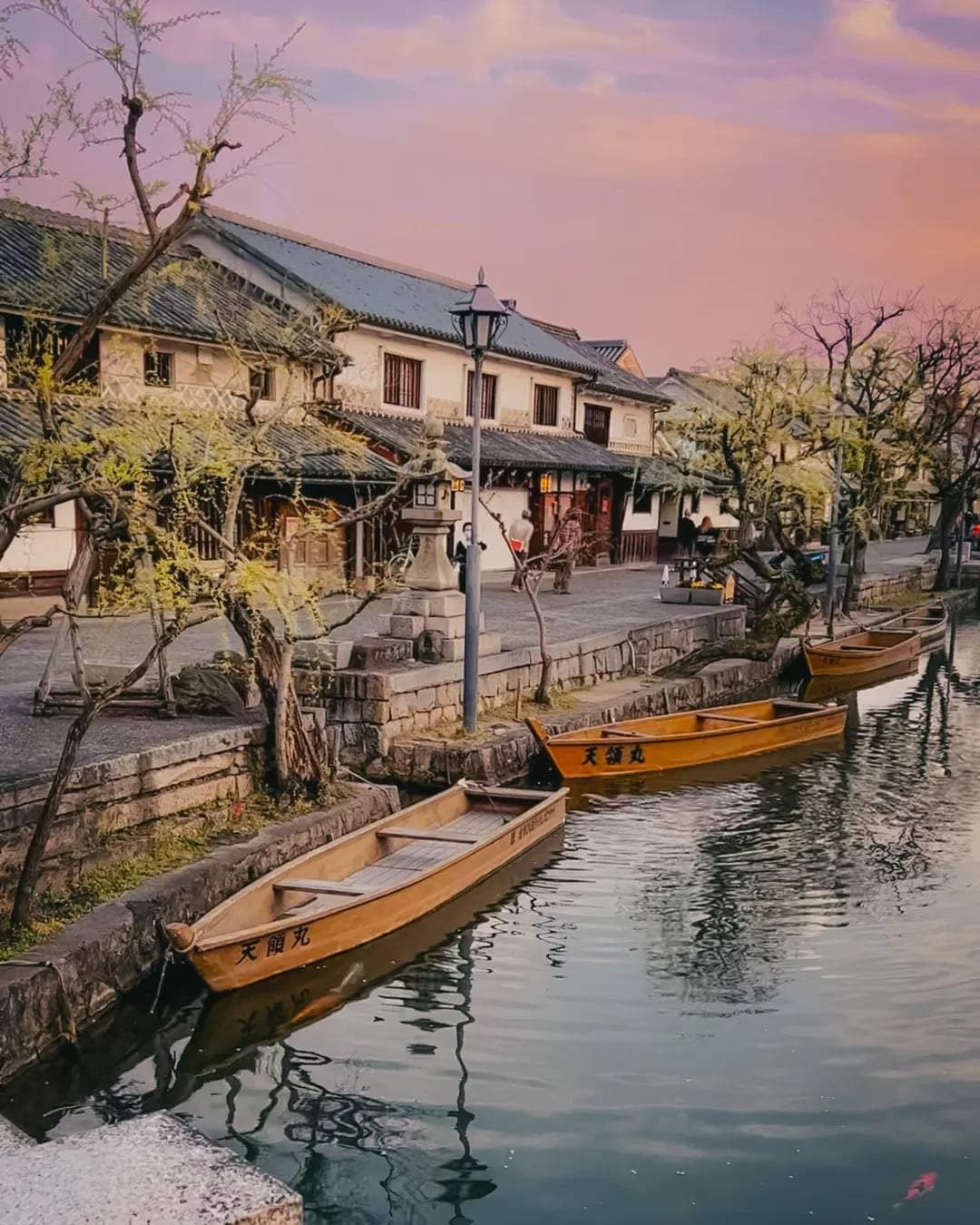
The white-walled buildings of the Kurashiki Bikan Historical Quarter date from its Edo-period status as land under direct shogunate control. It prospered as a distribution hub for goods, and the riverside storehouses are a legacy of that era, now converted into museums, cafes and general stores.
Where to Stay Near Okayama Korakuen

If you want a slower-paced foliage trip, staying one night is more relaxed than a same-day round trip.
Okayama Station Area or Kurashiki?
To stay close to Korakuen and Okayama Castle, the JR Okayama Station area is packed with affordable business hotels. The sights are a few minutes away on foot or by train, and getting back after the Fantasy Garden illumination is easy, so Okayama makes a good base for traveling the Chugoku region.
For more atmosphere, you can also stay around the Kurashiki Bikan Historical Quarter: see Korakuen during the day, move to Kurashiki in the evening, and enjoy the quiet streets of the Bikan area early the next morning before the crowds arrive. This suits a two-day, one-night trip.
Whichever you choose, the two are only 15-20 minutes apart by JR, so your plans stay flexible.
Further Reading: Related Autumn Leaf Spots
Okayama Korakuen Autumn Leaves 2026 FAQ
Here are the questions readers ask most often about autumn leaf viewing at Korakuen.Q1: When is the best time to see autumn leaves at Okayama Korakuen in 2026?
The best viewing period is expected from mid-November to early December 2026. About 250 maple and ginkgo trees change color in turn, and Chishio no Mori looks best around mid to late November. Actual dates depend on that year’s weather.
Q2: How much is admission to Korakuen, and which combined ticket is the best deal?
Korakuen costs ¥500 for adults and ¥200 for both children and visitors 65 and over. If you are also visiting Okayama Castle, the Korakuen + Okayama Castle combined ticket is only ¥800, ¥200 less than buying separately, and the best-value choice.
Q3: What are Korakuen’s opening hours in November?
From October 1 to March 19, winter hours of 8:00-17:00 apply (last entry 16:45), closing one hour earlier than in summer. Keep this in mind in foliage season and do not assume you can stay until evening.
Q4: When is the Autumn Fantasy Garden evening illumination held?
In 2026 it is expected to run from November 20 to November 29, 17:00-20:30 (last entry 20:00). It is a special opening separate from daytime hours, and requires a new ticket.
Q5: What is the fastest way from JR Okayama Station to Korakuen?
The most direct way is a bus bound for Fujiwara-danchi, getting off at Korakuen-mae after about 15 minutes. You can also take the tram to Shiroshita and walk 10 minutes, passing Okayama Castle on the way, or walk the whole way in about 25 minutes.
Q6: About how long does a visit to Korakuen take?
The main route takes about 1 hour. To explore Chishio no Mori, Yuishinzan and Kayo-no-Ike Pond at leisure and take photos, allow 1.5 to 2 hours; adding Okayama Castle makes it about half a day.
Q7: What side trips can I add to a Korakuen visit?
The most popular is the Kurashiki Bikan Historical Quarter (about 15-20 minutes by JR). Castle lovers can also visit Bitchu Matsuyama Castle (the only mountain castle in Japan with an original surviving keep) or Tsuyama Castle (one of Japan’s three great flatland-hill castles).