Tanzan Shrine Autumn Leaves 2026: Best Viewing Time and Travel Overview
Best Time to See Autumn Leaves at Tanzan Shrine
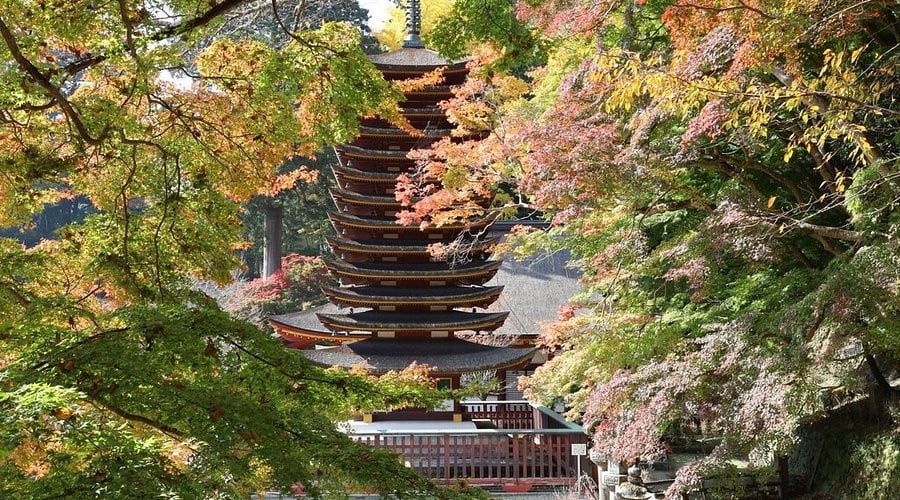
The best time to see autumn leaves at Tanzan Shrine is expected to fall between mid-November and early December 2026, as about 3,000 maple trees in the grounds turn red one after another and dress the vermilion thirteen-story pagoda in brocade.
The shrine sits high in the Tonomine mountains, so its leaves turn about one to two weeks earlier than at Nara Park in the city. That makes it a good stop early in a Kansai autumn-leaves itinerary.
Check the shrine’s official website 1-2 weeks before you go to confirm leaf conditions and the exact evening illumination dates.
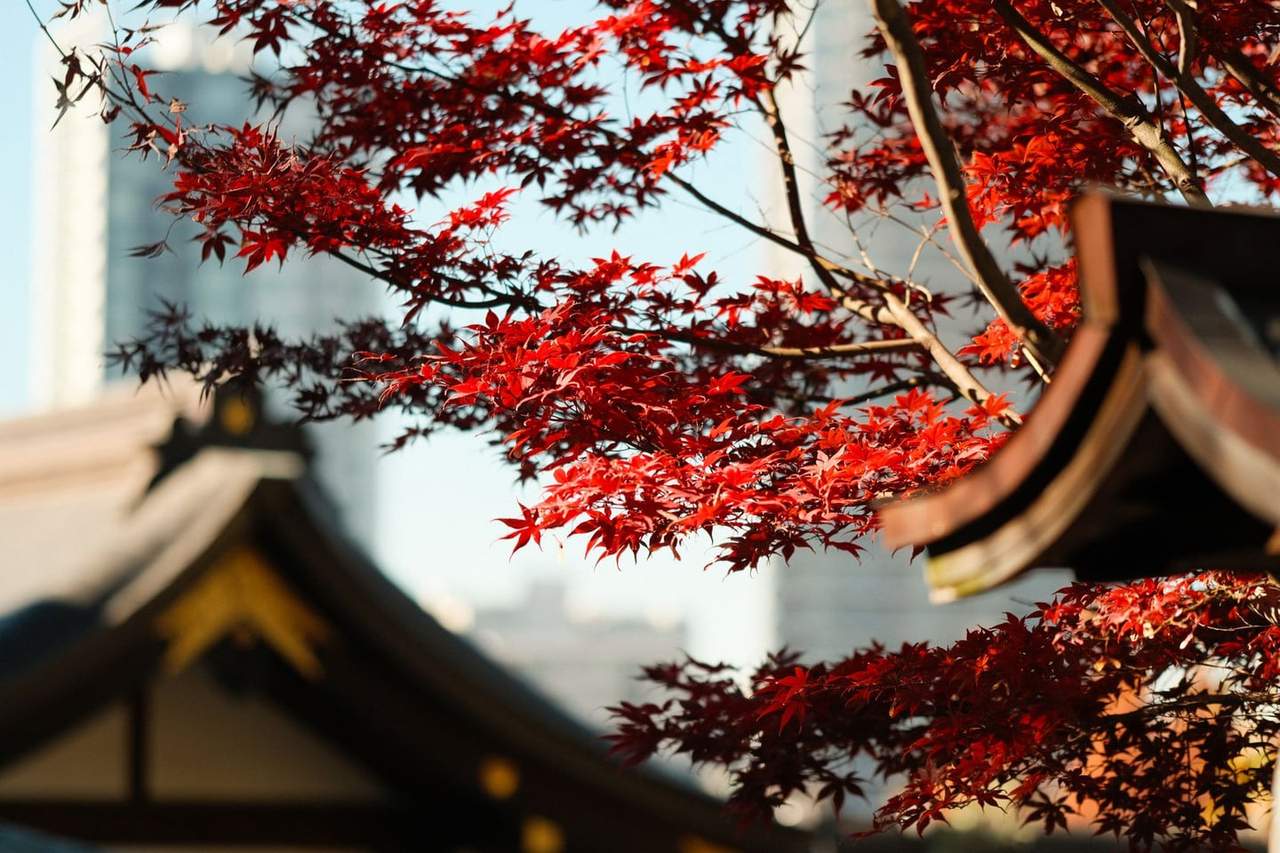

Because the Tonomine hills rise and fall, maples at different heights in the grounds turn at different speeds. Even if you miss the peak slightly, you can usually still see a layered, impressive display, one of the advantages of leaf viewing at a mountain shrine.
The Historical Importance of Tanzan Shrine: Where the Taika Reform Was Secretly Discussed
In 645, Nakatomi no Kamatari (later Fujiwara no Kamatari) and Prince Naka no Oe met secretly in the mountains here to plan the Taika Reform that changed the course of Japanese history, and the name Tanzan (talking mountain) comes from this.
The shrine enshrines Fujiwara no Kamatari and is one of the birthplaces of the Fujiwara clan. Its buildings blend shrine and temple elements, an important witness to Japan’s early fusion of Shinto and Buddhism.
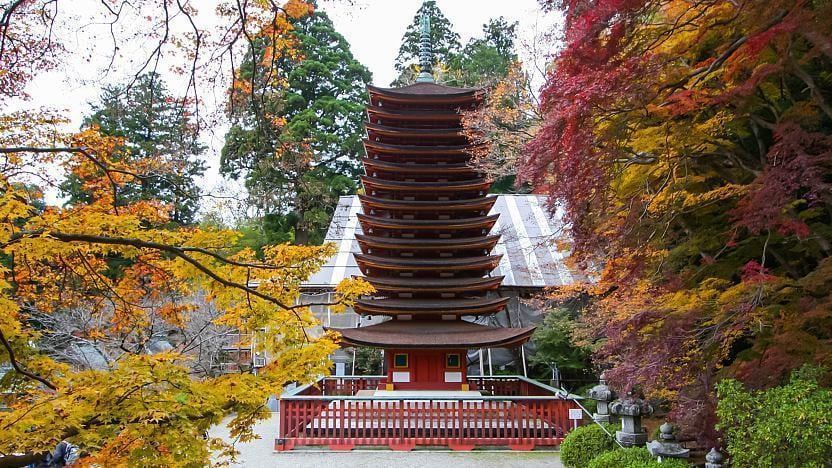
Legend says the two men held this history-changing secret talk under blooming wisteria, so the episode is also called the Talk Under the Wisteria. The shrine was founded in 678 by Kamatari’s son Jo’e, who reburied his father’s remains here and built the thirteen-story pagoda, making it a memorial to a pivotal political turning point in Japanese history.
Tips for Autumn Leaf Trips to Tanzan Shrine
⚠️ The most important tip is transport: the last bus normally leaves around 17:52, just before the evening illumination begins, so without a return plan you could be stuck on the mountain. Extra buses usually run during the illumination period, so be sure to check before you go.
The grounds are large with many steps, so wear comfortable shoes. Mountain temperatures drop sharply at night in autumn, so bring a warm jacket for the evening illumination.
Food options on the mountain are limited, so eat before you go up, or plan Miwa somen into your route after coming down.
Tanzan Shrine Autumn Leaves Transport Guide: Transferring at Sakurai Station and the Last-Bus Trap
To reach Tanzan Shrine you first travel to Sakurai Station and then transfer to a bus, and the last bus time is the most important thing to watch.How to Get to Tanzan Shrine: Transport and Last Buses at a Glance
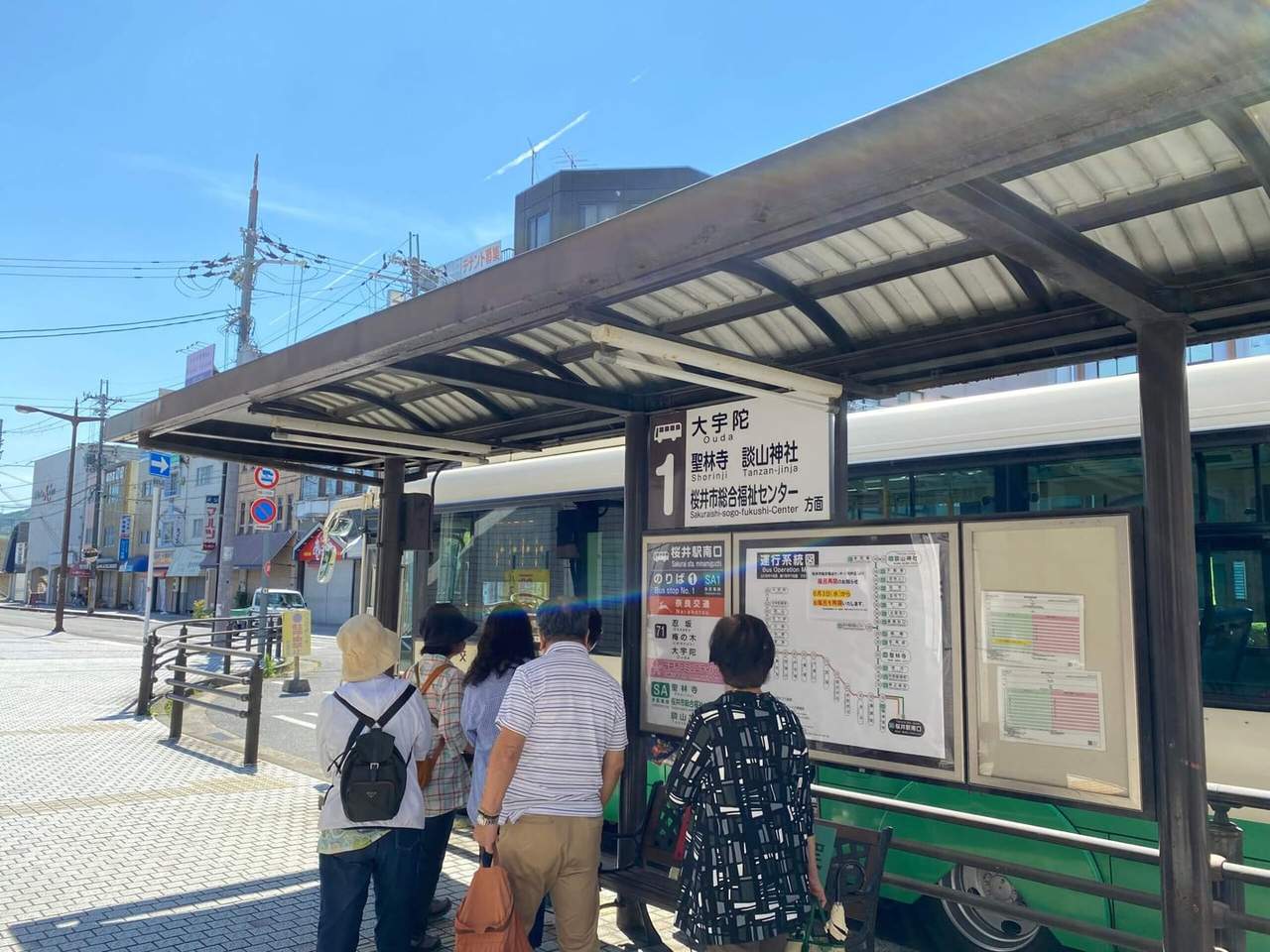
From Osaka or Kyoto, take the Kintetsu Osaka Line to Sakurai Station, then transfer outside the station to the Sakurai City community bus toward Tanzan Shrine, about 25 minutes. This is the main public transport route.
⚠️ The key trap: the last bus normally leaves around 17:52, just before the evening illumination starts. Extra buses usually run during the illumination period, so check the official website in advance. Without one, take a taxi (about ¥2,600-2,800 round trip from Sakurai Station) or drive; the grounds have 5 parking lots with about 200 spaces.
Must-Visit Autumn Leaf Spots at Tanzan Shrine: Thirteen-Story Pagoda, Evening Illumination and Nearby Sights
A Tanzan Shrine autumn trip can be planned in three layers: sights in the grounds, evening illumination and nearby sights. Here are 10 must-visit spots.Thirteen-Story Pagoda: The World’s Only Surviving Wooden Thirteen-Story Pagoda
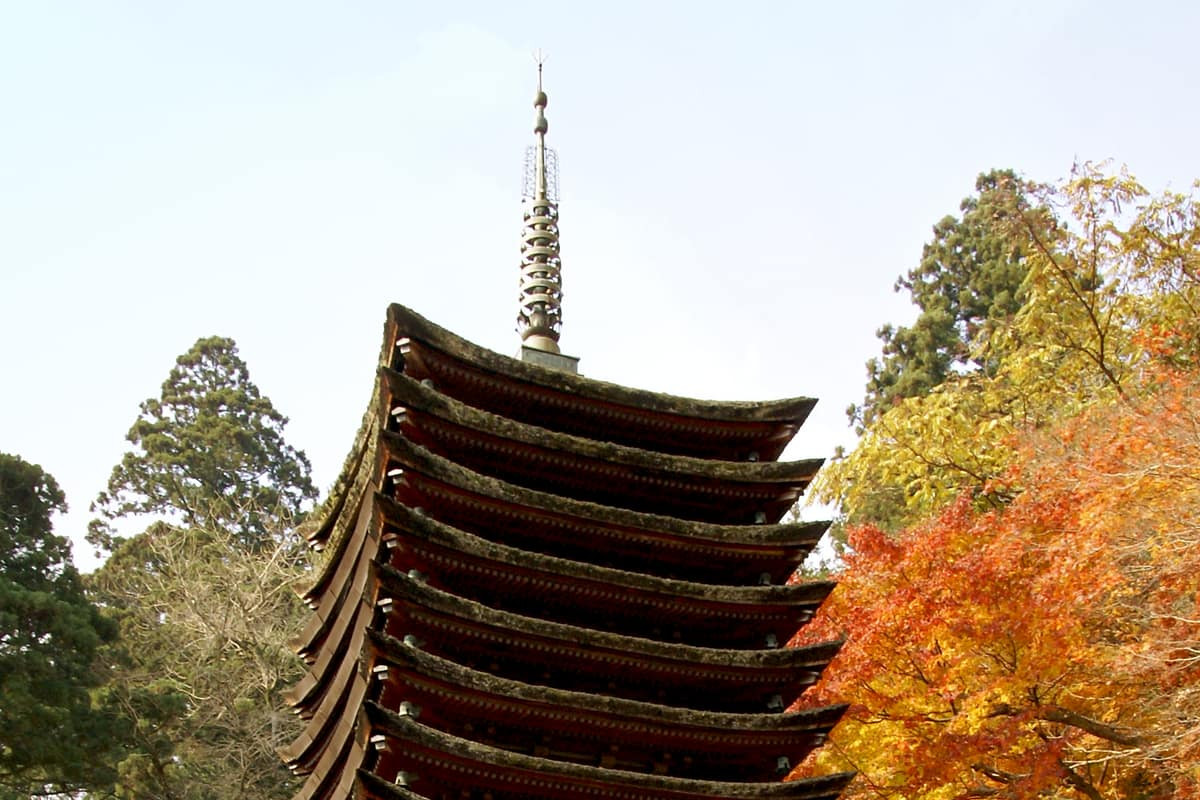
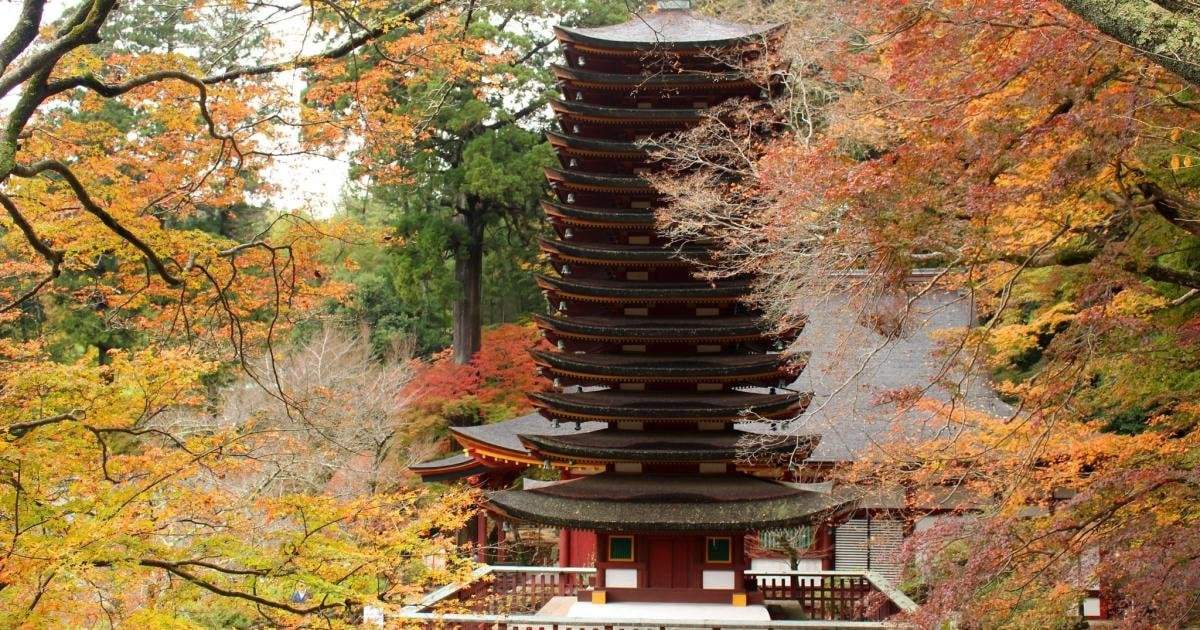
The thirteen-story pagoda is Tanzan Shrine’s best-known landmark and the only surviving wooden thirteen-story pagoda in the world, designated an Important Cultural Property. It is said to have been first built in 678 by Kamatari’s son Jo’e, and the present structure was rebuilt in the Muromachi period.
In autumn the vermilion pagoda is surrounded by about 3,000 maple trees, and the tiered eaves against red leaves make a classic Nara foliage composition. Stay 20-30 minutes to shoot from different angles.
Worship Hall and Main Hall: Vermilion Buildings Against Red Maples
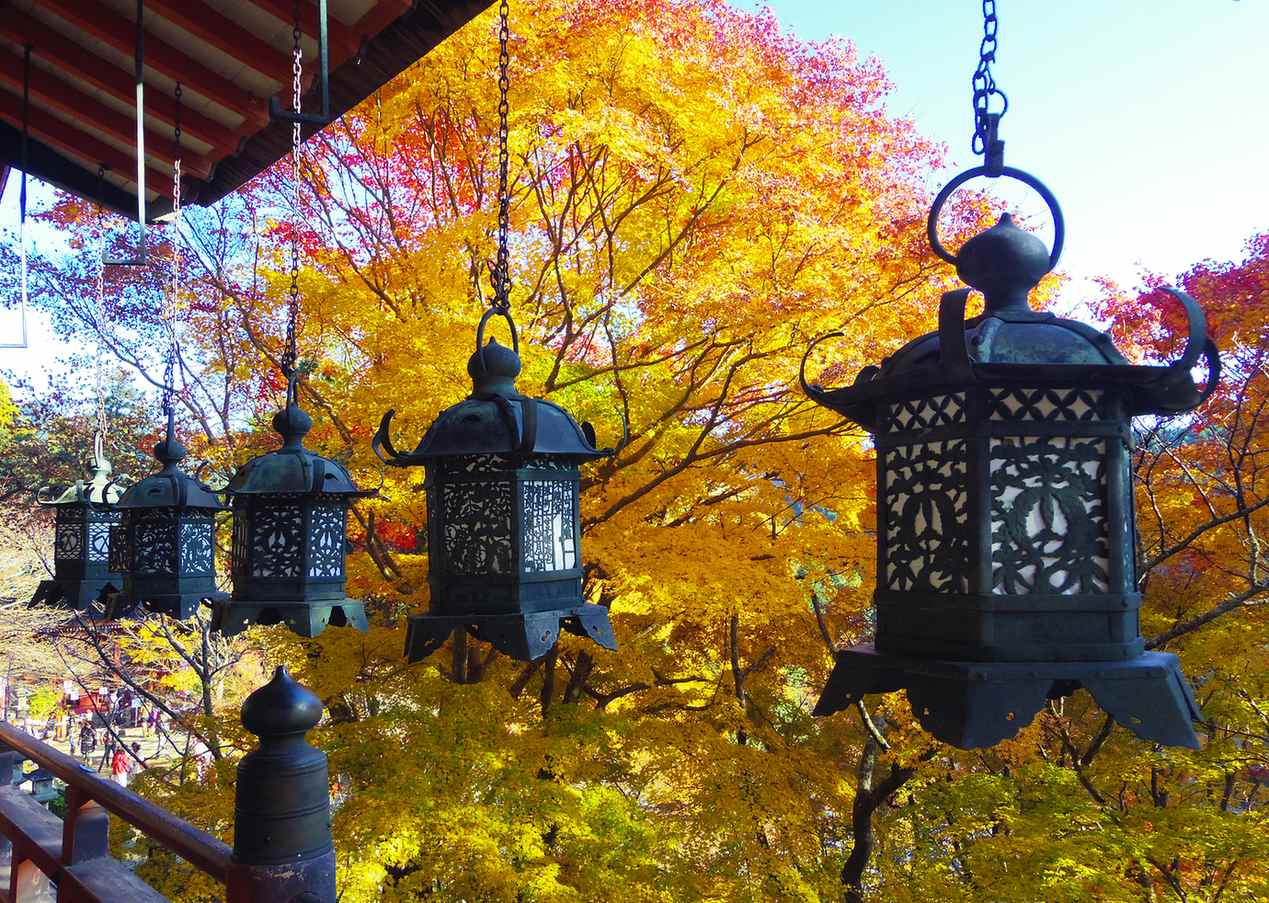
Tanzan Shrine’s worship hall and main hall are vermilion, and they look especially bright and vivid against the autumn maples, with lanterns hanging in front of the hall adding an old-fashioned atmosphere.
You can go inside the worship hall. Looking out from the corridor, maples surround the hall in layers, an angle photographers should not miss. Stay 20-30 minutes.
Koi Shrine: A Prayer Spot for the Matchmaking of Fujiwara no Kamatari and His Wife
Koi Shrine enshrines Fujiwara no Kamatari and his wife Kagami no Okimi. It has long been known for matchmaking, is a fairly popular prayer spot in the grounds, and many visitors buy matchmaking amulets here.
The shrine stands higher in the grounds, reached by a flight of stone steps that are also surrounded by maples, which adds atmosphere to an autumn visit. Stay 15-20 minutes.
Goshuin Office: Two Limited Goshuin and Matchmaking Amulets
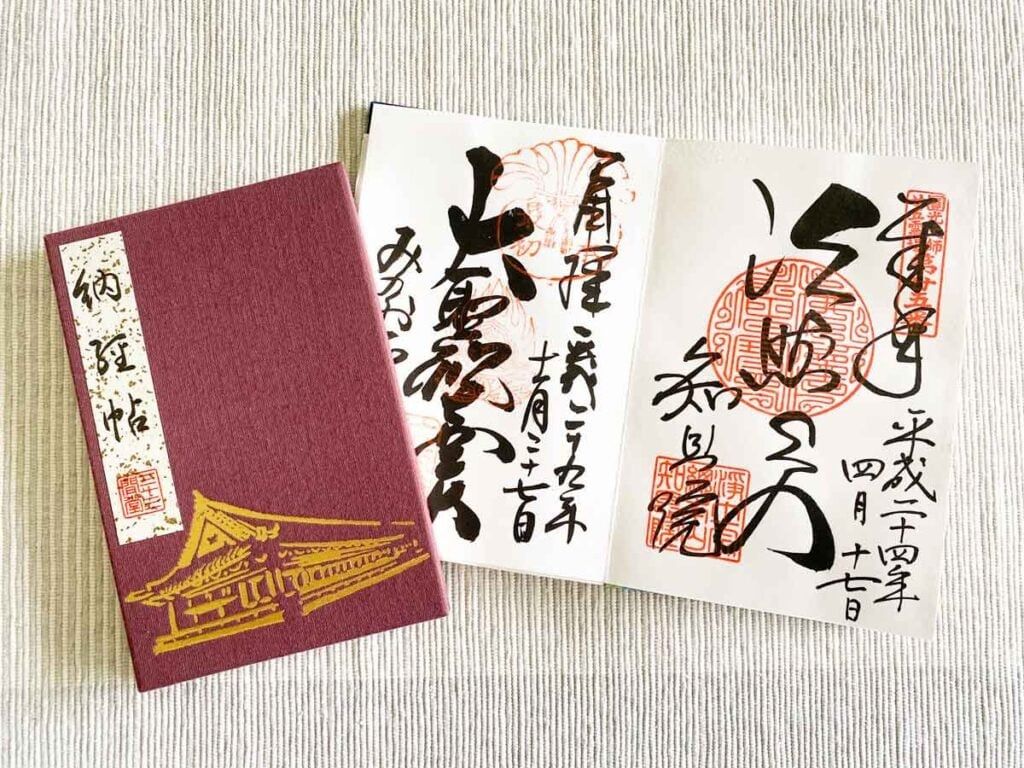
Tanzan Shrine offers two goshuin, Tanzan Myojin and Fukurokuju. The former is the divine name of the shrine’s main deity Fujiwara no Kamatari, and the latter comes from Kamatari being regarded as one of the Fukurokuju gods. The two styles are completely different, a combination goshuin collectors should get.
The office also sells matchmaking and good-luck amulets, and often releases limited seasonal items in autumn-leaf season. Stay 15-20 minutes to choose at leisure.
Stone Lanterns and Approach Path: The Most Atmospheric Angle During the Evening Illumination
The stone lanterns lining both sides of the approach path are an easily overlooked sight at Tanzan Shrine. The carvings and patterns on each lantern differ, reflecting the craftsmanship tastes of donors from different eras, and they are worth slowing down to look at.
During the evening illumination, the stone lanterns and the worship hall set off by the lights create a quiet, sacred atmosphere, the angle photographers consider the most atmospheric. Stay 20-30 minutes.
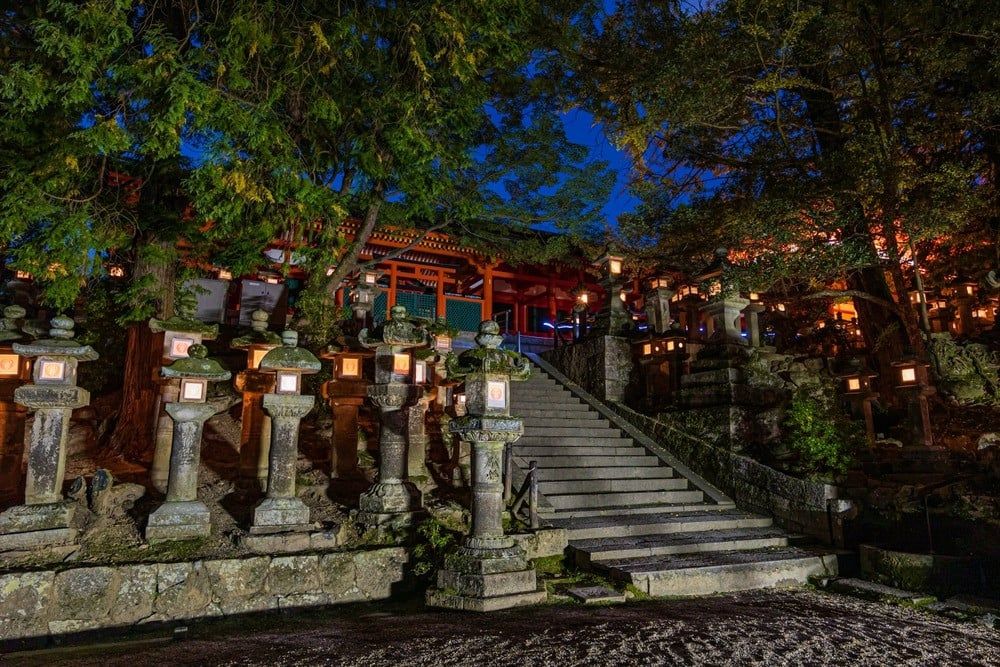
Evening Leaf Illumination: The Limited Mysterious Beauty Until the 20:00 Lights-Out
Tanzan Shrine holds an evening autumn-leaf illumination every autumn. In 2026 it is expected from mid-November to early December, with the lights on until 20:00 each day. Designed lighting on the red leaves and the vermilion pagoda creates a mysterious atmosphere completely different from daytime.
The best way is to arrive before dusk, see the daytime leaf layers first, and then experience the illumination after dark, giving you two completely different results in one trip. Stay 1-1.5 hours.
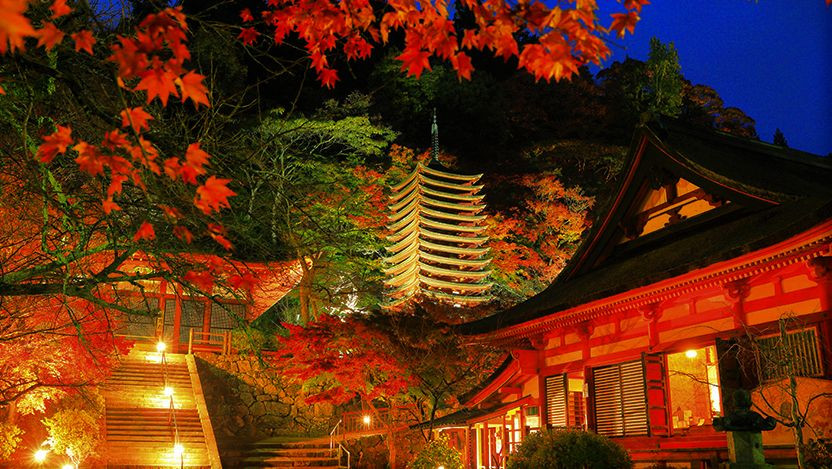
Hasedera: 399 Steps of Covered Stairway and Autumn Color at a Kannon Pilgrimage Temple
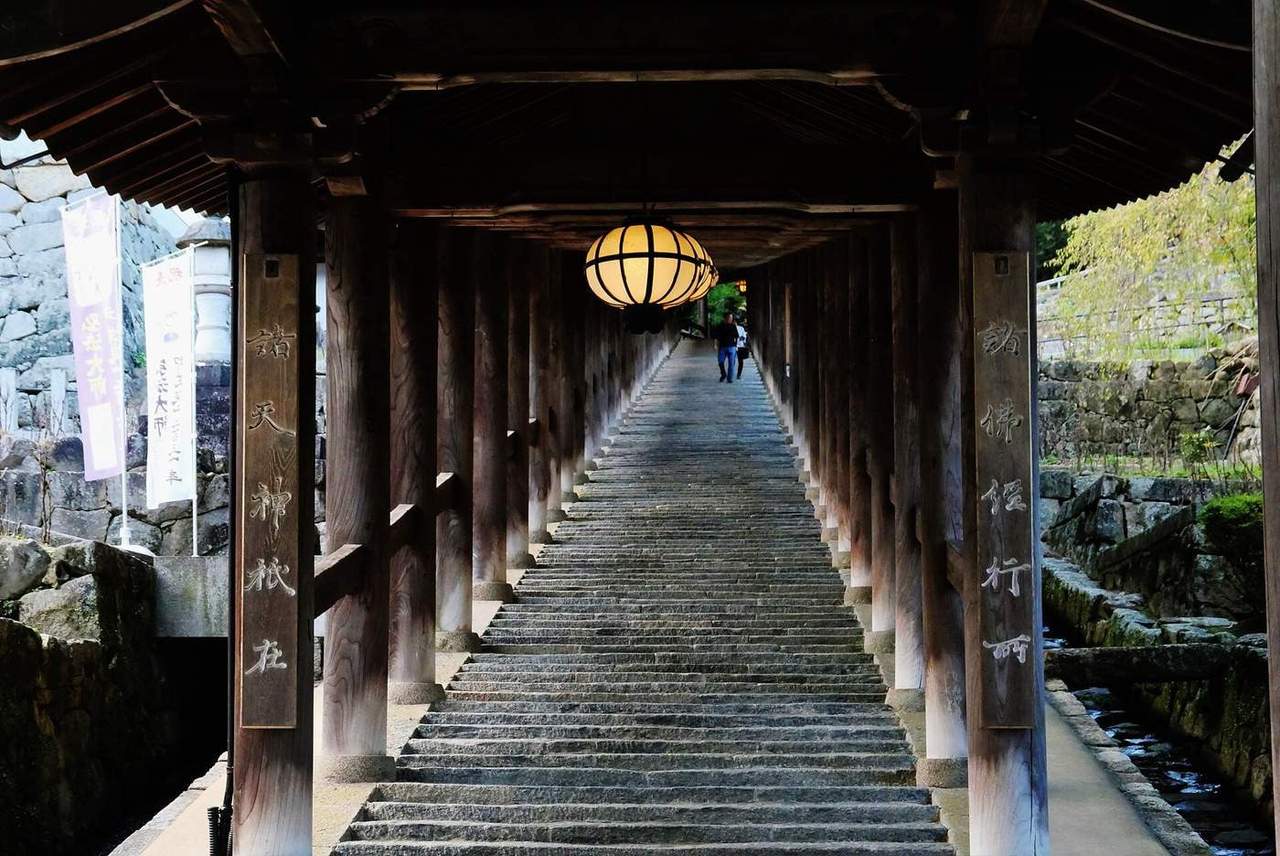
Hasedera is the sight most often paired with Tanzan Shrine. It is only 6 minutes and ¥240 by Kintetsu Osaka Line from Sakurai Station to Hase-dera Station, so transport is very convenient.
The temple’s most famous feature is the 399-step covered stairway, hung with lanterns on both sides, where in autumn light filters between the maple leaves through the gaps in the corridor. There is also an evening illumination, but the lighting is relatively restrained and aims for a tranquil mood. Stay 1.5-2 hours.
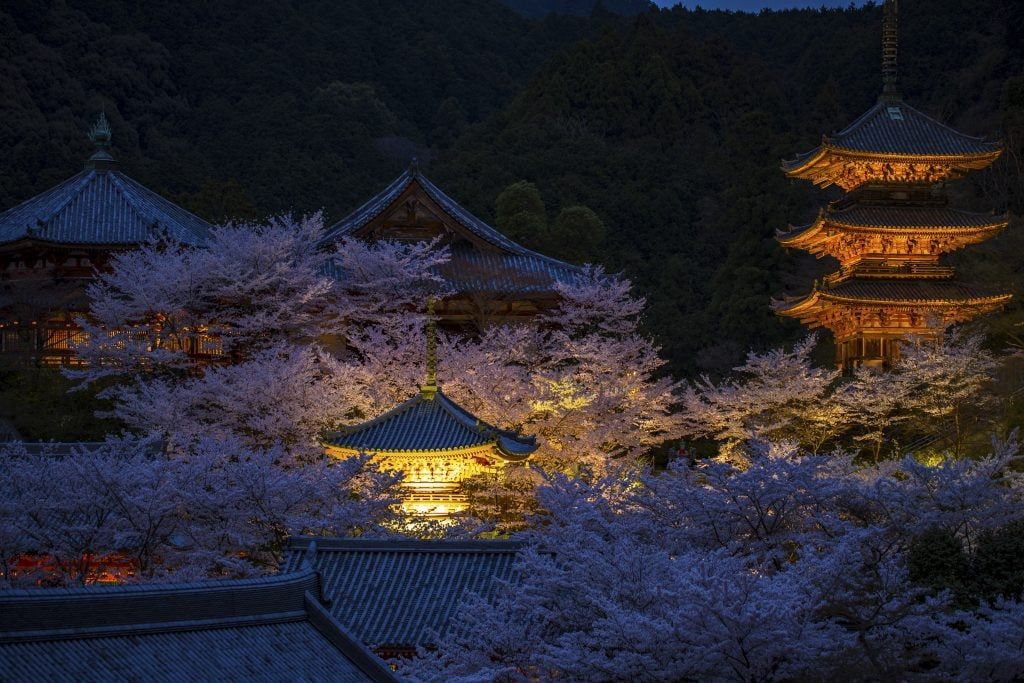
Tsubosakadera: An Alternative for Strongly Contrasted Night Leaves
Tsubosakadera is another well-known night-leaf spot in southern Nara. Compared with Hasedera, its evening illumination has stronger contrast between light and shadow, and the large Buddha and stone Buddha statues look dramatic under the lights.
A common plan is Tsubosakadera for the night leaves plus Hasedera for daytime leaves, letting one southern Nara trip show two different styles of autumn color. Stay 1-1.5 hours.
Omiwa Shrine: The Mount Miwa Faith of Japan’s Oldest Shrine
Omiwa Shrine, like Tanzan Shrine, is in Sakurai. It is one of Japan’s oldest shrines, known for its unique form with Mount Miwa itself as the object of worship and no main hall, an important place to understand Japan’s original mountain faith.
It lies right on the Sakurai Station route, so it suits the same day as Tanzan Shrine, with local Miwa somen to try on the way. Stay 1-1.5 hours.
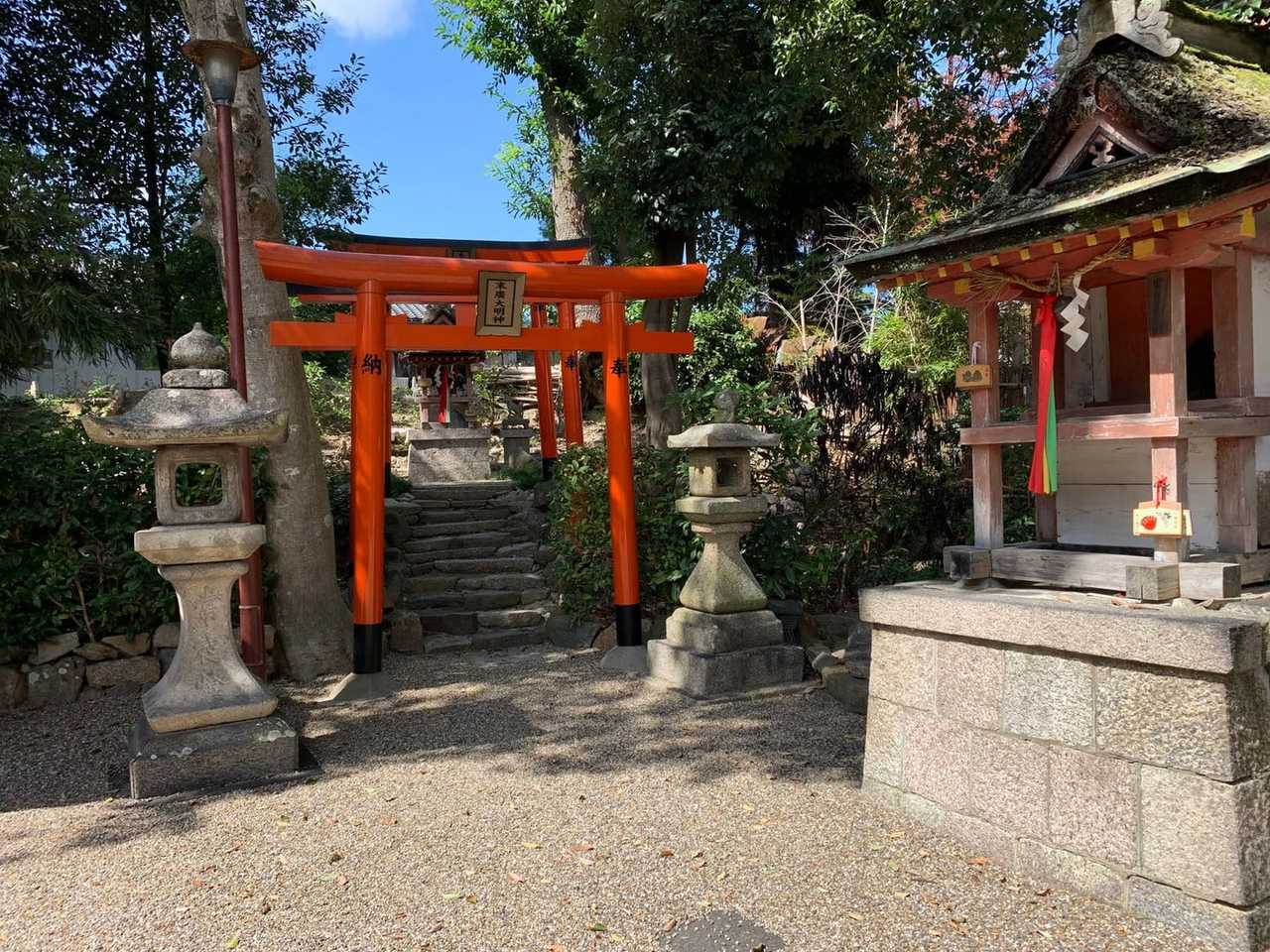
Okadera: An Asuka Village Temple for Warding Off Misfortune and Its Marble Water Basin
Okadera is in Asuka Village and has 1,300 years of history. It is Japan’s earliest temple for warding off misfortune (yakuyoke, praying to dispel disaster), and became famous on social media for its dreamy water basin filled with marbles.
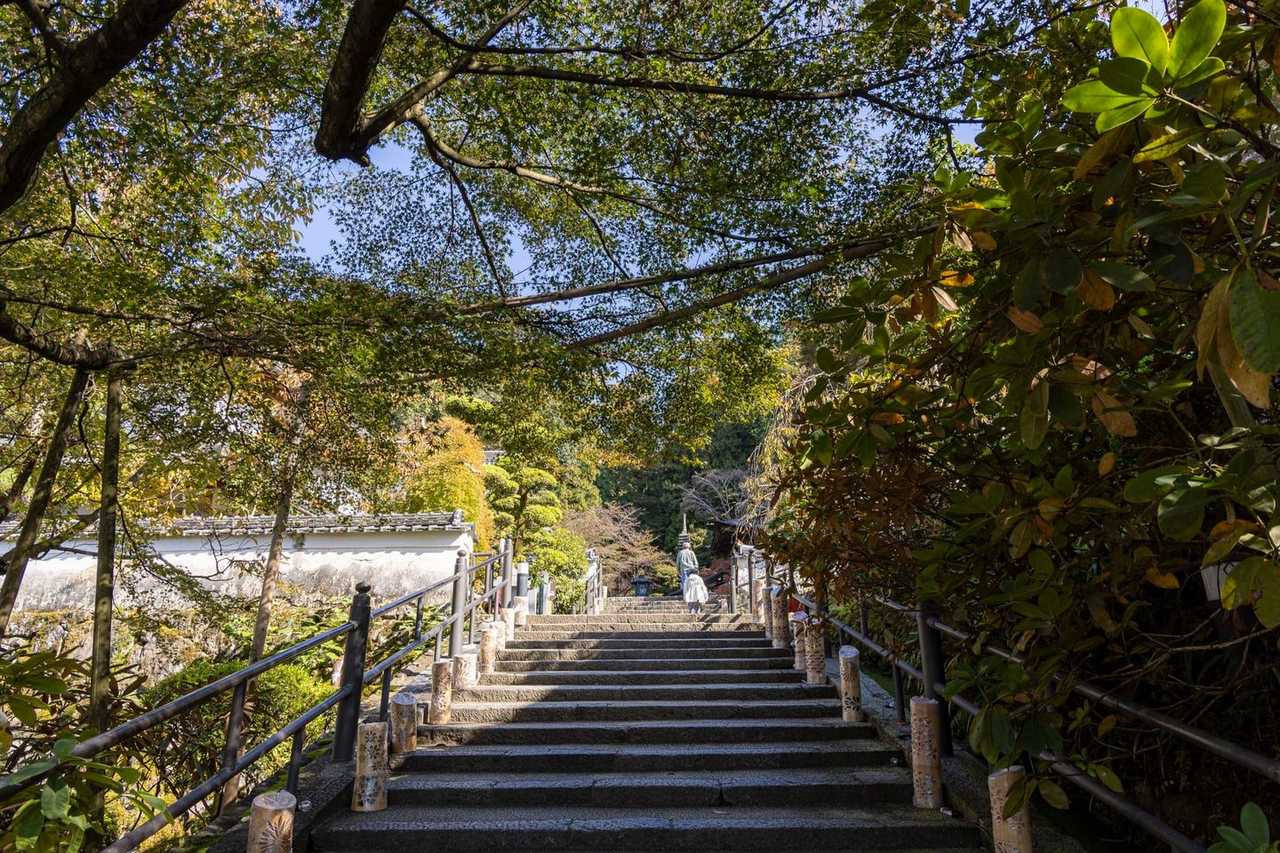
The best time for leaves is late November, and the stairs surrounded by maples are a popular composition. If you drive, note that unofficial lots beside the main road call out to visitors and charge ¥500, so set your navigation straight to the official parking lot. Stay 1 hour.
Food Near Tanzan Shrine: Miwa Somen and Nara Local Dishes
Because food on the mountain is limited, here are 6 local foods you can fit into your route.Miwa Somen: The Best Fix for Poor Food on the Mountain
Tanzan Shrine is on a mountain with quite limited dining options, so many experienced visitors plan Miwa somen into their route and eat in Sakurai city after coming down.
The Miwa area is one of the birthplaces of Japanese somen, with thin, springy noodles. In autumn and winter you can also order warm nyumen to warm up, the most practical meal plan for this trip.

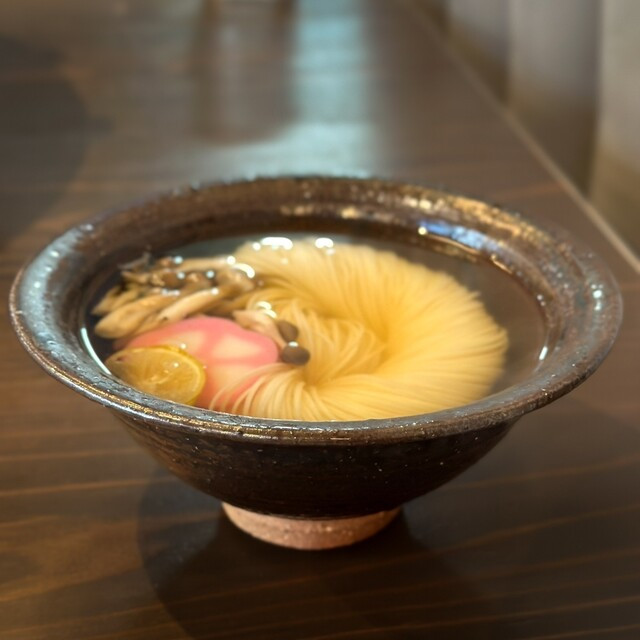
- 🍜 Must-order: Miwa somen, nyumen (warm somen)
- 💰 Price: about ¥800-1,500
- 🚉 Access: about 5 minutes’ walk from JR Miwa Station, or around Sakurai Station
Yoshitsune Nabe: Tonomine Kanko Hotel
Tonomine Kanko Hotel stands near Tanzan Shrine and is one of the few places on the mountain for a proper meal. Its signature dish is the uniquely shaped Yoshitsune nabe.
The Yoshitsune nabe pot has a grill plate in the center and a soup moat around it, so you can enjoy both grilling and hot pot at once. It is said to originate from the camp cookware of Minamoto no Yoshitsune on the march, which makes it both a talking point and filling.

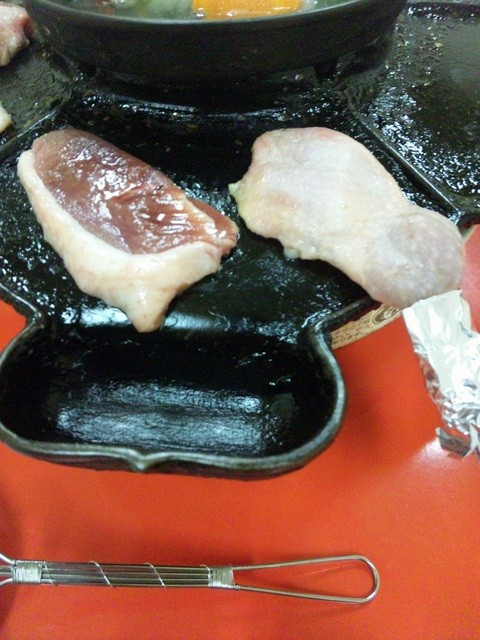
- 🍲 Must-order: Yoshitsune nabe
- 💰 Price: about ¥2,500-4,500
- 🚉 Access: about 5 minutes’ walk from Tanzan Shrine
Kakinoha Sushi: Nara’s Most Representative Local Specialty
Kakinoha sushi is a Nara local dish passed down for hundreds of years, in which vinegared rice and mackerel or salmon are wrapped in persimmon leaves and aged, and the fresh scent of the leaves soaks into the rice for a unique flavor.
It is easy to carry and does not spoil quickly, so it is good to buy as trail food for the mountain trip, and you can find it at Sakurai Station or other Kintetsu stations.

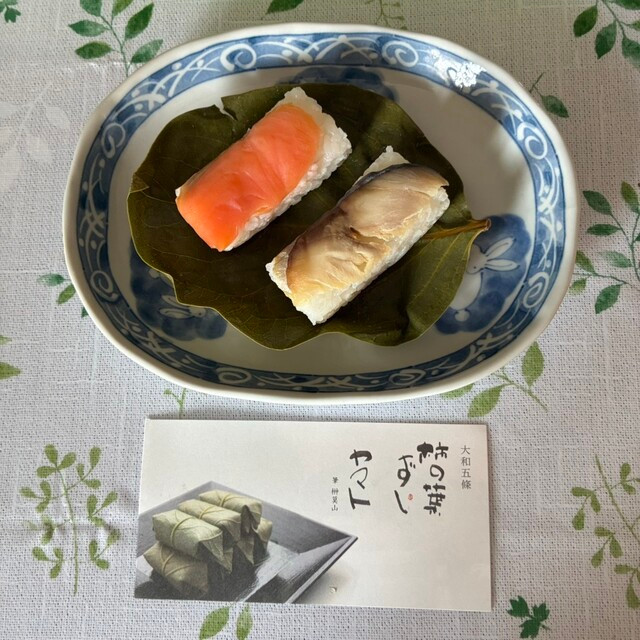
- 🍣 Must-order: Mackerel kakinoha sushi
- 💰 Price: about ¥800-1,800
- 🚉 Access: shops at Sakurai Station and Kintetsu stations
Kusa Mochi: Freshly Made Wagashi on the Hasedera Approach
Many shops along the Hasedera approach sell freshly made kusa mochi, with a strong mugwort aroma, a soft chewy skin and red bean filling, the classic sweet to eat while walking after visiting Hasedera.
Some shops offer a grilled version, where the slightly charred, crisp skin contrasts nicely with the soft inside, well worth trying.

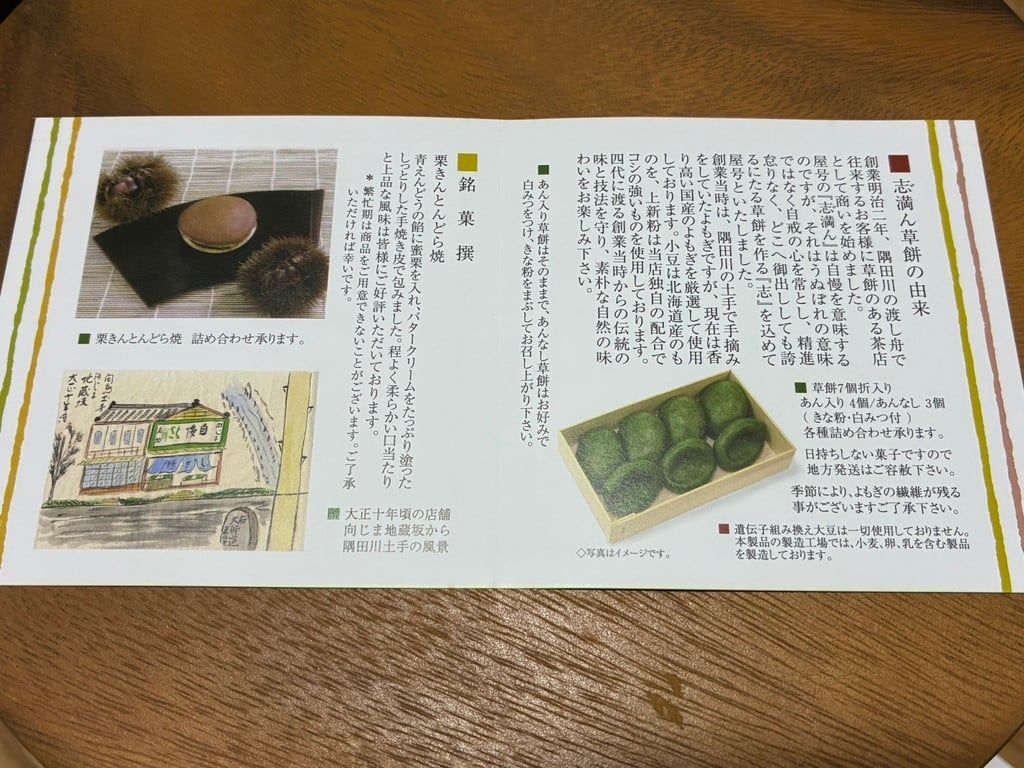
- 🍡 Must-order: Freshly grilled kusa mochi
- 💰 Price: about ¥150-400 each
- 🚉 Access: along the approach, about 15 minutes’ walk from Hase-dera Station
Nara Chameshi: An Old-Style Meal Passed Down from Todaiji Monks
Nara chameshi is a traditional dish of rice cooked in roasted tea or sencha. It is said to come from the daily meals of monks at Todaiji and Kofukuji, and is one of the origins of Japanese tea-over-rice dishes.
The tea aroma is elegant and the flavor light, and it is often served in a set meal with local pickles and soup, suiting visitors who want to taste Nara’s historical flavors.
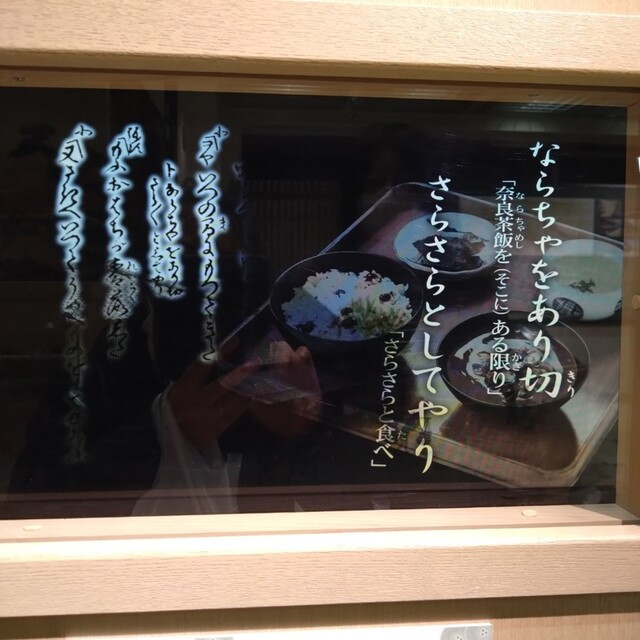

- 🍚 Must-order: Nara chameshi set meal
- 💰 Price: about ¥1,200-2,500
- 🚉 Access: Nara city, around Kintetsu Nara Station
Persimmon Sweets: Nara’s Autumn-Only Fruit Specialty
Nara Prefecture is one of Japan’s main persimmon-producing areas, and autumn is the harvest season. City and station shops offer seasonal sweets such as persimmon parfaits, persimmon yokan and dried persimmons.
Dried persimmons (hoshigaki) are extremely sweet and keep well, an autumn souvenir that suits taking home with you.


- 🍑 Must-order: Persimmon yokan, dried persimmons
- 💰 Price: about ¥500-2,000
- 🚉 Access: shops around Sakurai Station and Kintetsu Nara Station
Tanzan Shrine Autumn Leaves Itinerary Suggestions and Ticket Information
When planning a Tanzan Shrine autumn trip, your choice of tickets and transport directly affects whether you can see the evening illumination.Kansai Kintetsu Rail Pass: A Money-Saving Tool for Southern Nara
Getting to Tanzan Shrine means taking Kintetsu to Sakurai Station and then a bus. If you also plan to visit Hasedera, Omiwa Shrine and Nara city, the Kansai Kintetsu Rail Pass is good value.
The pass comes in versions such as 1-day, 2-day, 5-day and 5-day Plus, and 5-day Plus also includes buses in designated areas, so choose the plan that best fits your trip length and area.


Tanzan Shrine Admission: ¥700 from 2026
Adult admission to Tanzan Shrine is adjusted to ¥700 from April 1, 2026. Reception hours are 8:30-16:00 (last admission 16:30), and the evening illumination period has separate special visiting hours.
Tickets are bought on the spot at the ticket office at the entrance and need no advance booking, but on weekends in peak autumn-leaf season lines are longer, so arrive early.

The ticket covers all the main buildings in the grounds, including the area around the thirteen-story pagoda and the corridor of the worship hall and main hall. The grounds are large with sights close together, so the ticket is good value; allow at least one to one and a half hours to look around.
During the evening illumination period the visit is a special session and the daytime ticket cannot be reused. If you plan to visit both day and night, buy separate tickets and budget for them.
Hasedera Admission: The Kannon Faith Experience of the 399-Step Stairway
Hasedera is the head temple of the Buzan school of Shingon Buddhism. Admission gives access to the main areas, including the 399-step covered stairway, the main hall stage and the five-story pagoda, and it is the best paid sight to pair with Tanzan Shrine.
During certain periods the principal image, the Eleven-Faced Kannon, is opened for special admission (extra fee), letting you worship the ten-meter statue up close. Check the official website before you go.


The covered stairway is about 200 meters long with 399 steps, hung with lanterns on both sides, Hasedera’s most iconic scene. The slope is gentle and each step is low, so visitors of average fitness can climb it easily and need not be put off by the number of steps.
The temple also has a five-story pagoda and a main hall stage, and the view from the stage takes in the whole valley of autumn color, a viewpoint not to be missed.
Southern Nara Chartered Car Day Trips: A Fix for the Last-Bus Problem
Because the last bus from Tanzan Shrine leaves at 17:52, just before the evening illumination starts, a chartered car is the easiest fix for visitors who want to see the night leaves without driving.
There are charter tours departing from Nara or Osaka that link Tanzan Shrine, Hasedera and Tsubosakadera freely, about 8-10 hours in total, and they suit groups of three or more who can split the cost.
Another advantage of a charter is that you can leave your luggage in the car instead of carrying it up mountain paths. If you travel with older relatives or children, this matters more than saving money in Nara’s southern mountains, where there are many steps and infrequent transport.
Where to Stay Near Tanzan Shrine
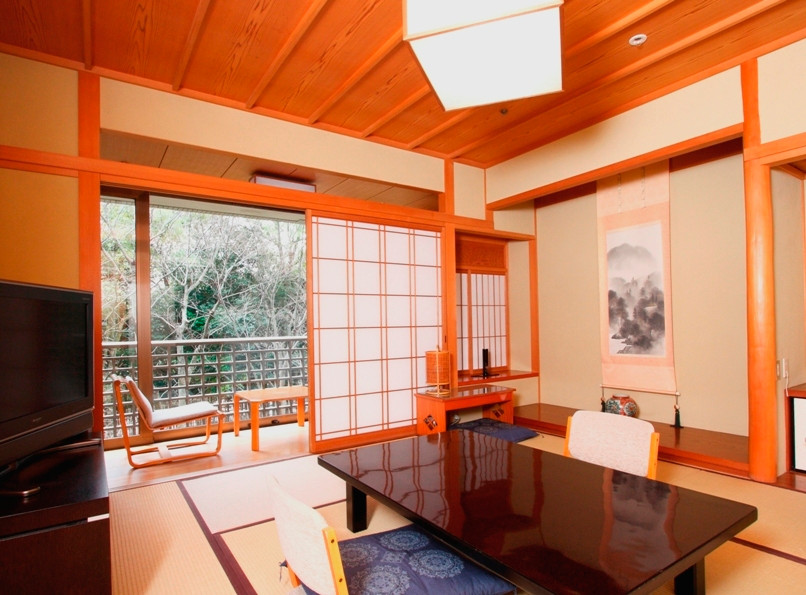
If you want a slower pace on your autumn-leaf trip, staying one night is more relaxed than a same-day round trip.
Choosing Between Sakurai and Central Nara
If you plan to see the evening illumination, staying around Sakurai Station is the most practical choice. You avoid a long trip after coming down the mountain, and the next day you can easily visit Omiwa Shrine and Hasedera to finish southern Nara in one go.
If you want more lodging choices and also plan classic sights such as Todaiji and Nara Park, stay around Kintetsu Nara Station or JR Nara Station, where business hotels and hot-spring hotels are plentiful, then take Kintetsu to and from Sakurai, about 30 minutes each way.
The Kintetsu ride between the two places takes about 30 minutes with frequent trains, so you can still adjust which side to stay on even if you decide on the same day.
Further Reading: Kansai Autumn Leaves Roundup

Tanzan Shrine Autumn Leaves 2026 FAQ
Here are the Tanzan Shrine autumn-leaf questions readers ask most often.Q1: When Is the Best Time to See Autumn Leaves at Tanzan Shrine in 2026?
The best viewing period is expected to run from mid-November to early December 2026, as about 3,000 maple trees in the grounds turn red one after another. Actual dates depend on that year’s weather, so check the shrine’s official website before you go.
Q2: How Much Is Tanzan Shrine Admission? What Are the Opening Hours?
Adult admission is adjusted to ¥700 from April 1, 2026. Reception hours are 8:30-16:00 (last admission 16:30). The evening illumination period has separate special visiting hours, with the lights on until 20:00.
Q3: What Time Is the Last Bus? Will I Miss the Evening Illumination?
The last bus normally leaves around 17:52, just before the evening illumination starts. However, extra buses usually run during the illumination period, so check the official website for that year’s schedule before you go, or drive or book a taxi (about ¥2,600-2,800).
Q4: Is Tanzan Shrine a Half-Day or Full-Day Trip?
Tanzan Shrine is not a place you drop into on the way but a destination you travel to on purpose. Allow at least half a day including round-trip transport, and a full day is more relaxed if you add Hasedera or Omiwa Shrine.
Q5: Which Goshuin Can I Collect at Tanzan Shrine?
Tanzan Shrine offers two goshuin, Tanzan Myojin and Fukurokuju. The former is the divine name of the main deity Fujiwara no Kamatari, and the latter comes from the belief that Kamatari is regarded as the god Fukurokuju. You can collect both.
Q6: Any Tips for Photographing the Evening Illumination?
Arrive before dusk, photograph the daytime leaf layers first, and then shoot the illumination after dark to get two sets of photos in one trip. Tripods are allowed in some less crowded areas, but avoid the main approach path and watch the height differences on the stone steps.
Q7: Which Other Sights Can I Visit on the Same Trip?
Hasedera (6 minutes from Sakurai by Kintetsu) and Omiwa Shrine (also in Sakurai) are the best matches, and you can also add Tsubosakadera for night leaves. There is no direct public transport between Ishibutai Kofun and Tanzan Shrine, and Muroji goes in a different direction, so neither is recommended on the same day.