In this guide: autumn leaves routes around Shimogamo Shrine, Kyoto Gyoen, Nijo Castle and Kyoto Station
William has put together seven autumn leaves spots in central Kyoto: Tadasu no Mori at Shimogamo Shrine, Kyoto Gyoen, Nijo Castle, Nishi Honganji, Higashi Honganji, Shosei-en and To-ji. All are reachable by subway and on foot.
Kyoto Gyoen and Nishi Honganji are mainly about ginkgo. To-ji and Nijo Castle have evening illumination in autumn 2026, and Higashi Honganji and Shosei-en host the NAKED GARDEN NIGHTS light event.
2026 Peak Timing: Central Kyoto Lags Behind the Mountains and Higashiyama
A private weather company’s first forecast, issued September 13, puts Kyoto’s peak at about December 11 for maple (momiji) and about November 27 for ginkgo. These are citywide reference values, not forecasts for single spots.
Maples on the city’s flat ground usually turn later than those in the mountains and Higashiyama. Ginkgo turns before maple, so late November is for ginkgo and early December is for red leaves.
Route Planning: Two Stages Starting from Kyoto Station
Nishi Honganji, Higashi Honganji and Shosei-en are within walking distance north of Kyoto Station. To-ji is southwest of the station: take the Kintetsu Kyoto Line one stop from Kyoto Station to To-ji Station.
Shimogamo Shrine and Kyoto Gyoen are in the north of the city, and Nijo Castle is on the west side. Split the trip into a “around the station” day and a “north” day. If you want to see the evening illuminations, put To-ji or Nijo Castle last.
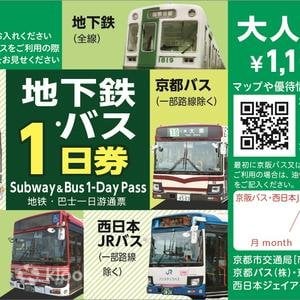
Kyoto City Autumn Leaves Transport: How to Ride the Subway, Keihan and Kintetsu
How to Get to the Seven Autumn Leaves Spots at a Glance
The nearest stations are listed below. In the city, the subway plus walking links the spots together.
- Shimogamo Shrine: about 12 minutes on foot from Demachiyanagi Station on the Keihan Line.
- Kyoto Gyoen: within walking distance of Imadegawa Station or Marutamachi Station on the Karasuma Subway Line.
- Nijo Castle: Nijojo-mae Station on the Tozai Subway Line.
- To-ji: To-ji Station on the Kintetsu Kyoto Line, one stop from Kyoto Station (limited express trains do not stop there).
- Nishi Honganji, Higashi Honganji and Shosei-en: within walking distance north of Kyoto Station, so you can link them on foot.

Kyoto City Autumn Leaves Spots: Shimogamo Shrine, Kyoto Gyoen and on to To-ji
Shimogamo Shrine: The Red-Leaf Approach Path of Tadasu no Mori
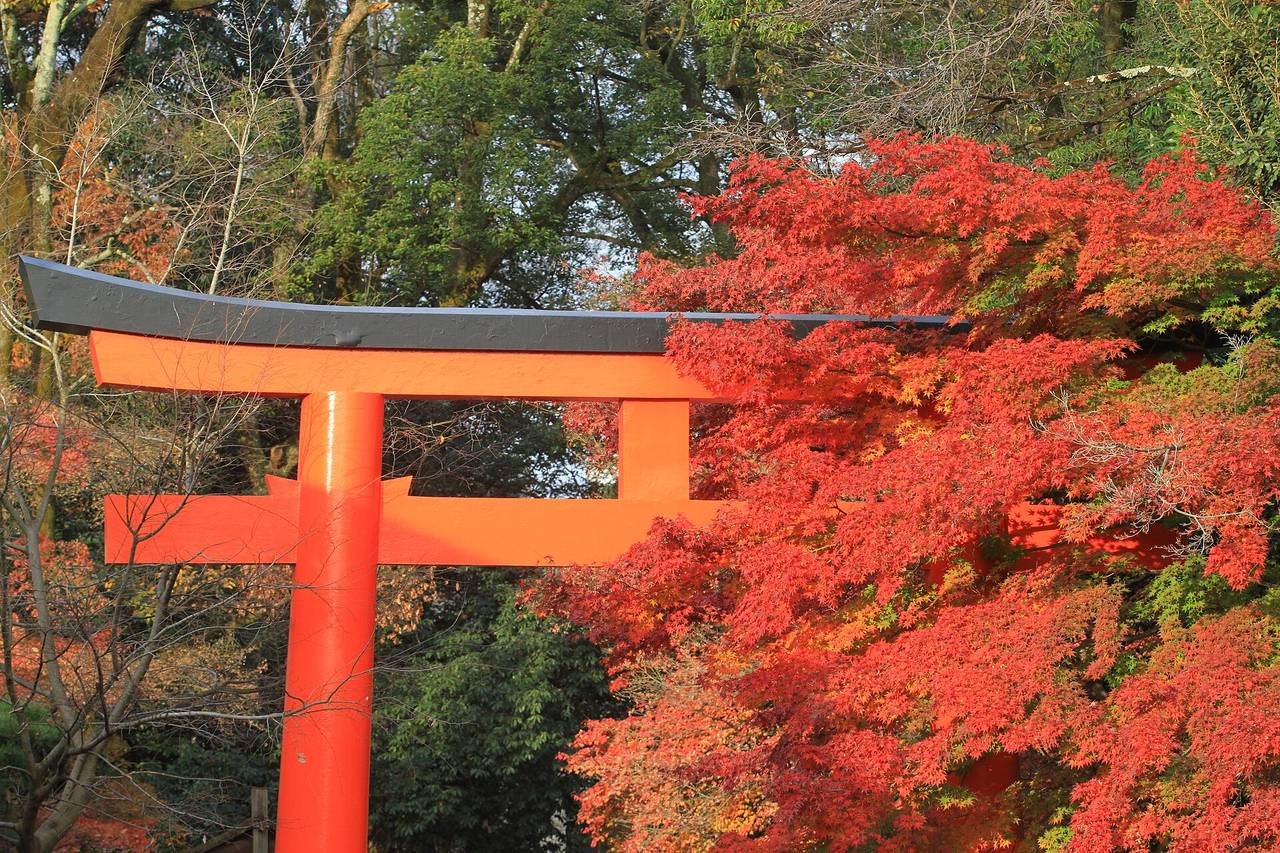
Shimogamo (Kamomioya) Shrine is a World Heritage site; Tadasu no Mori in front is a well-preserved primeval forest. Past the south torii, trees form a green tunnel. Maples redden in late autumn; the stretch by Semi no Ogawa suits a slow walk.
The color in Tadasu no Mori follows the citywide forecast (see the timing section above). If you arrive by late November, see the ginkgo at Kyoto Gyoen and Nishi Honganji first, then return to Tadasu no Mori for the maples.
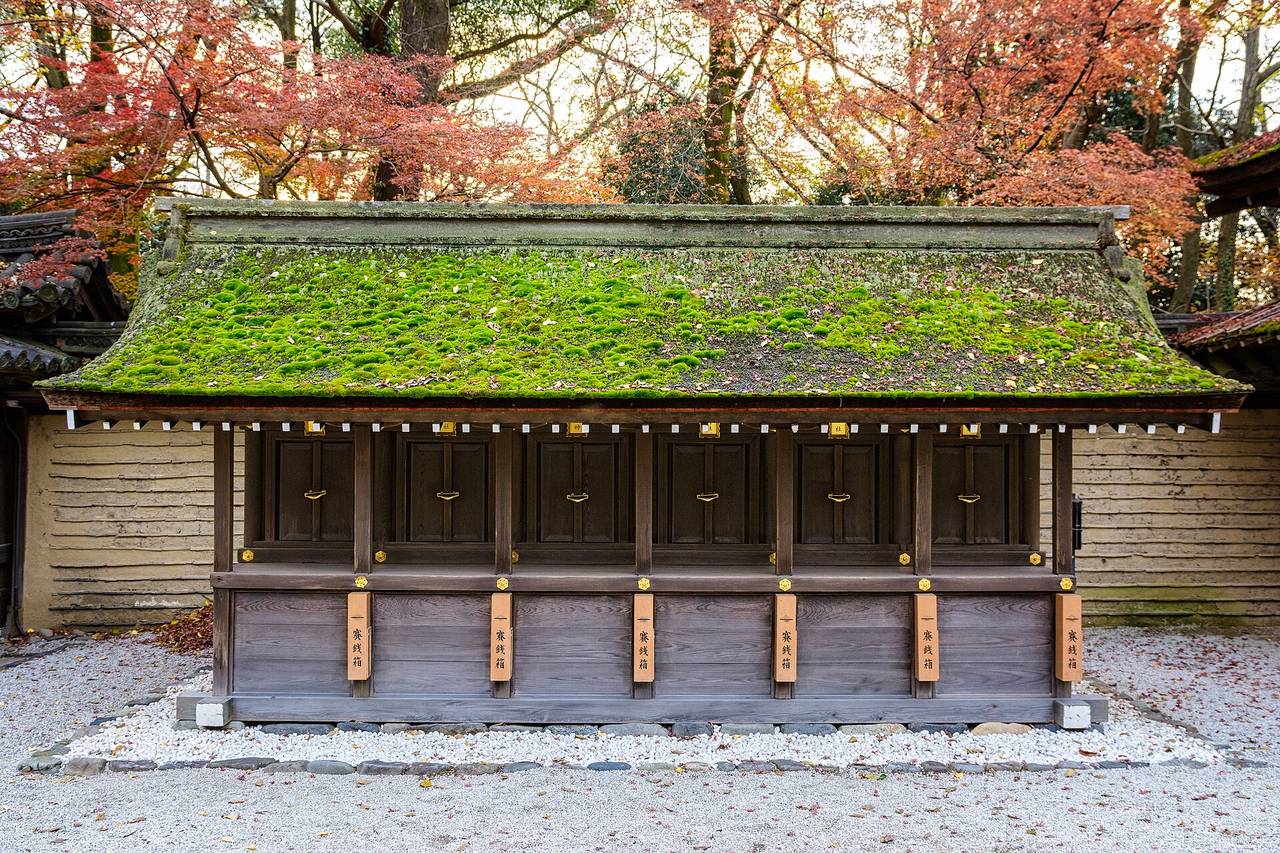
Shimogamo Shrine stands where the Kamo and Takano rivers meet. Tadasu no Mori holds trees about 600 years old, and in peak season the branches over the approach form a canopy of red and yellow. The Mitarashi River running through the forest reflects the colors, and its banks are good for photos. Peak color usually falls in early to mid December.

- 🕘 Opening hours: grounds 6:30-17:00; Tadasu no Mori is open at all hours
- 🎫 Admission: free
- 🚉 Access: about 12 minutes on foot from Demachiyanagi Station on the Keihan Line

Kyoto Gyoen: A Free National Garden with About 20 Ginkgo Trees
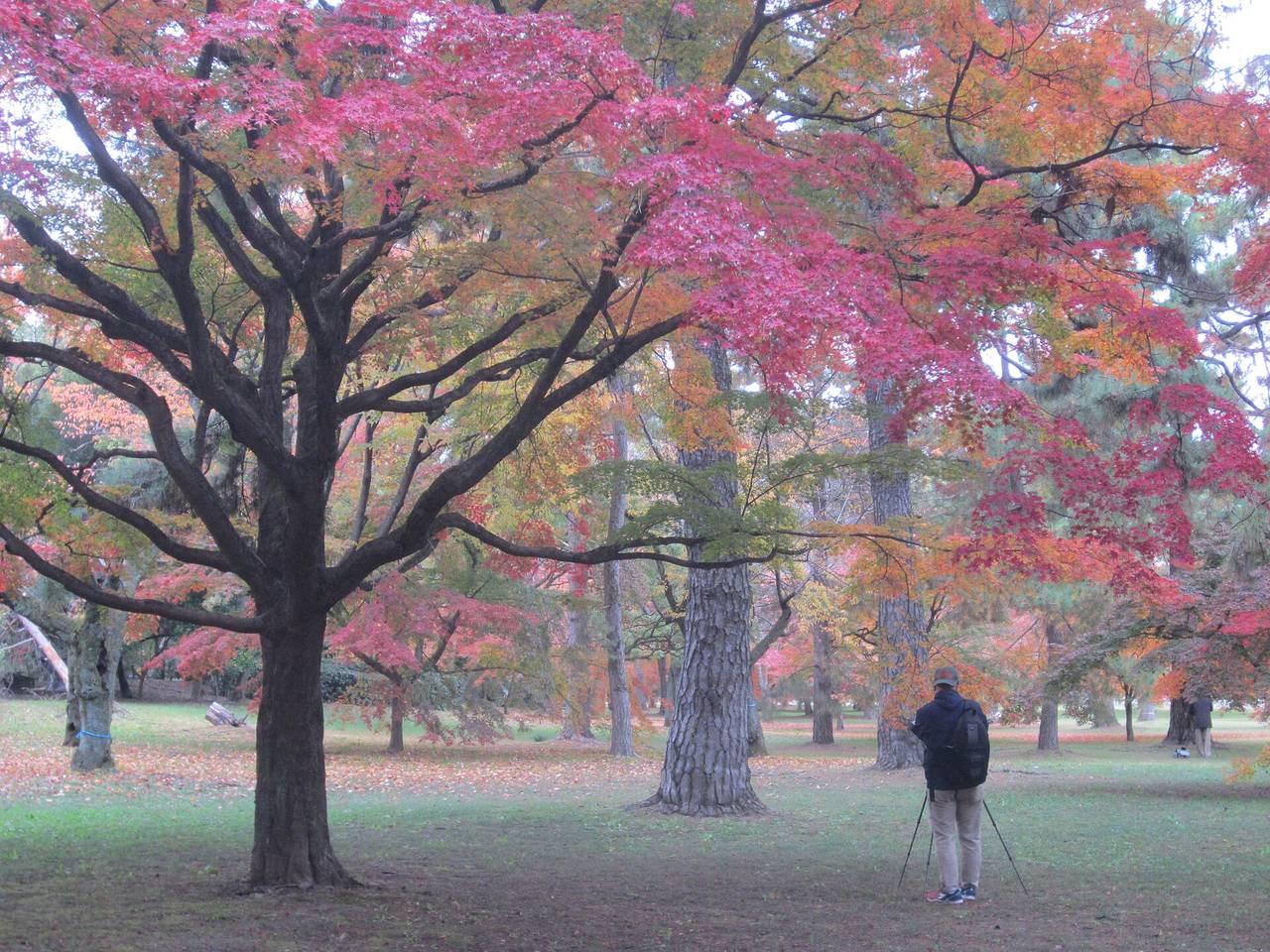
Kyoto Gyoen is the national garden around the Kyoto Imperial Palace, managed by the Ministry of the Environment. About 20 large ginkgo trees drop yellow leaves along the paths. It is the most accessible place in central Kyoto for fall foliage.
The Kan’in-no-miya Residence Ruins Exhibition Hall in the garden is free to enter, so you can stop in for a rest when you need a break.
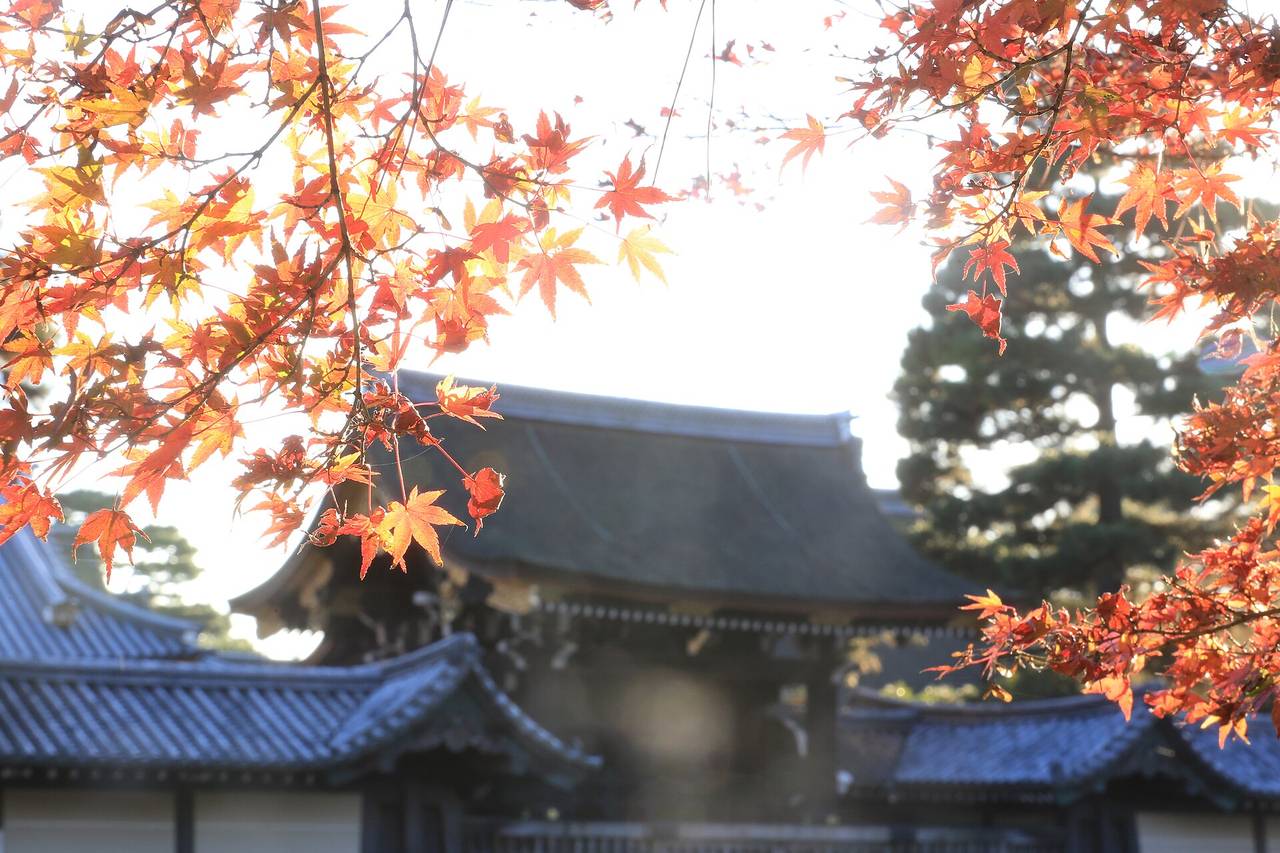
Kyoto Gyoen covers about 65 hectares, roughly 700 m east to west and 1,300 m north to south. The Ministry of the Environment says color starts in early November and peaks from late November to mid December. Around Kujo Pond, red and yellow leaves appear together, and Shuisui-tei overlooks the pond. Large ginkgo trees are scattered around the park.
- 🕘 Garden hours: open 24 hours daily
- 🎫 Admission: free; Shusui-tei charges a separate fee, ¥300 for high school students and older
- 🏛️ Kan’in-no-miya Residence Ruins Exhibition Hall: 9:00-16:30, closed Mondays, free to enter
- 🚉 Access: take the subway to Imadegawa or Marutamachi Station and walk
Nijo Castle: A World Heritage Site with a Pond Garden and Evening Illumination
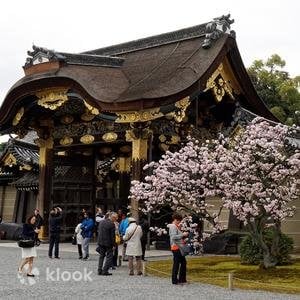
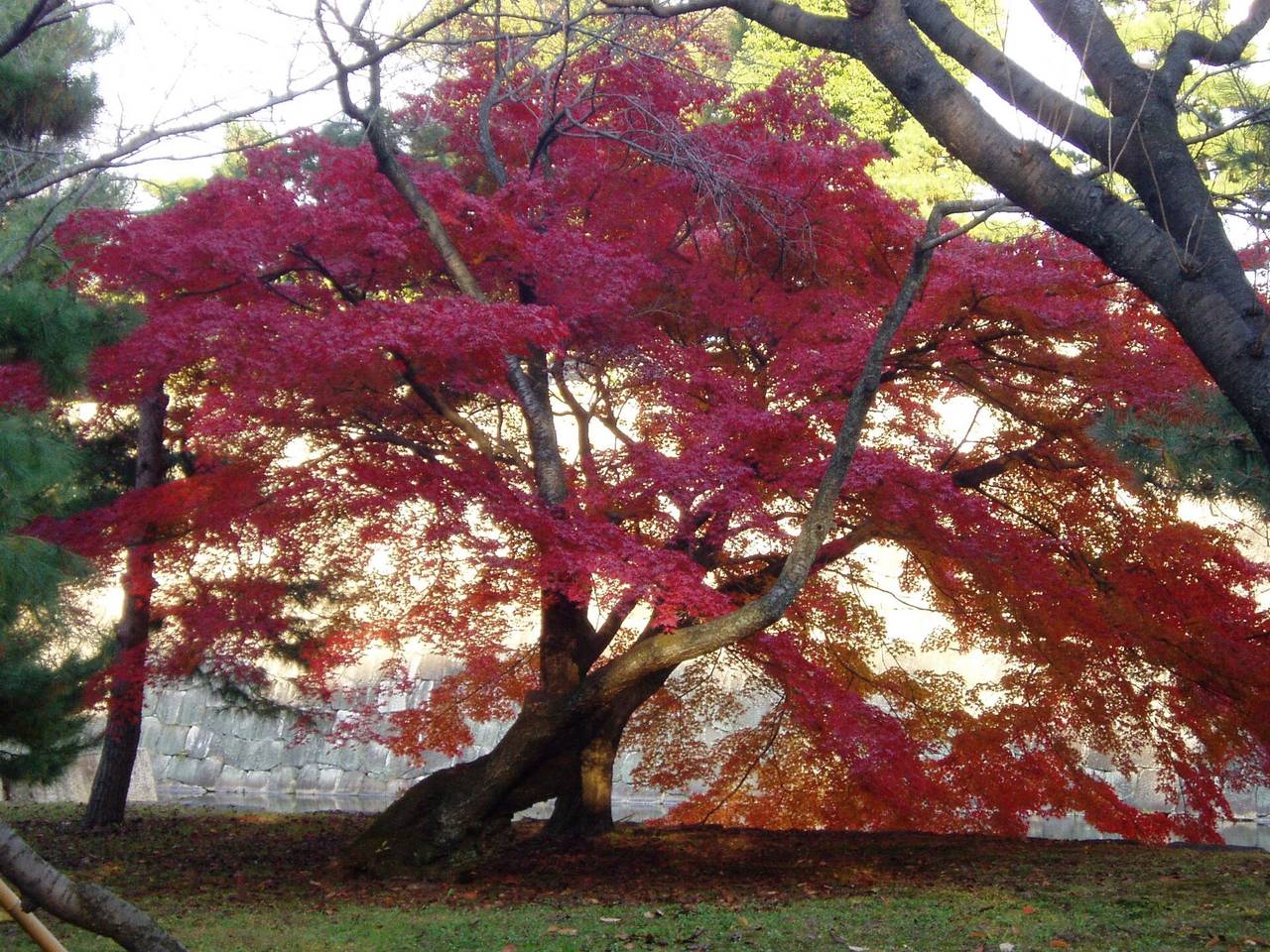
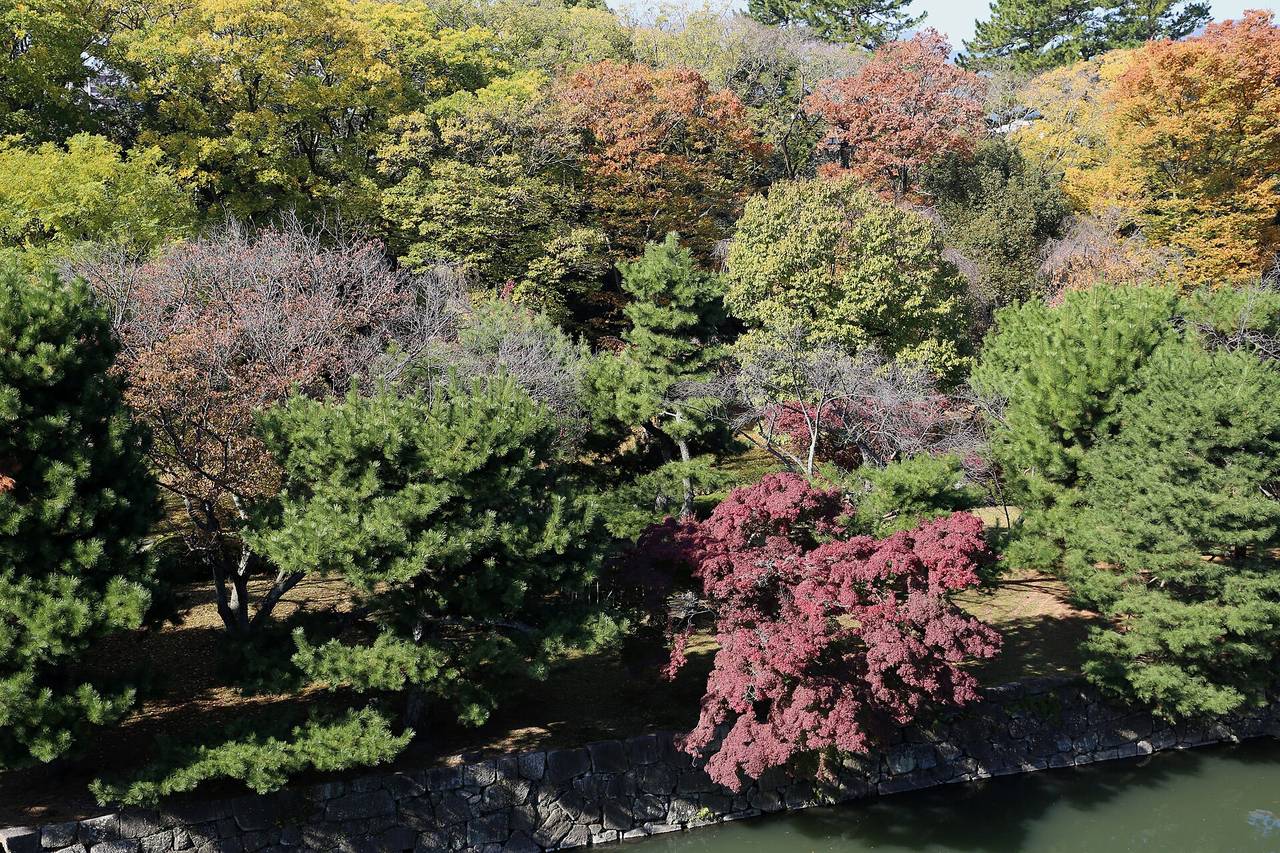
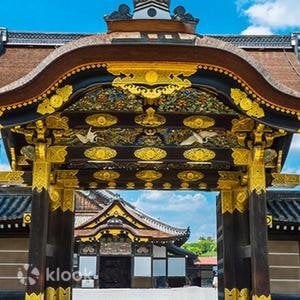
Nijo Castle was built by Tokugawa Ieyasu in 1603 and is a World Heritage site. The Ninomaru Garden inside is a National Special Place of Scenic Beauty, and maple leaves dot it in late autumn.
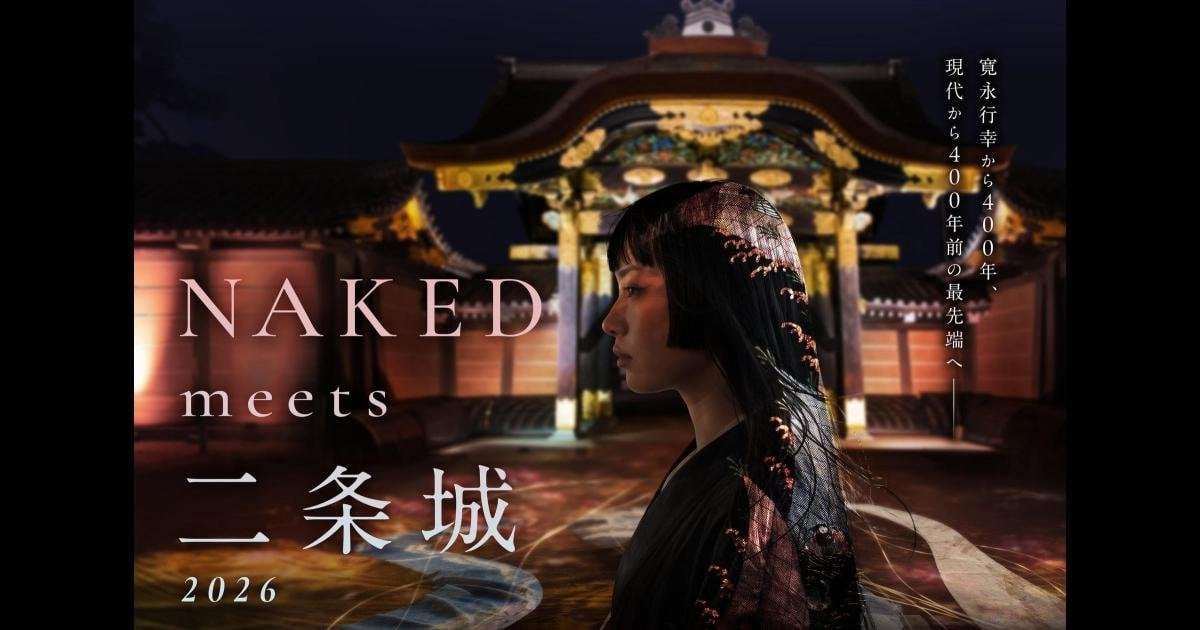
In 2026, the Nijo Castle Festival runs from October 23 to December 6, and the evening illumination runs from October 23 to December 5. The “NAKED meets Nijo Castle 2026” evening art exhibition is also held, and entry requires a separate ticket.
The Ninomaru Garden is said to have been remodeled by Kobori Enshu and others before Emperor Go-Mizunoo’s 1626 visit. It is a shoin-style garden with Horai Island in the pond, flanked by Crane and Turtle islands. The garden can be viewed from three sides: the Ohiroma, the Kuroshoin and the Gyoko Palace. Viewing from inside needs the extra Ninomaru Palace ticket.
- 🕘 Opening hours: opens at 8:45, last entry 16:00, closes at 17:00
- 🎫 Admission: adults ¥800, junior high and high school students ¥400, elementary school students ¥300; adults ¥1,300 with the Ninomaru Palace ticket
- 📝 Honmaru Palace: not included in the admission ticket; advance online reservation required
- 🚉 Access: Nijojo-mae Station on the Tozai Subway Line
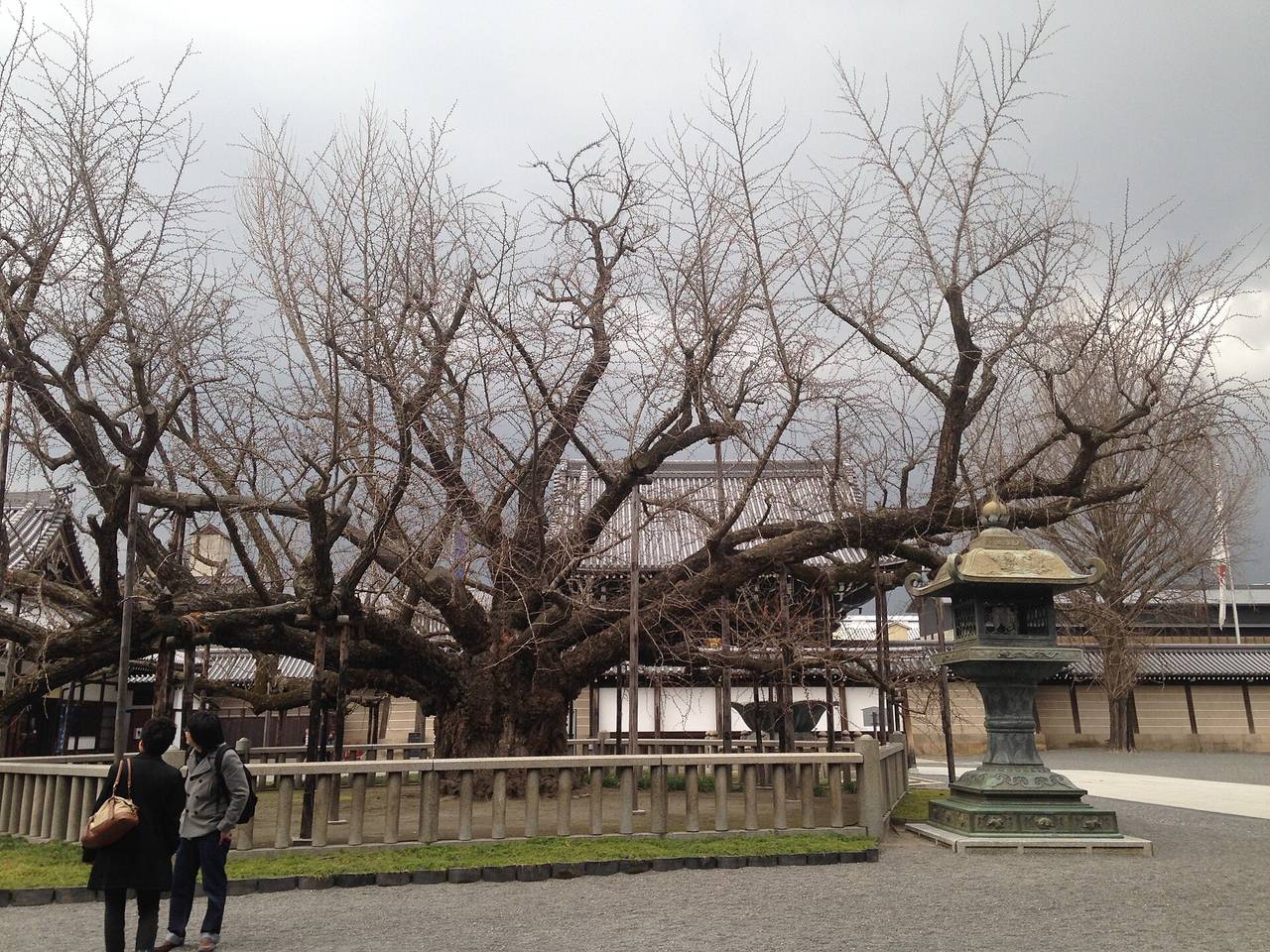
Nishi Honganji: The Great Ginkgo, About 400 Years Old, in Front of Goeido
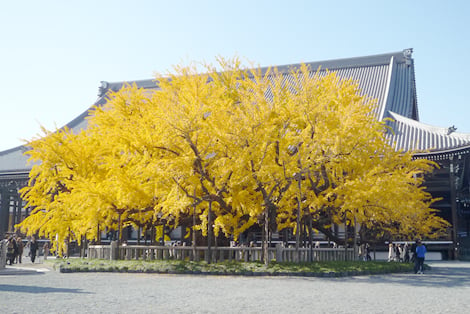
Nishi Honganji, head temple of the Hongwanji-ha of Jodo Shinshu, is a World Heritage site. The great ginkgo before Goeido is about 400 years old. The temple’s website lists it as an autumn highlight, best when yellow leaves cover the front court.
It is the easiest place in the city to see ginkgo: there is no admission fee, and you can visit on the way from Kyoto Station.
Both the Goeido and the Amidado are National Treasures. The great ginkgo in front of the Goeido is called the “Sakasa Icho” (upside-down ginkgo) for the shape of its branches. Legend says that in the great fire of 1788 the tree spouted water and saved the Goeido, so it is also called the “Mizufuki Icho.” It is a natural monument designated by Kyoto City.
- 🕘 Opening hours: grounds 5:30-17:00, free to visit at any time in that period
- 🎫 Admission: free
- 🚉 Access: within walking distance north of Kyoto Station
Higashi Honganji: Evening Light Event in Front of Goeido
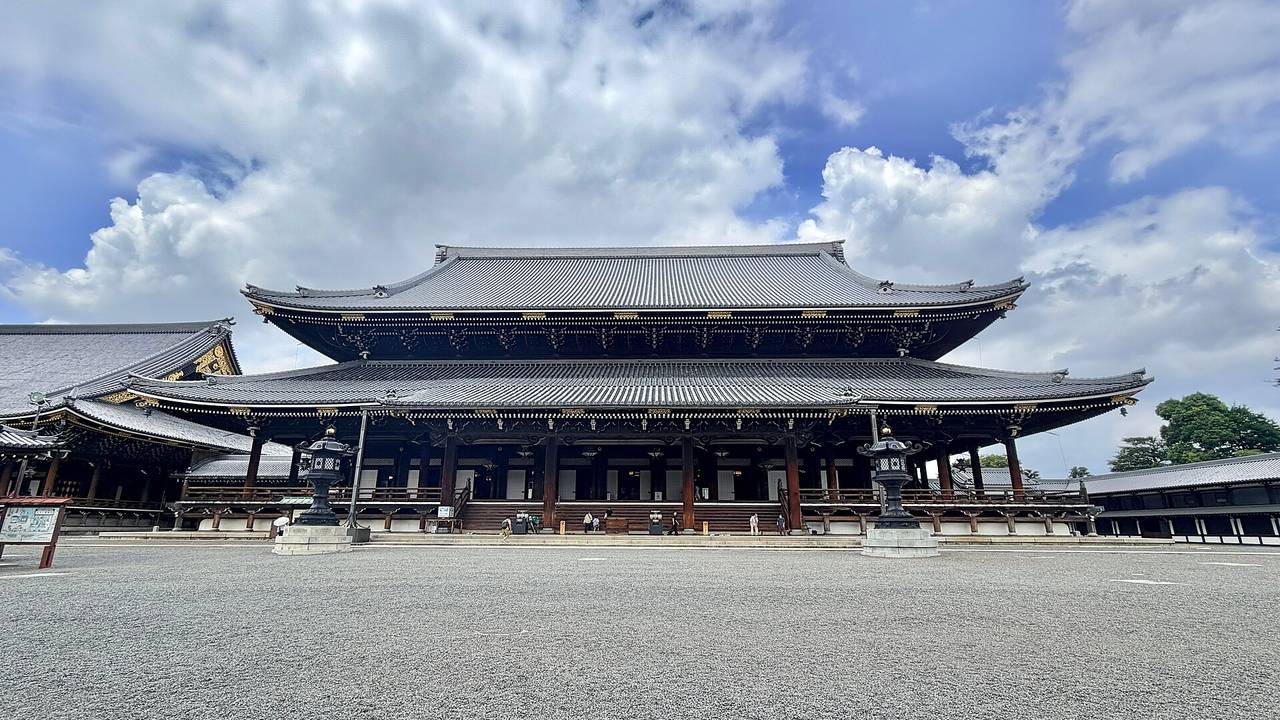
Higashi Honganji is the head temple of the Shinshu Otani-ha. Its Goeido is one of the largest wooden buildings in Japan, and it stands within walking distance north of Kyoto Station.
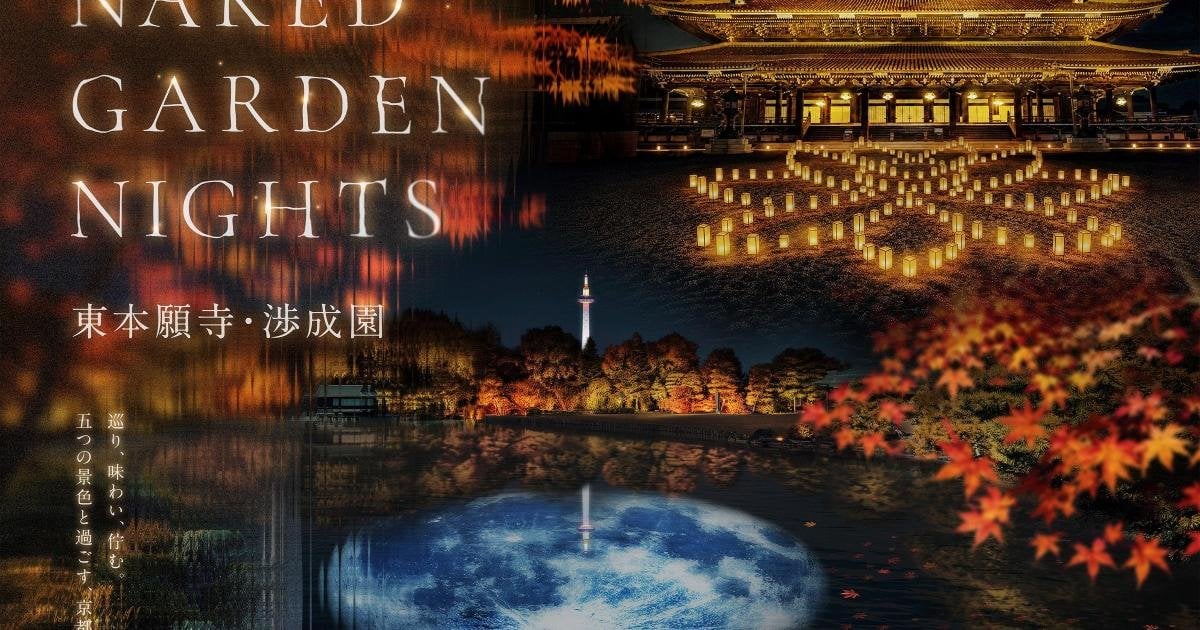
In autumn 2026, Higashi Honganji and Shosei-en host “NAKED GARDEN NIGHTS” from Sat., October 31 to Sun., December 6, with date- and time-designated tickets, entry from 18:00. See the Nishi Honganji ginkgo by day, then come here for the evening event.
Higashi Honganji’s gates are open 5:50-17:30 from March to October and 6:20-16:30 from November to February. Shosei-en is a detached precinct of Higashi Honganji, and the two belong to the same temple, which is why the evening event is held jointly.
- 🌙 Evening event: NAKED GARDEN NIGHTS Higashi Honganji and Shosei-en, October 31 to December 6, date- and time-designated tickets, entry from 18:00
- 🚉 Access: within walking distance north of Kyoto Station
Shosei-en: A Stroll Garden with a Maple Valley and Ginkgo at the West Gate
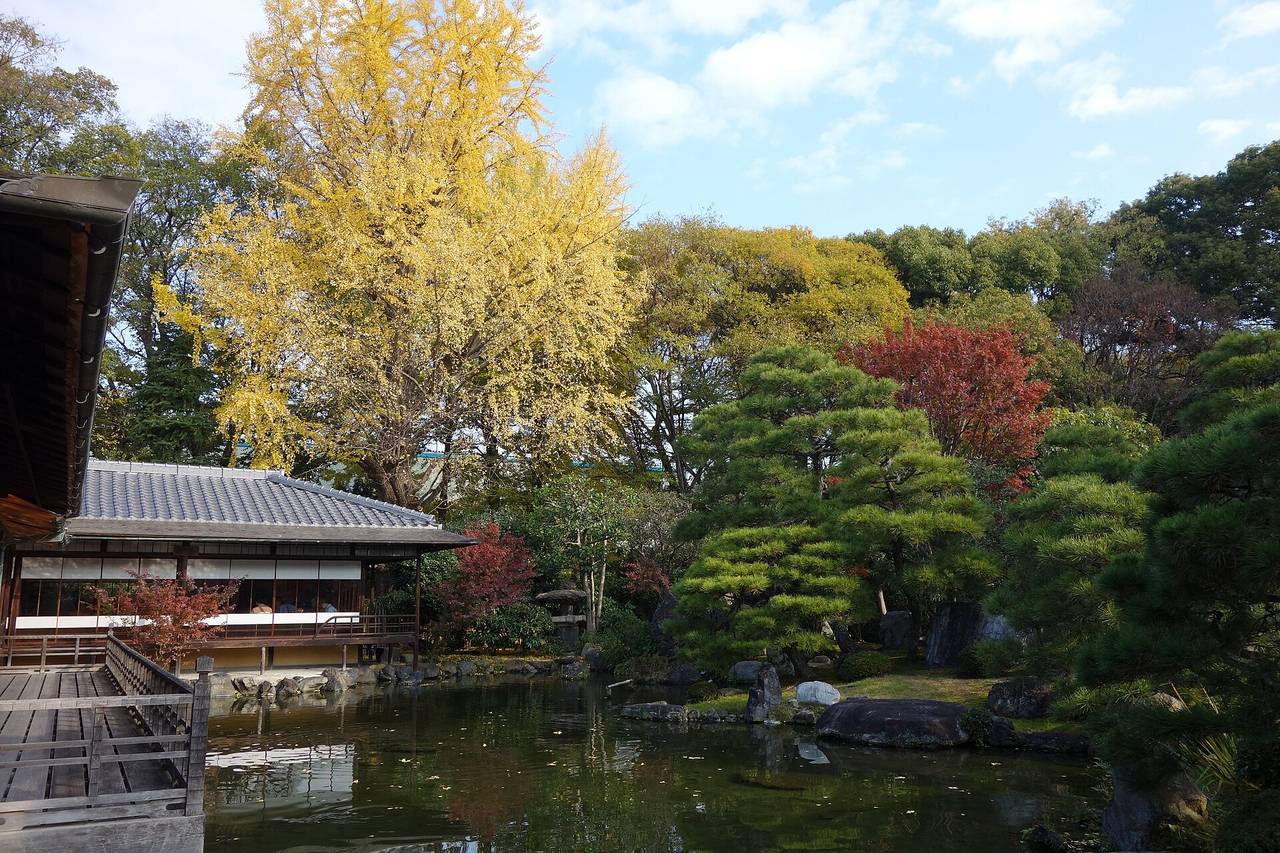
Shosei-en (Kikoku-tei) is Higashi Honganji’s pond stroll garden. The Maple Valley (Tanpu) and the West Gate ginkgo are the main spots, mainly iroha maple and ginkgo. Peak color usually runs from about late October to early December.
Shosei-en is also a venue for NAKED GARDEN NIGHTS, and the evening event uses the same date- and time-designated ticket as Higashi Honganji.
Shosei-en was donated by the third Tokugawa shogun, Iemitsu, to Shonyo, the 13th abbot of Higashi Honganji. It is said to have been designed by Ishikawa Jozan and was designated a National Place of Scenic Beauty in 1936. The garden is centered on Ingetsu Pond. Recommended viewpoints for the leaves are Ingetsu Pond, Boka-kaku, Rinchi-tei, Tekisui-ken and Kaitoro.
- 🕘 Opening hours: March to October 9:00-17:00 (last entry 16:30); November to February 9:00-16:00 (last entry 15:30)
- 🎫 Garden maintenance donation: adults ¥700 or more, junior high and high school students ¥300 or more, free for elementary school students and younger
- 🚉 Access: within walking distance north of Kyoto Station
To-ji: Evening Red Leaves and the Five-Story Pagoda Reflected in Hyotan Pond
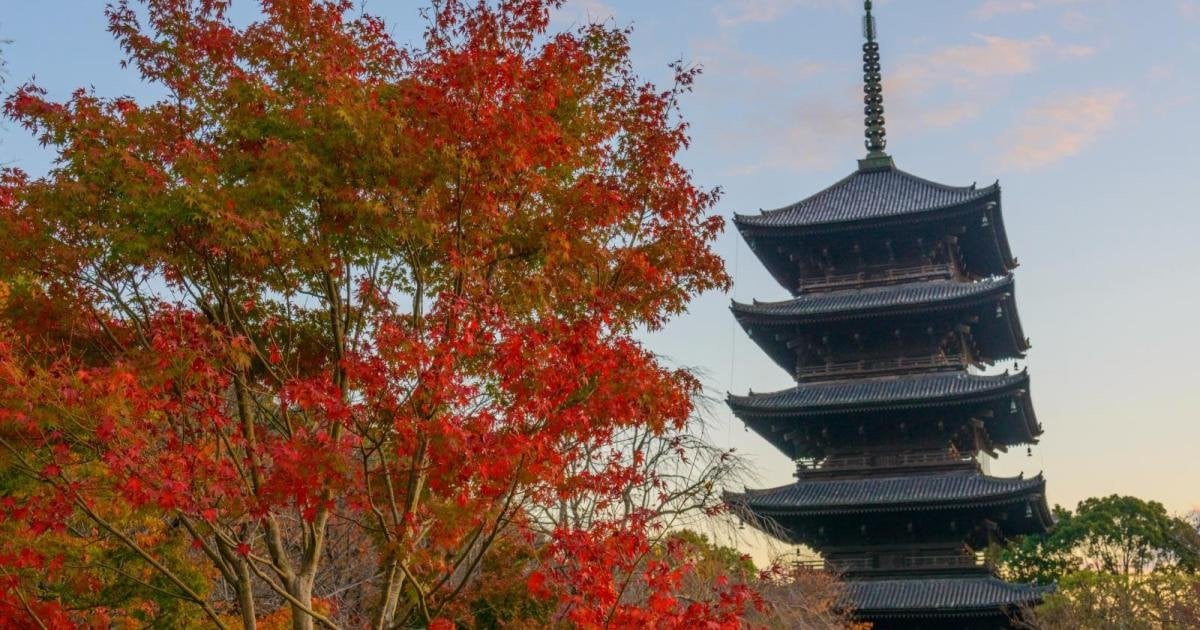
The five-story pagoda at To-ji is about 55 meters tall, the tallest surviving wooden pagoda in Japan. During the evening illumination, red leaves around it reflect in Hyotan Pond. It is the best-known night view of autumn leaves in central Kyoto.
Oct. 31-Dec. 13: Kondo and Kodo hold special evening admission with illumination, the pagoda’s first floor opens specially, and Kodo’s 3D mandala can be walked around. Treasure Hall: “Art and History of To-ji’s Five-Story Pagoda,” Sept. 20-Nov. 25.
The grounds of To-ji open at 5:00 and close at 17:00. The National Treasure Kanchi-in is open all year, outside the autumn special-opening periods. If you want to avoid the evening crowds, there is something to see by day as well.
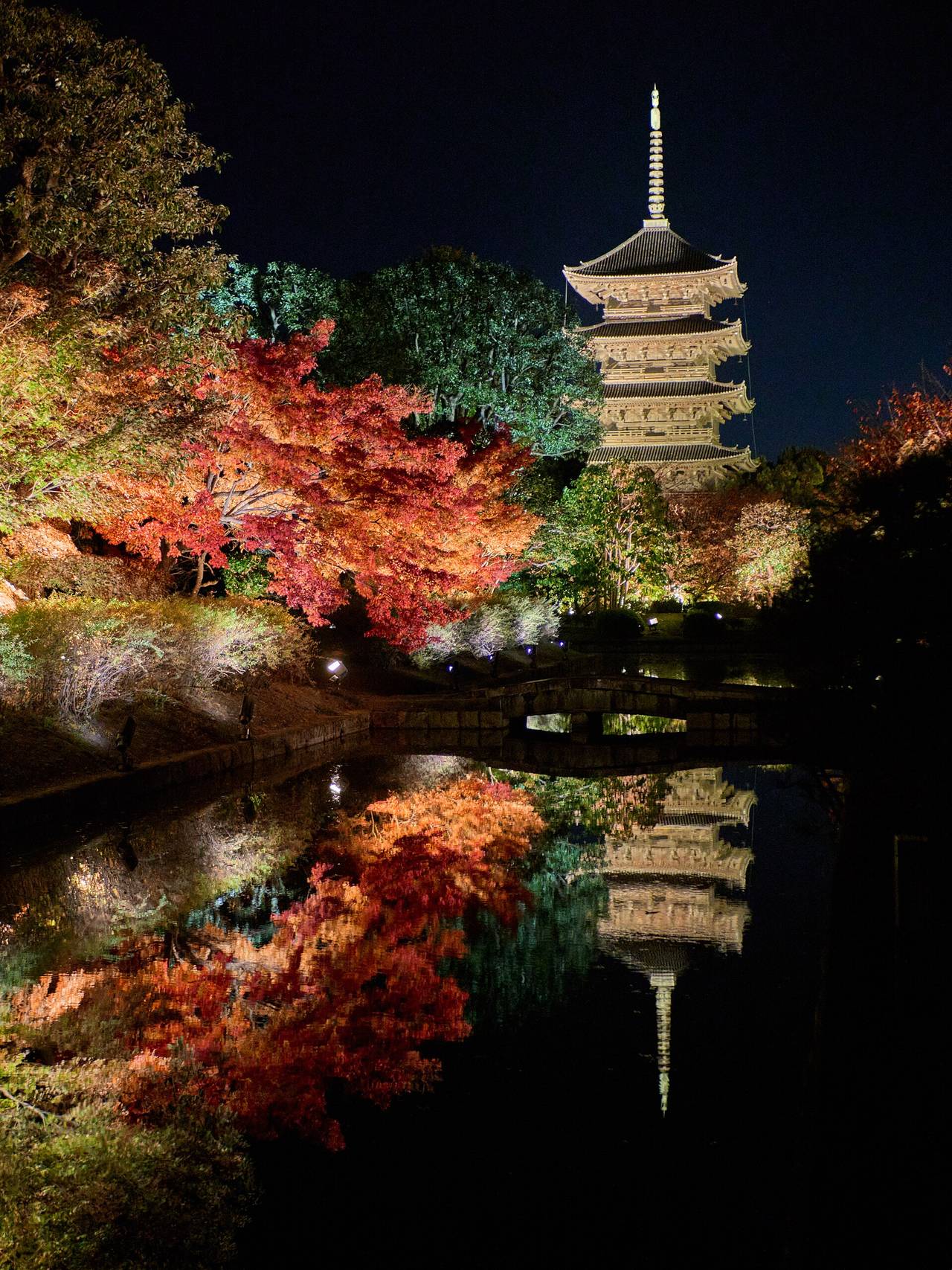
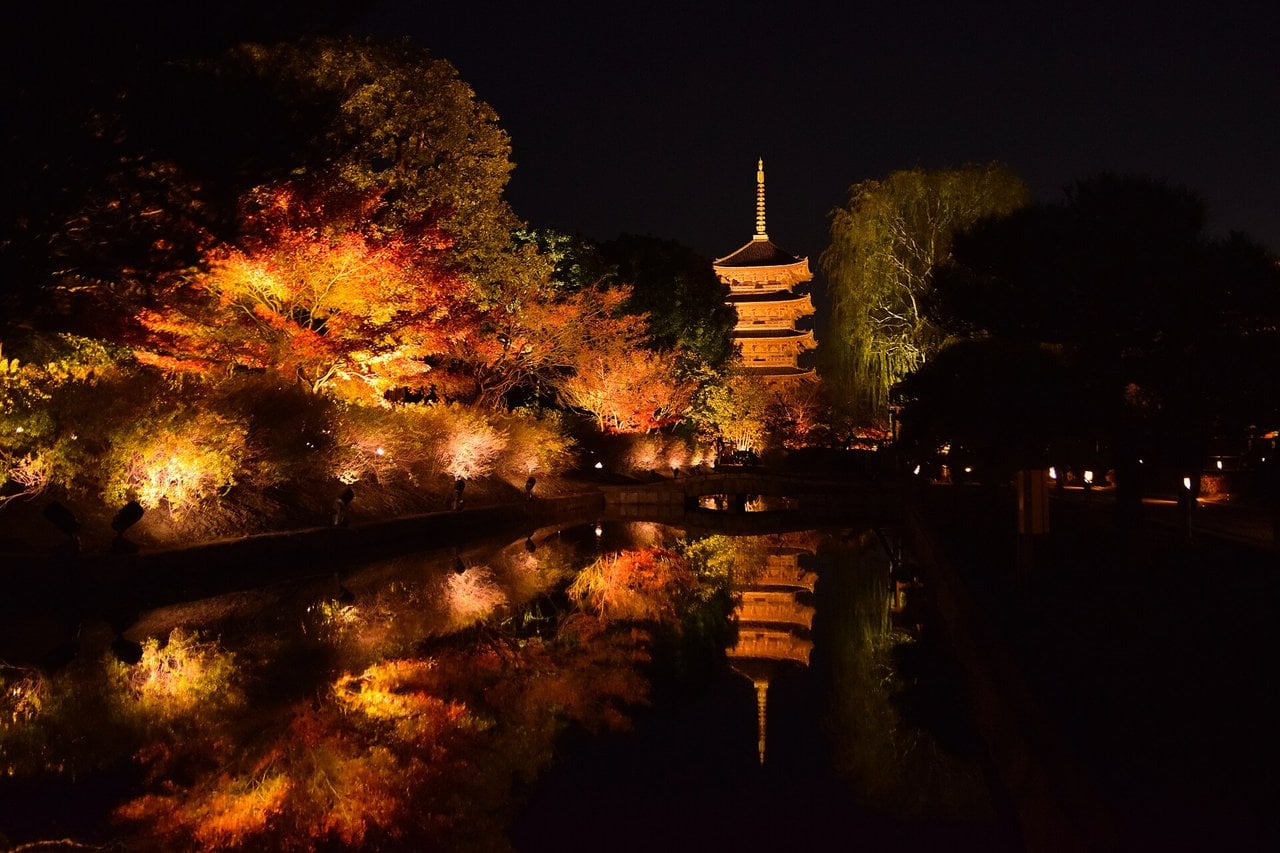
- 🌙 Special evening admission: October 31 to December 13, 18:00-21:30 (last entry 21:00), ¥1,000
- 🎫 Daytime combo ticket: October 31 to November 25, first floor of the five-story pagoda plus Kondo and Kodo, ¥1,200
- 🚉 Access: To-ji Station on the Kintetsu Kyoto Line (one stop from Kyoto Station; limited express trains do not stop there)
Central Kyoto Autumn Leaf Viewing Costs: Free Spots and Evening Tickets
Free Autumn Leaf Viewing: Kyoto Gyoen, Shimogamo Shrine and Nishi Honganji
Kyoto Gyoen is free to enter 24 hours a day, and visiting the grounds of Shimogamo Shrine and Nishi Honganji is also free, so you can see ginkgo and maple without buying a ticket.
Paid Spots and Evening Tickets
Nijo Castle: adults ¥800, ¥1,300 with Ninomaru Palace. Shosei-en: adult donation of ¥700+. To-ji special evening admission: ¥1,000. NAKED GARDEN NIGHTS (Higashi Honganji, Shosei-en) uses timed tickets; Nijo’s evening art show needs a separate ticket.
Where to Stay near Kyoto Station: Karasuma and the Station Area
Kyoto Station and Karasuma: Best Connected for Transport
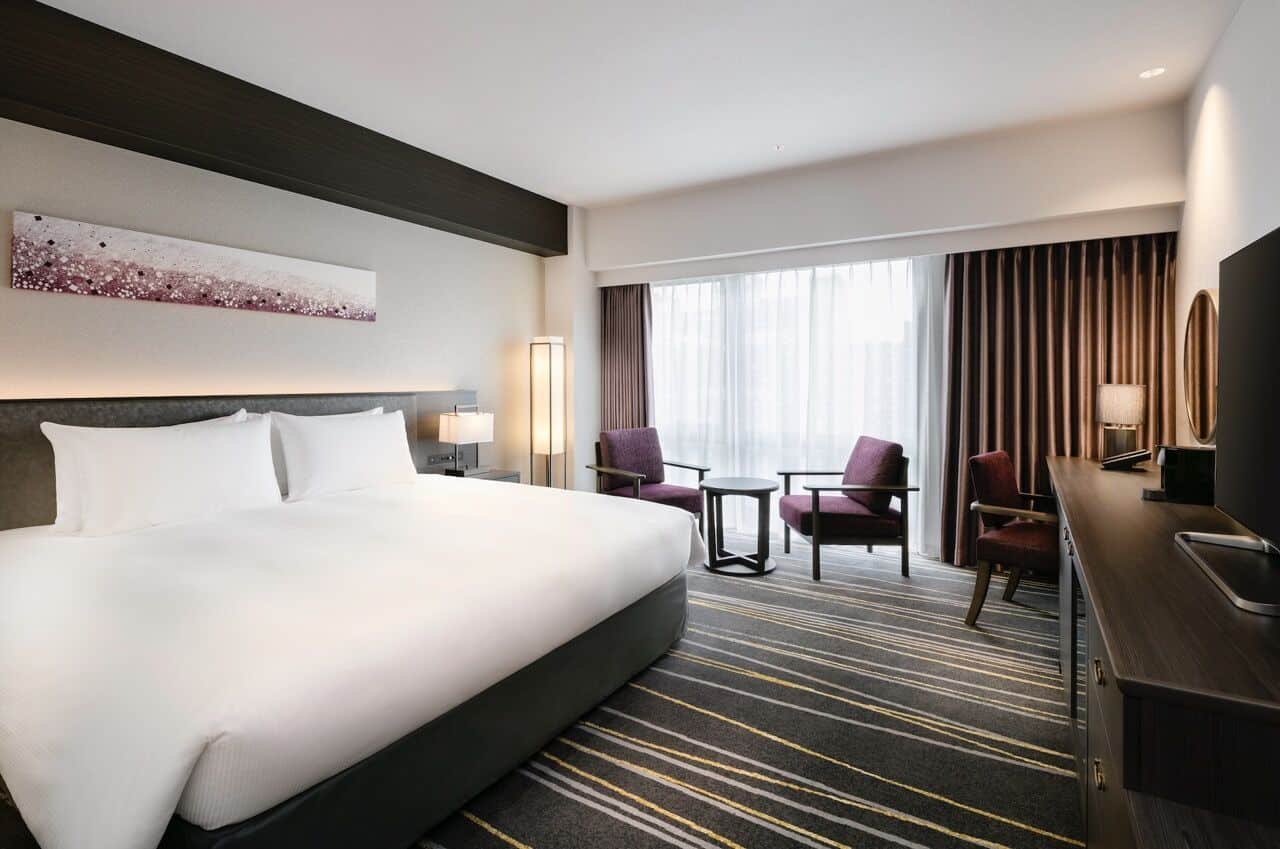
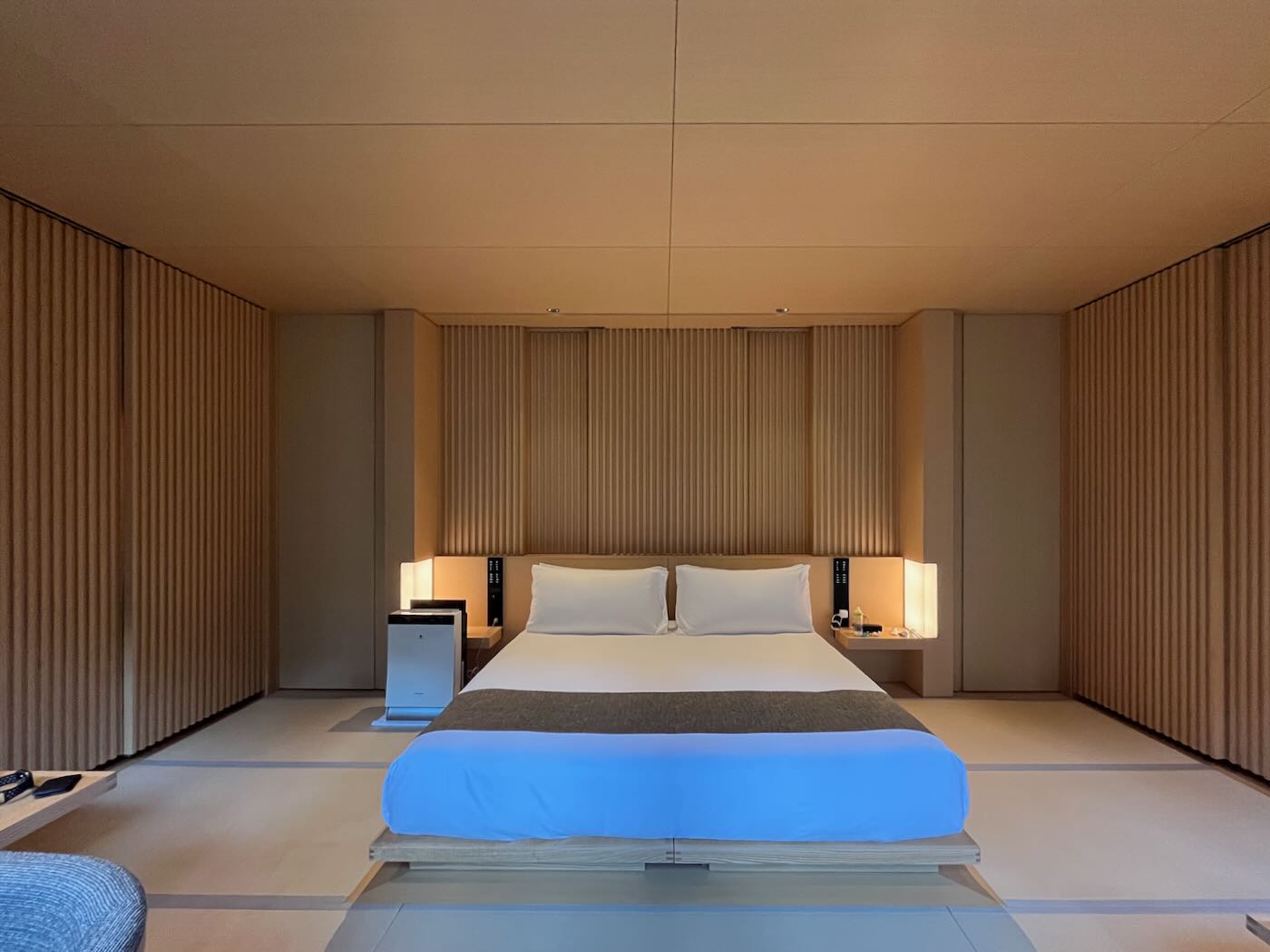
If you stay near Kyoto Station and Karasuma, take the Karasuma Line north to Imadegawa and walk into Kyoto Gyoen. Nishi Honganji, Higashi Honganji and Shosei-en are within walking distance north of the station. To-ji is one Kintetsu stop away.
FAQ
Q: When is the best time to see autumn leaves in central Kyoto?
Roughly mid-November to early December across central Kyoto. For 2026, a private weather company’s reference forecast puts red leaves at about December 11 and ginkgo at about November 27.
Q: Do I need a ticket for Tadasu no Mori at Shimogamo Shrine?
Visiting the grounds of Shimogamo Shrine is free, and Tadasu no Mori is open at all hours, so no ticket is needed. The grounds are open from 6:30 to 17:00.
Q: What are the opening hours and admission fee for Kyoto Gyoen?
Kyoto Gyoen is free to enter 24 hours a day. The Kan’in-no-miya Residence Ruins Exhibition Hall is free to visit from 9:00 to 16:30 and is closed on Mondays and over the New Year holidays. Shusui-tei charges a separate fee.
Q: How do I get to Shimogamo Shrine?
The nearest station is Demachiyanagi Station on the Keihan Line, about 12 minutes on foot.
Q: When is the evening illumination at Nijo Castle in autumn?
In 2026 the Nijo Castle Festival runs from October 23 to December 6, and the evening illumination runs from October 23 to December 5. The “NAKED meets Nijo Castle 2026” evening art exhibition is also held, and entry requires a separate ticket.