Koishikawa Korakuen Autumn Leaves 2026: Peak Timing, Admission and Access from Iidabashi, Autumn Colors and Night Views in an Edo Daimyo Garden
Koishikawa Korakuen is an Edo-period daimyo garden in Bunkyo Ward, Tokyo, well worth a visit in the autumn leaves season, with regular admission of ¥300.
The Mito Tokugawa family’s residence garden, begun in 1629 and completed under the second lord, Tokugawa Mitsukuni, is a Special Historic Site and Special Place of Scenic Beauty. Its name comes from Fan Zhongyan’s Record of Yueyang Tower: “be the first to worry about the world’s troubles, the last to enjoy its pleasures.” Allow 1 to 2 hours, more in foliage season.
Autumn Leaves Peak: Expected Late November to Early December 2026
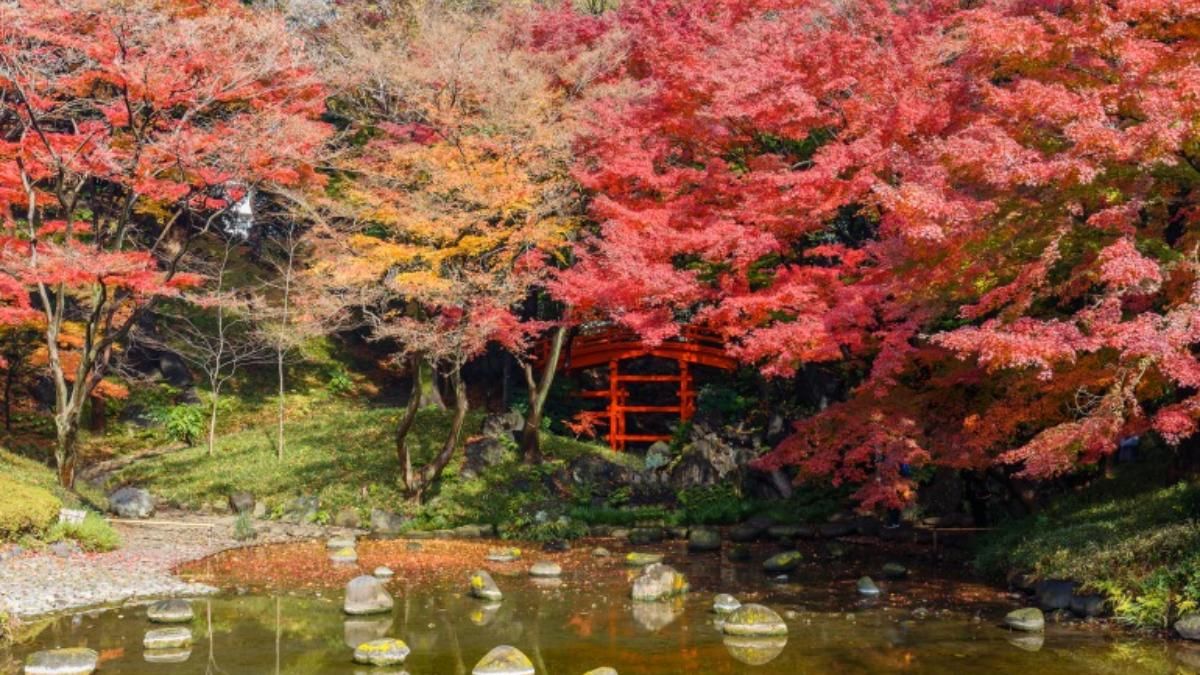
The garden’s leaves are mainly iroha maples, and the garden’s official site sets its autumn leaves event, Miyama Momiji o Tanoshimu (Enjoying the Deep-Mountain Autumn Leaves), for November 21 to December 6, which can be taken as the main viewing period for 2026.
Conditions differ each year, so before you go check the weekly status in the Garden Highlights section of the official site.
Special Night Opening: November 13 to 24, 2026
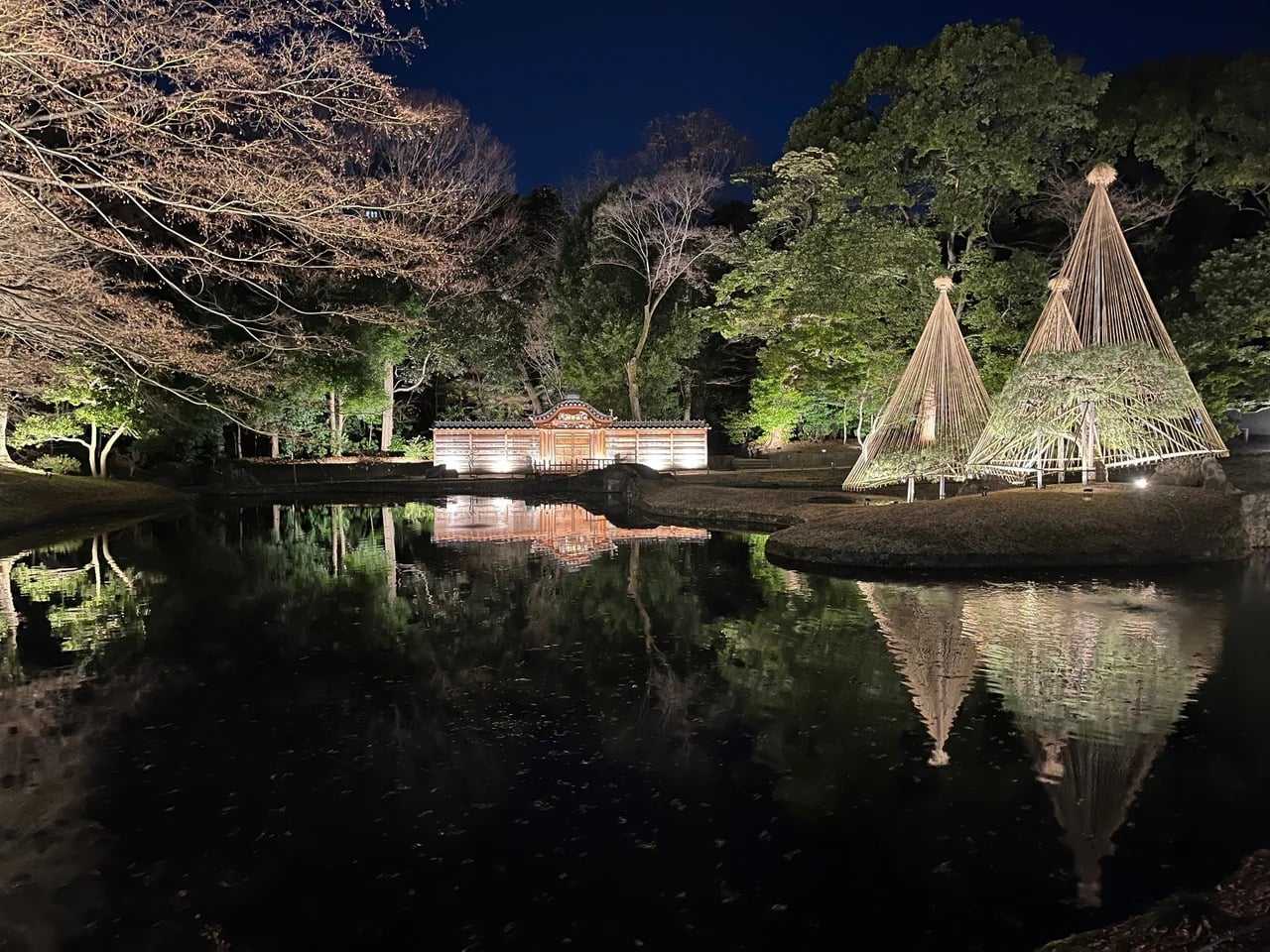
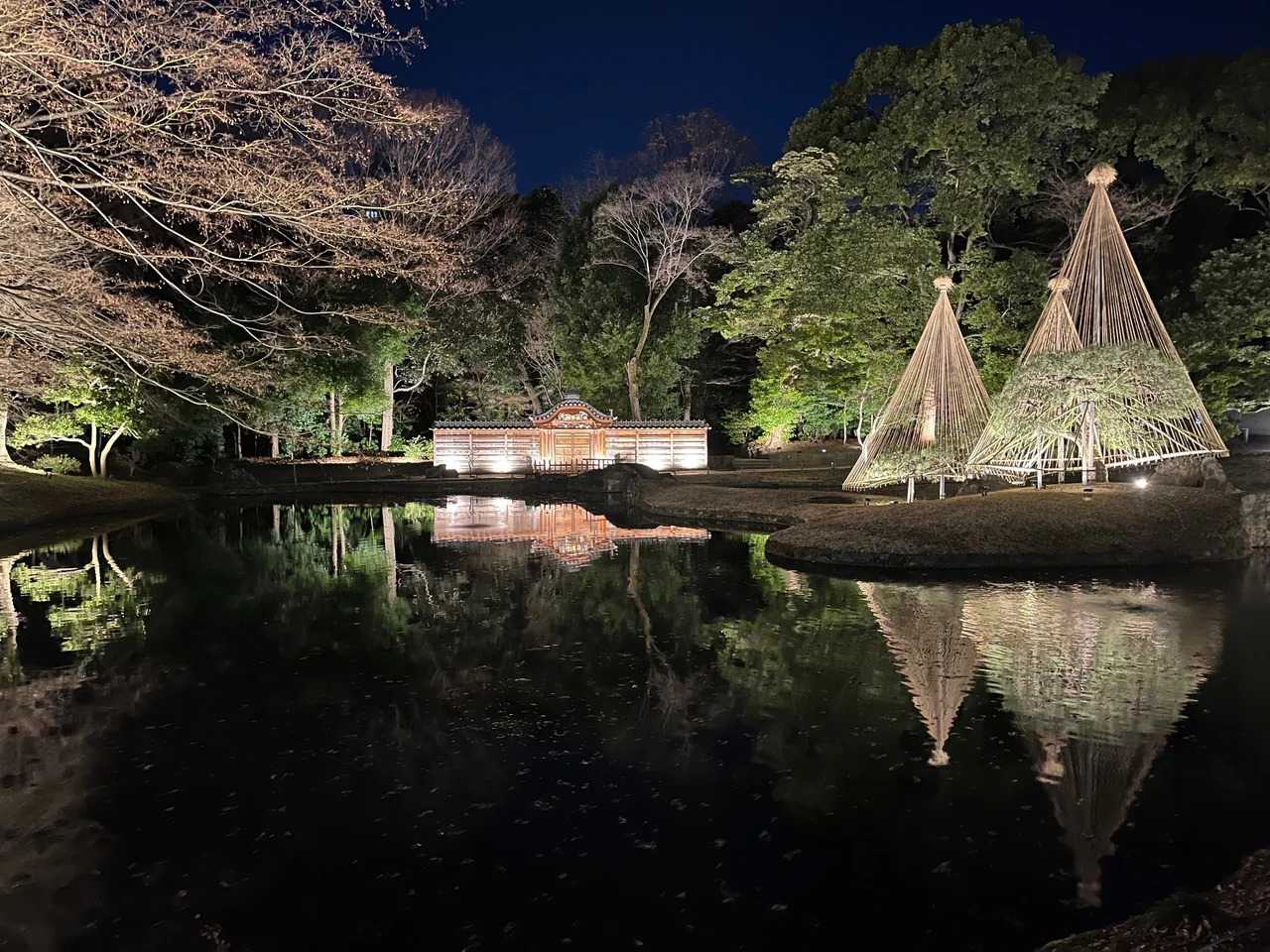
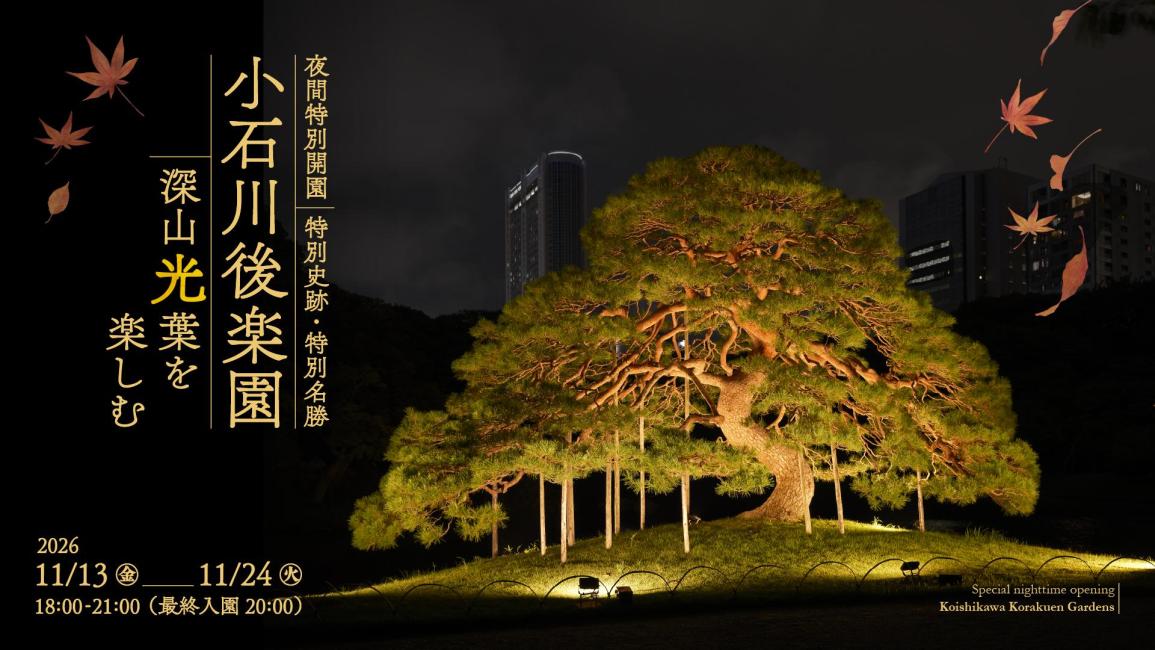
The special night viewing, Miyama Hikari-ba o Tanoshimu (Enjoying the Deep-Mountain Glowing Leaves), runs from Friday, November 13 to Tuesday, November 24, from 18:00 to 21:00 each night, with last entry at 20:00. After the garden closes for the day at 17:00, it reopens at 18:00, and night visitors enter by the West Gate and exit by the East Gate.
Sights such as Horaijima Island and Hitotsumatsu (the lone pine) are lit up, and the Engetsukyo Bridge and the Tsuijibei earthen wall have projection shows. The night ticket is a separate ticket, and daytime admission does not apply.

Tsutenkyo Bridge Under Reconstruction: Access Follows the Garden’s Notice
The Tsutenkyo Bridge is within the area of reconstruction work, and whether you can cross follows the garden’s on-site notices. Other main sights remain open as usual, so there is no need to cancel your plans because of it.
The rest of the garden can still be explored, and Taisensui, Engetsukyo and Horaijima are the most representative spots for autumn leaf photos.
How to Get to Koishikawa Korakuen: Access
How Do You Get to Koishikawa Korakuen? Access at a Glance
Choose your entrance by departure station:
- West Gate: about 3 minutes from Exit C3 of Iidabashi Station on the Toei Oedo Line, about 8 minutes from the East Exit of Iidabashi Station on the JR Sobu Line
- East Gate: about 5 minutes from the West Exit of Suidobashi Station on the JR Sobu Line, about 6 minutes from Exit 2 of Korakuen Station on the Tokyo Metro Marunouchi and Namboku Lines
- Other: about 8 minutes from Exit A2 of Suidobashi Station on the Toei Mita Line, about 8 minutes from Exit A1 of Iidabashi Station on the Tokyo Metro Tozai, Yurakucho and Namboku Lines
From Tokyo Station, take the Marunouchi Line toward Ikebukuro for about 8 to 9 minutes to Korakuen Station, which is closest to the East Gate.


Must-See Spots: Highlights Across the Garden
Below are the garden’s 9 main highlights, each with viewing points and practical information.
Taisensui: A Circuit Pond Modeled on Lake Biwa
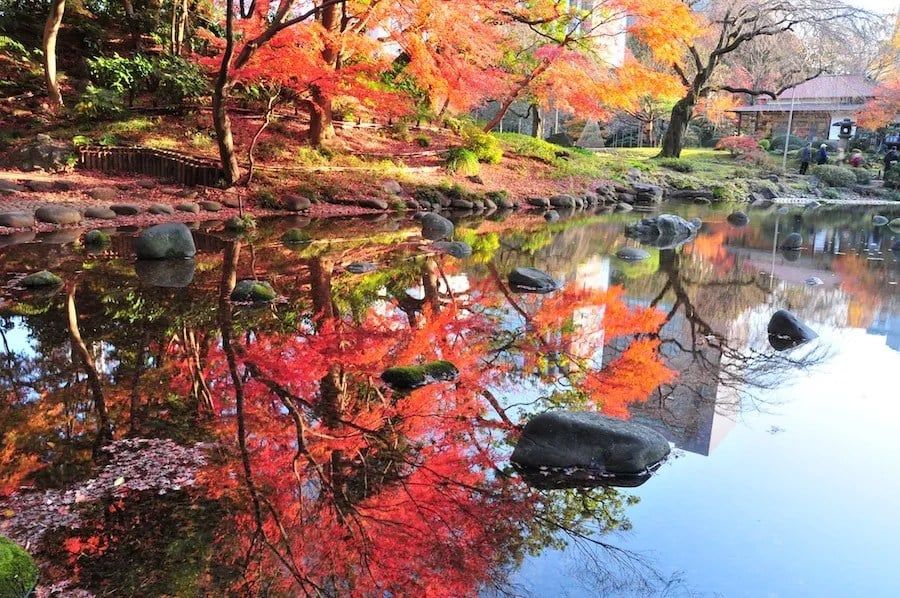
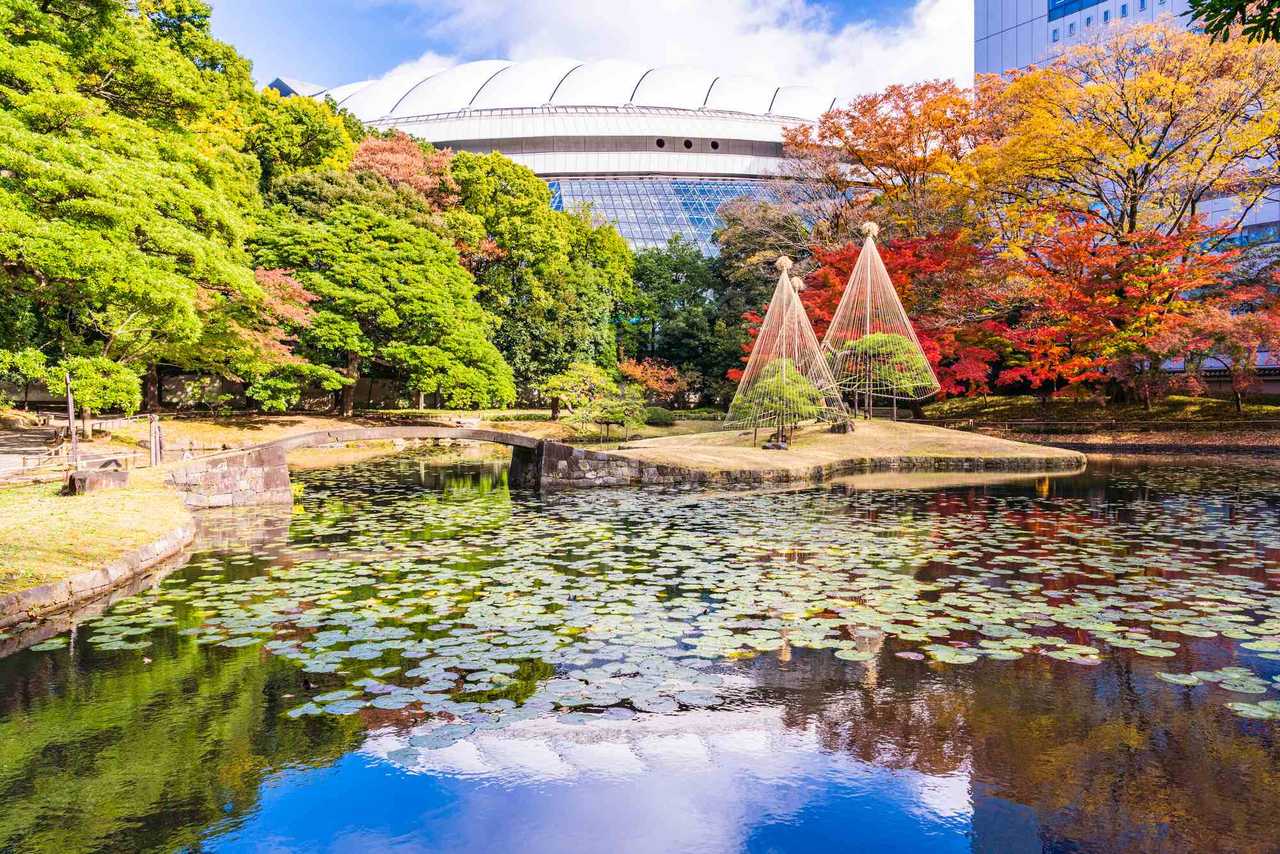
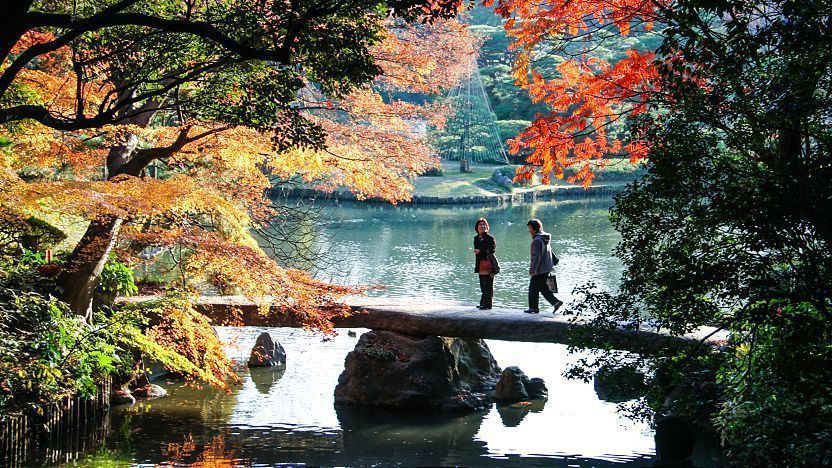
Taisensui is the heart of Koishikawa Korakuen, built to evoke the scenery of Lake Biwa, and the reflections of Horaijima Island at its center and the surrounding rock groupings are the main attraction. In autumn, maple leaves are reflected in the water alongside their mirror images, making it the top angle for photographing the leaves.
Crowds concentrate from 11:00 to 15:00, so for cleaner reflections, walk around the water’s edge first between 09:00 and 10:30. Horaijima is also lit during the special night opening and is one of the focal points of the night view.

Engetsukyo Bridge: The Arch and Its Reflection Form a Full Moon
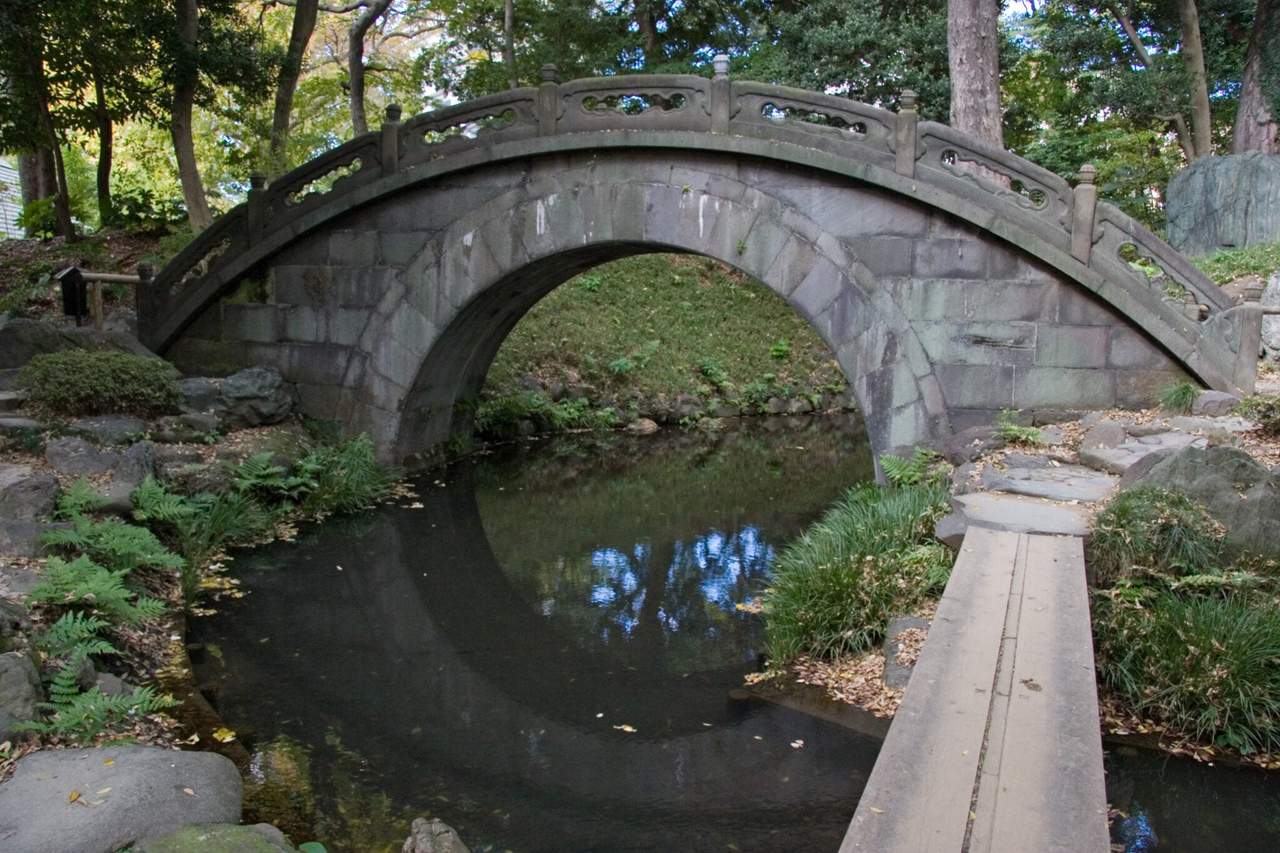
Engetsukyo Bridge spans the Taisensui, and the arch and its reflection in the water form a circle, hence the name. From the bridge you can see the surrounding maple trees and the water together, making it one of the most common photo spots in the garden.
During the special night opening there is a projection show on an autumn leaves theme near Engetsukyo, completely different from the daytime scenery. The garden has many stone steps and changes in level, so watch your step as you walk.
Kantokutei: A Tea House and Rest Area Near the Entrance
Kantokutei is a gathering facility in the garden where you can dine while looking at the garden, and it is closer if you enter by the West Gate. During the special night opening, a limited-time Vidro Chaya tea house opens here, offering sets of wagashi and matcha.
If you plan to dine at Kantokutei, enter by the West Gate.
Seiko no Tsutsumi and Sho-Rozan: Garden Scenes Modeled on West Lake in Hangzhou and Mount Lu
Seiko no Tsutsumi is modeled on the long embankment of West Lake in Hangzhou, and walking along it, the waterside and autumn leaves interweave, making it a relatively quiet strolling route in the garden. Sho-Rozan is modeled on China’s Mount Lu and has a small path up the hill.
From the top of Sho-Rozan you can look over the garden’s maples and water, with a wider view than on level ground. The mountain path has changes in level, so non-slip, comfortable shoes are best.
The Rice Paddy: A Rare Rice-Growing Landscape in the Garden
The garden’s rice paddy is described as quite rare in Japan. Every May, elementary school children from Bunkyo Ward plant rice here, and from late September to early October an inekari (rice harvest) experience is held.
By the autumn leaves season the harvest is over, and the fields and surrounding maples make a color contrast, good for autumn-mood photos.
Karamon Gate: Special Opening on Culture Day
The Karamon is a gate building in the garden whose name carries a Chinese flavor, and together with Engetsukyo and Seiko no Tsutsumi it forms the garden’s Chinese-style scenery. The garden combines Chinese-style landscaping with miniature versions of famous Japanese sights, and the Karamon is one of its representative buildings.
On Culture Day the Karamon opens specially, and it is one of the angles for photographing the gate and the autumn leaves.
Tsuijibei: Edo Scenery in the Night Projection Show
The Tsuijibei is a traditional earthen wall, and during the special night opening, ukiyo-e prints and historical scenes of the Edo period are projected onto it, making the wall a night highlight of the garden.
During the special night opening, the Tsuijibei shows a projected Edo history scroll, and it fits well into the same stretch of the route as the lighting of Horaijima.
Tsutenkyo Bridge: Reconstruction Underway
Tokujindo: Open on Culture Day, Passing the Site of Kiyomizu Kannon-do
Tokujindo is a historic building in the garden, specially opened on November 3, Culture Day, together with the Karamon, from 10:00 to 16:00.
The Tokujindo opens on the same day as the Karamon, so if you want to see the building in the inner garden, pick this day to visit.
How Much Does It Cost? Admission, Night Tickets and Guided Tours
Regular Admission at Koishikawa Korakuen: From ¥300, Free for Elementary School Children and Younger
Regular admission is ¥300 for adults and ¥150 for ages 65 and up, and free for elementary school children and younger and for secondary school students studying in Tokyo. For groups of 20 or more, it is ¥240 for adults and ¥120 for ages 65 and up.
Admission is free on Greenery Day (May 4) and Tokyo Citizens’ Day (October 1). You can pay with a transport IC card, credit card or electronic payment. The garden also has an annual pass, ¥1,200 for general visitors and ¥600 for ages 65 and up (valid only for Koishikawa Korakuen).
Miyama Hikari-ba Night Viewing Ticket: ¥1,000 Online, ¥1,200 on the Day
The night ticket must be bought separately. Online advance sales run from 10:00 on October 1 to 23:59 on November 12 at ¥1,000 (tax included), and online same-day tickets are sold from 0:00 on November 13 to 19:30 on November 24 at ¥1,200.
A limited number of same-day tickets are also sold at the West Gate window from 18:00 to 20:00, cash only. Junior high school students and older need a ticket, and annual pass holders and people with disability certificates must also buy the night ticket. The official sales channels are Seven Ticket, KKday and Asoview.
Tokyo Dome City Combo Ticket: Add Rides to Your Night Foliage Visit
During the special night opening, Koishikawa Korakuen and the neighboring Tokyo Dome City offer a combo ticket for rides, so you can fit autumn leaves viewing and the attractions into the same evening.
Tokyo Dome City is right next to the garden, within walking distance. Combo ticket prices and contents follow the official announcement, and before buying, check the operating hours for that evening.
Free Garden Tours: Japanese and English Time Slots
Japanese tours run at 11:00 and 14:00 on Saturdays, Sundays, Mondays and national holidays, and English tours run at 10:30 and 13:30 on Saturdays. The tours are free and suspended in July and August.
Tour schedules during the autumn leaves season and the special night opening may change, so check the official announcement before you join to avoid a wasted trip.
How to Plan a Combined Itinerary: Visiting Hours and Tips
Best Arrival Time: Fewer Crowds from 09:00 to 10:30
In the autumn leaves season the afternoon is more crowded, so arriving in the morning gives a more relaxed visit, and the reflections at Taisensui are easier to capture in full.
The garden is open until 17:00, with last entry at 16:30, so plan to finish before closing. To combine the leaves with the night view, schedule the daytime visit in the morning and enter again in the evening in the night slot.
Night Entry Route: In by the West Gate, Out by the East Gate
During the special night opening you enter by the West Gate and exit by the East Gate. The West Gate is near Iidabashi Station, and the East Gate is near Suidobashi and Korakuen Stations, so after leaving you can board directly toward Suidobashi or Korakuen.
From the East Gate it is about a 6-minute walk to Exit 2 of Korakuen Station, where you can take the Marunouchi Line toward either Ikebukuro or Tokyo.
Combine With Rikugien: About 6 Minutes on the Namboku Line From Korakuen Station to Komagome
Rikugien is in Bunkyo Ward, about 6 minutes on the Namboku Line from Korakuen Station to Komagome Station, then about a 7-minute walk. Admission is ¥300.
Visiting Koishikawa Korakuen and Rikugien on the same day contrasts a bright, open garden with a quiet one, and suits a continuous half-day tour.
Garden Service Center: 03-3811-3015
The Koishikawa Korakuen service center’s phone number is 03-3811-3015, and the garden’s address is 1-6-6 Koraku, Bunkyo Ward, Tokyo. The garden is managed by the Tokyo Metropolitan Park Association.

Further Reading: A Roundup of Tokyo Autumn Foliage

FAQ
Q: When are the autumn leaves at Koishikawa Korakuen at their best in 2026?
The garden’s official autumn leaves event, Miyama Momiji o Tanoshimu, runs from November 21 to December 6, and the peak is generally late November to early December. Conditions differ each year, so check the garden’s official site before you go.
Q: How much is admission to Koishikawa Korakuen?
Regular adult admission is ¥300 and ¥150 for ages 65 and up, free for elementary school children and younger. Admission is free on May 4 and October 1, and the special night opening requires a separate night ticket of ¥1,000 to ¥1,200.
Q: How do I get to Koishikawa Korakuen from Iidabashi Station?
Take the Toei Oedo Line to Iidabashi Station and walk about 3 minutes from Exit C3 to the West Gate. You can also walk about 8 minutes from the East Exit of Iidabashi Station on the JR Sobu Line.
Q: What are the opening and closing times of Koishikawa Korakuen?
It opens at 09:00 and closes at 17:00, with last entry at 16:30. It is closed from December 29 to January 1, and during the special night opening there is a separate 18:00 to 21:00 slot.
Q: Can I bring pets or park at Koishikawa Korakuen?
Pets are not allowed in the garden and there is no parking lot, so going by train is recommended.
Q: What should I know about the 2026 evening illumination period?
The special night opening runs from November 13 to 24, with entry by the West Gate and exit by the East Gate. Annual pass holders and people with disability certificates must also buy the night ticket, and junior high school students and older need a ticket.