Japan Ginkgo Forecast 2026: Peak Dates in Seven Major Cities and Where the Forecast Comes From
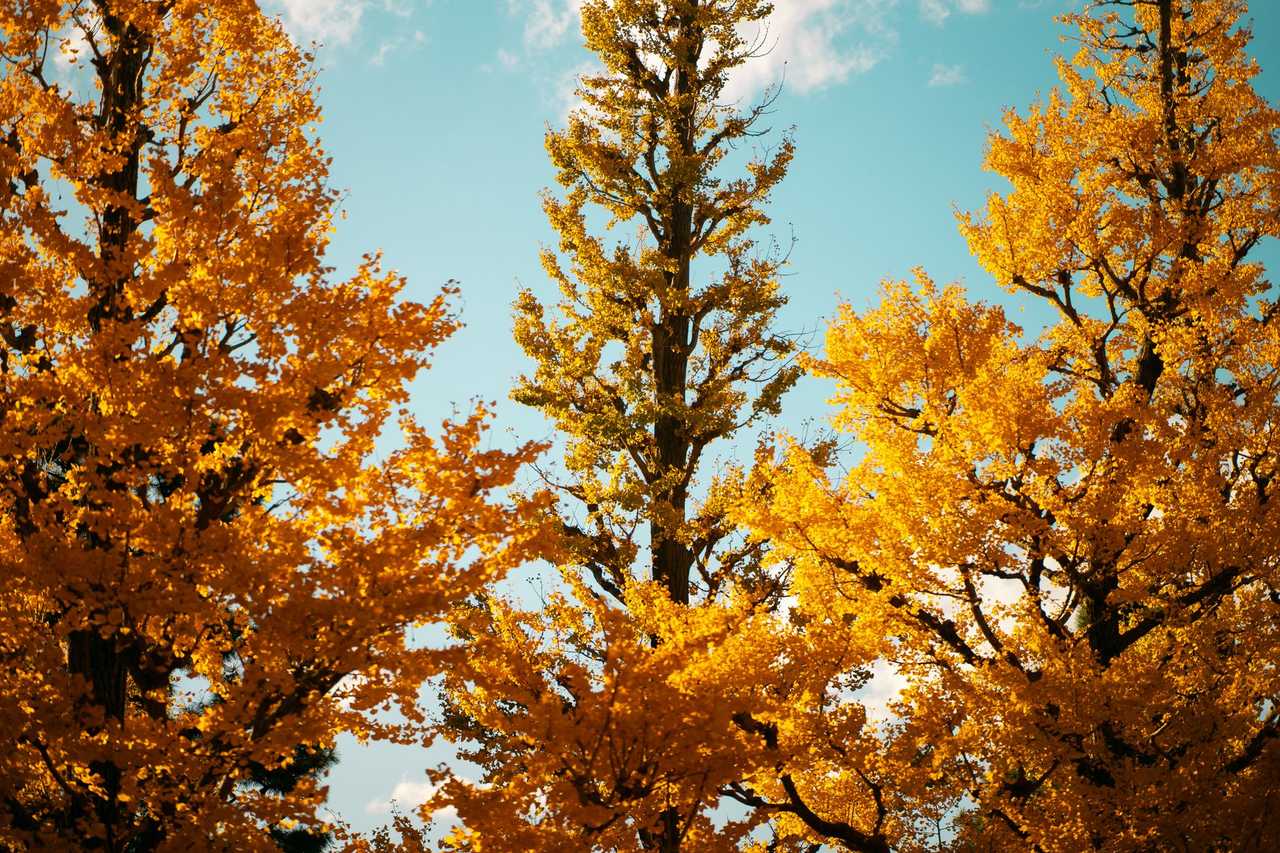
Autumn 2026 is running warm. The second forecast from Japan Meteorological Corporation (published October 1, 2026) shows ginkgo turning yellow close to or slightly later than average in most cities. Tokyo (about November 26) and Osaka (about November 24) are the popular viewing windows, and William has compiled peak dates for seven major cities from the official forecast.
| City | Forecast peak (2026) | Average year |
|---|---|---|
| Sapporo | 11/3 | 11/4 |
| Sendai | 11/29 | 11/23 |
| Tokyo | 11/26 | 11/23 |
| Nagoya | 11/17 | 11/18 |
| Osaka | 11/24 | 11/22 |
| Kyoto | 11/27 | 11/24 |
| Fukuoka | 11/28 | 11/20 |
Forecast Source and Update Timing: Japan Meteorological Corporation’s Second Forecast
Japan Meteorological Corporation published its second ginkgo (yellow foliage) peak forecast on October 1, 2026, William’s main source here. Its first autumn foliage peak forecast came out on September 2; the two use different indicators, so do not mix them. The company says the next revision is due in early November, and that latest version then takes precedence.
Peak Color and Viewing Period: Definition and Length
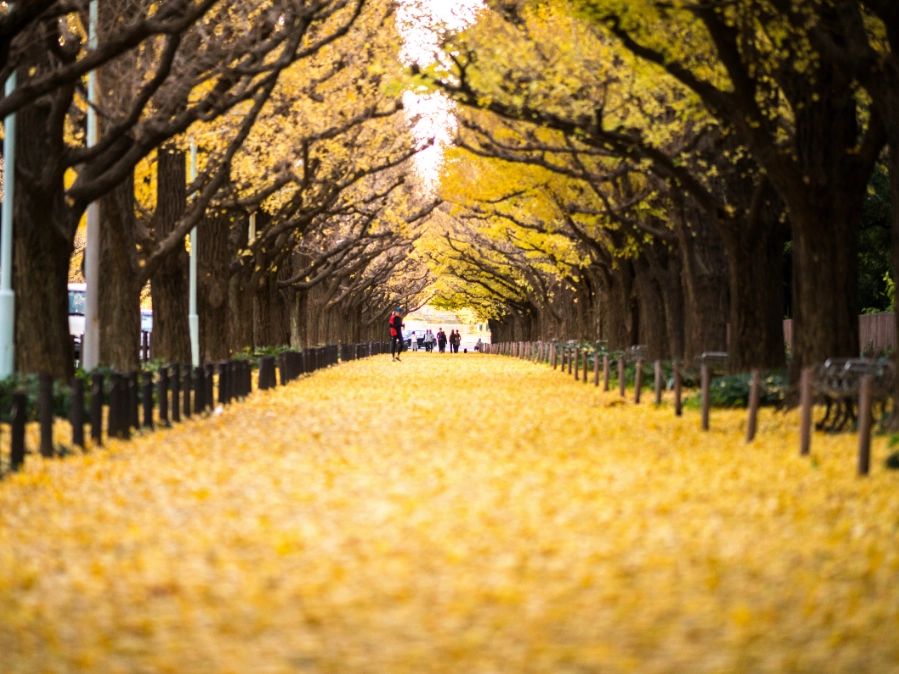
Peak color (migoro) usually means when yellow is fullest and gold most uniform. Ginkgo takes about 2 to 3 weeks from yellow to leaf drop, with the best gold often lasting 7 to 10 days. A spot’s peak start is defined differently from most of a city’s reference tree changing color, so take care comparing. Strong wind or heavy rain makes ginkgo shed fast, leaving a golden carpet.
2026 Weather Factors: High Temperatures and Typhoons
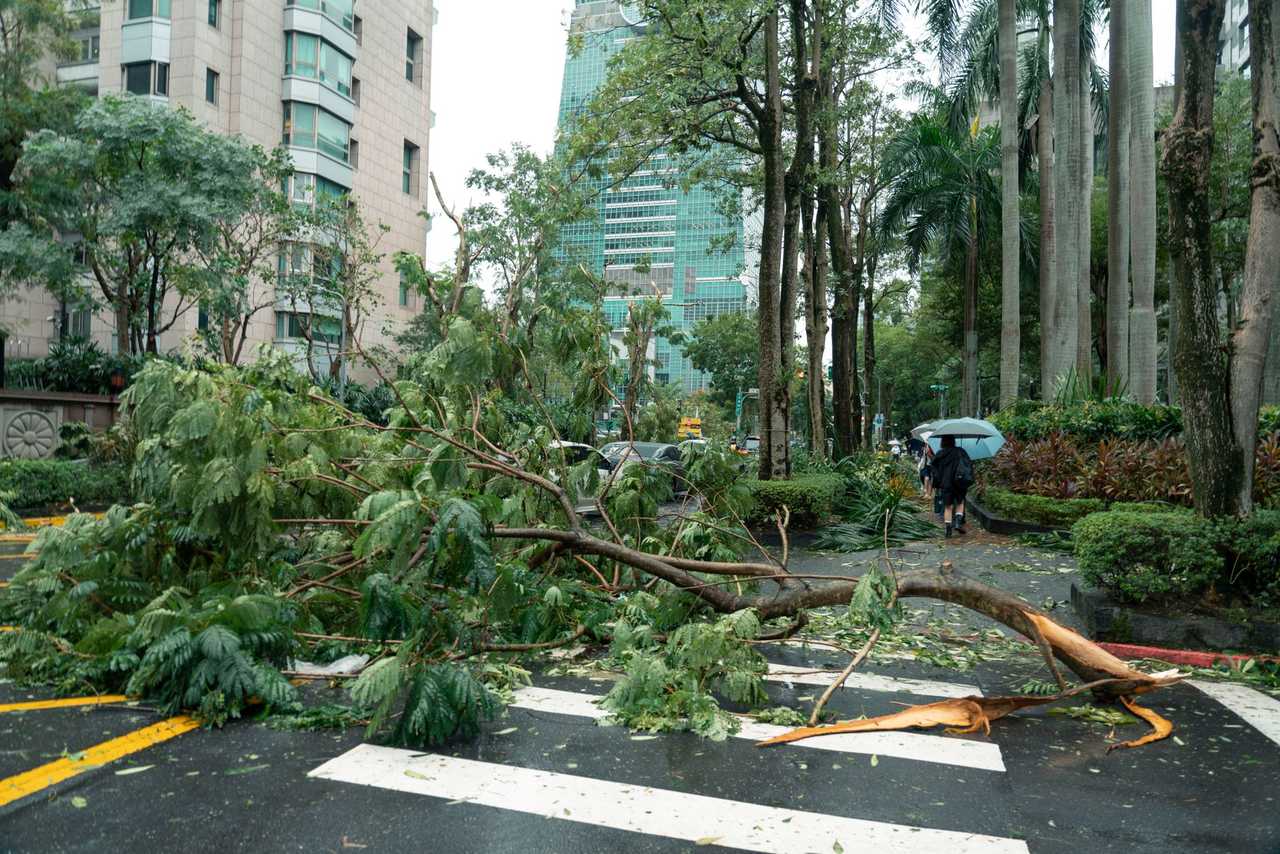
Autumn 2026 is running warm. The second forecast has most cities close to average, with Fukuoka about 8 days late. Ginkgo and maple peaks often overlap from late November to early December, so one trip can show both colors. Typhoons, heavy rain and strong wind can affect leaf color and mountain transport, so check local information before you travel.
Japan Ginkgo Forecast 2026: How to Reach the Major Ginkgo Spots, Transport and Costs
How to Reach the Major Ginkgo Spots at a Glance
Access varies a lot between spots; here are William’s main transport options for each.
- Sapporo, Hokkaido University Ginkgo Avenue: take the Namboku subway line to Kita-Juni-Jo Station and walk about 4 minutes; entry to the campus is free.
- Tokyo, Meiji Jingu Gaien: take the Tokyo Metro Ginza Line to Gaienmae Station and walk from there.
- Tachikawa, Showa Kinen Park: take JR to Tachikawa Station, then a bus or walk.
- Kyoto, Nishi Hongwanji: take a Kyoto City Bus to the Nishi-Hongwanji-mae stop and walk to the temple.
- Osaka, Midosuji: walk from around JR Osaka Station, Kitashinchi Station or Namba Station.
- Sendai, Atago-Kamisugi-dori: about a 5-minute walk from JR Sendai Station; ginkgo line both sidewalks and the median for about 1 km from Hirose-dori to Kita-Ichibancho-dori.
- Nagoya, Nagoya Castle and Meijo Park: peak foliage in the castle grounds is typically from about mid-November to early December, with ginkgo among the trees; Meijo Park is free to enter.
- Fukuoka: this year’s forecast is about 8 days later than average, so recheck leaf conditions at spots in the city a week before you leave.

Japan Ginkgo Forecast 2026: Which Ginkgo Spots Are Must-Sees? Highlights by Region
William has gathered these ginkgo spots and arranged them by region and city.
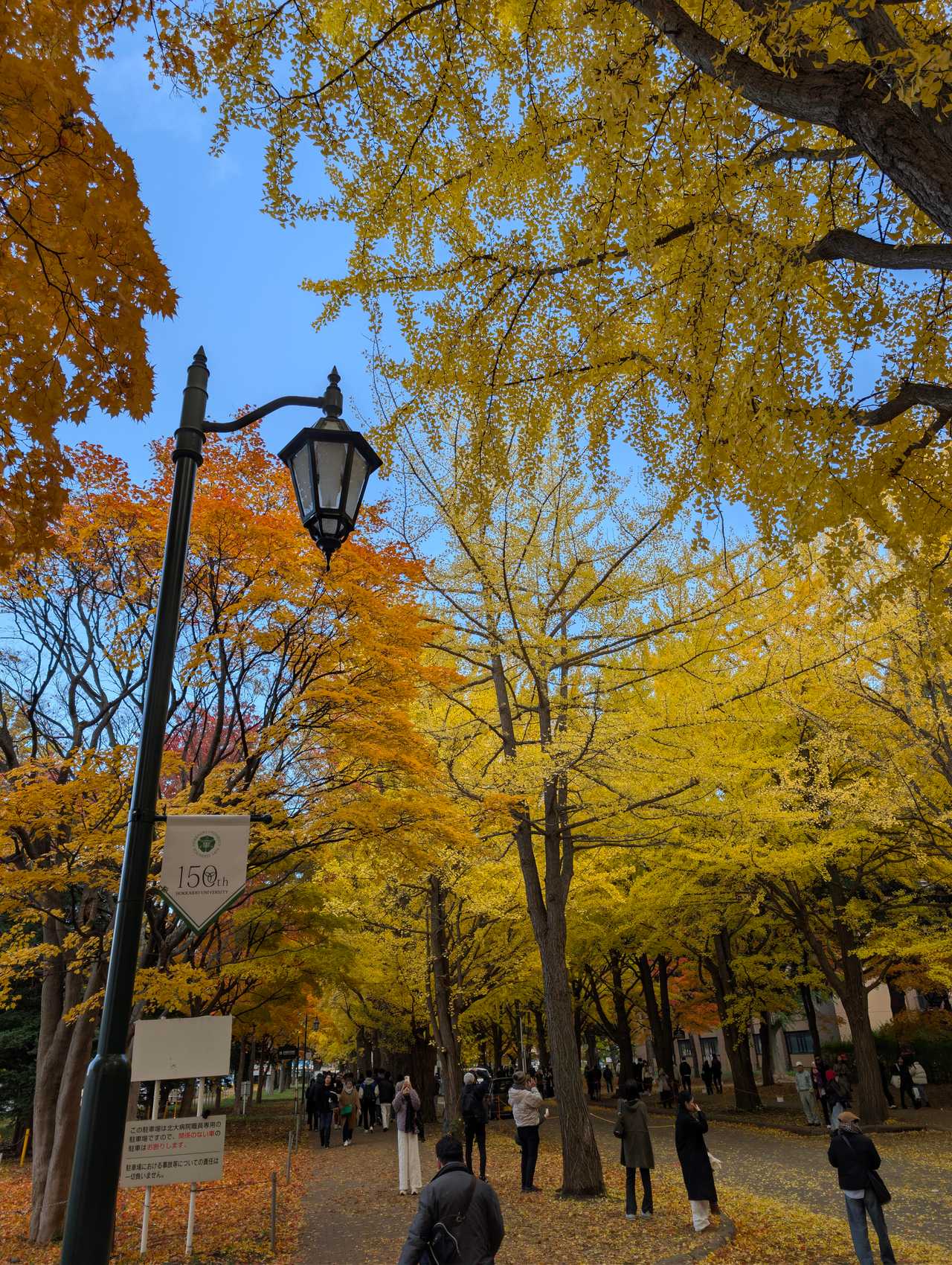
Hokkaido University Ginkgo Avenue: A Golden Path on a Sapporo Campus
Running about 380 meters west from the Kita-13-Jo Gate, with about 70 ginkgo trees on both sides of the road, this is Sapporo’s signature campus avenue of yellow leaves. Peak color usually falls from late October to early November, and this year’s forecast has Sapporo turning yellow around November 3.
Entry to the campus is free, but general vehicles are not allowed in; do not step into the roadway for photos.

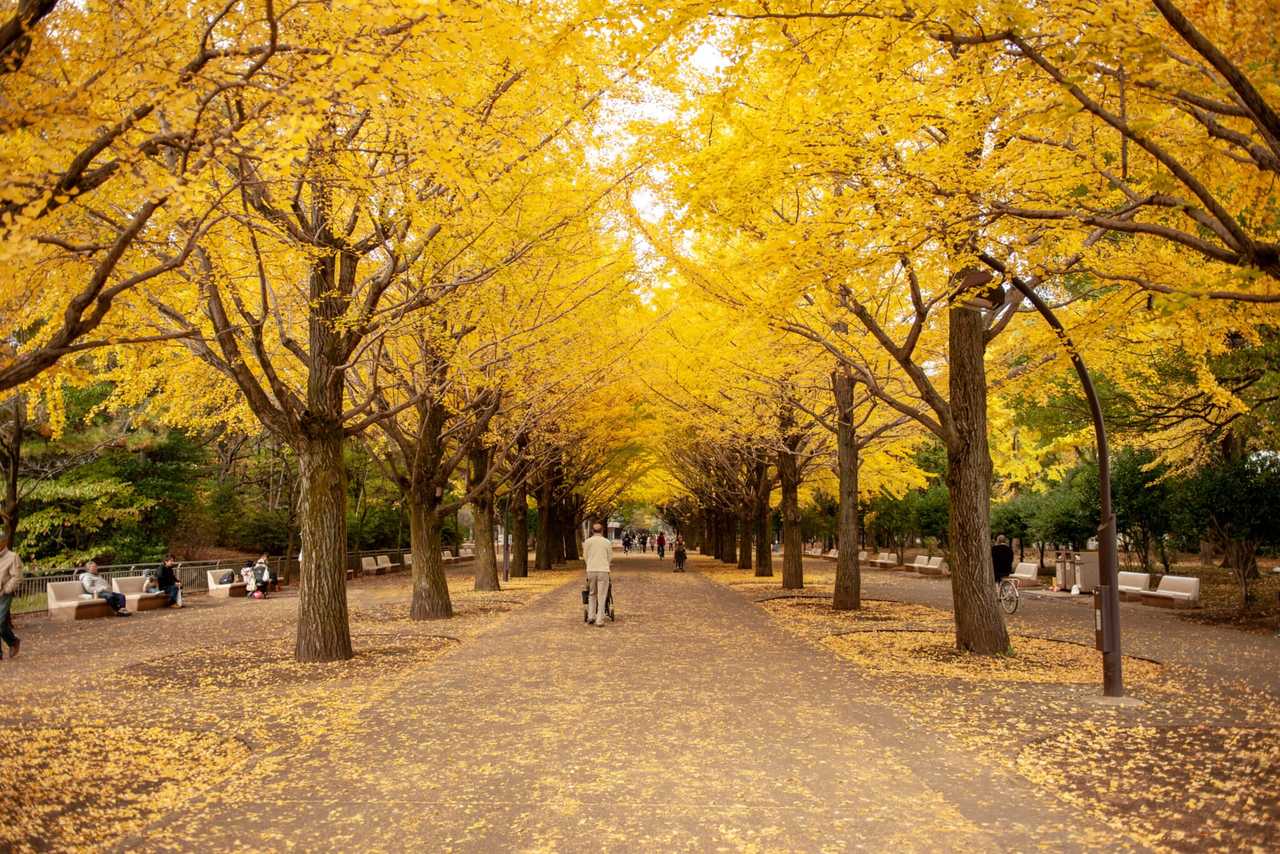
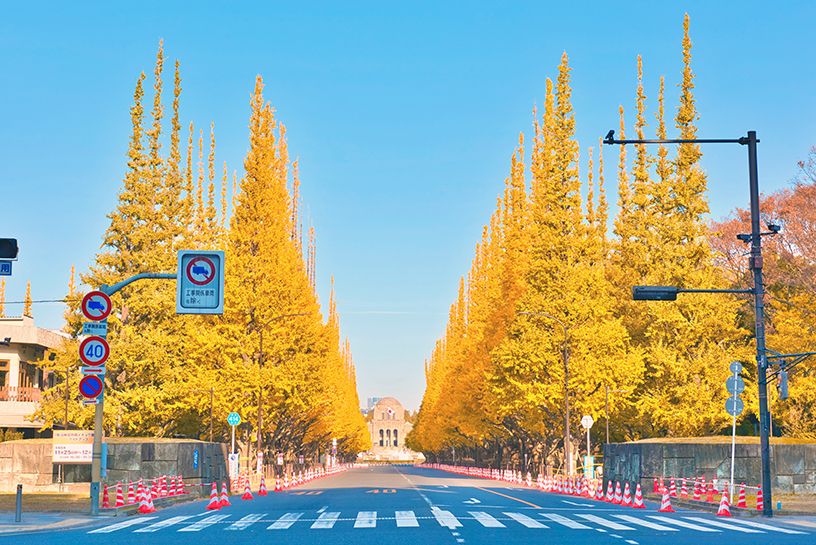
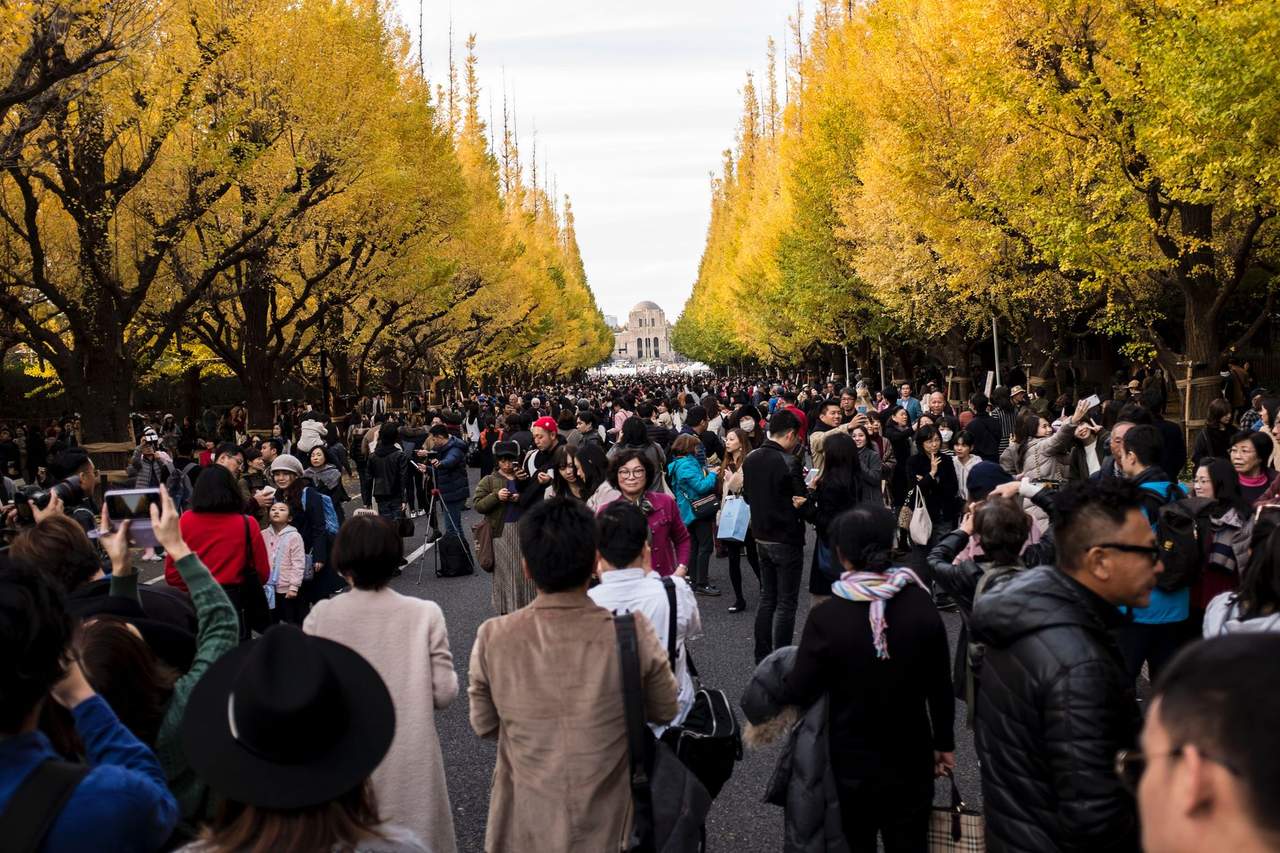
Meiji Jingu Gaien Ginkgo Avenue: Tokyo’s Golden Autumn Boulevard
Peak color usually runs from mid-November to early December; this year’s forecast has Tokyo turning yellow around November 26. The 2025 evening illumination ran November 22 to 30, and 2026 times are not yet announced. The Meiji Memorial Picture Gallery is under seismic and conservation work, with scaffolding expected until around the end of May 2027, which will affect the view.
For construction and opening information, contact the Meiji Jingu Gaien General Affairs Department at 03-3401-0312.
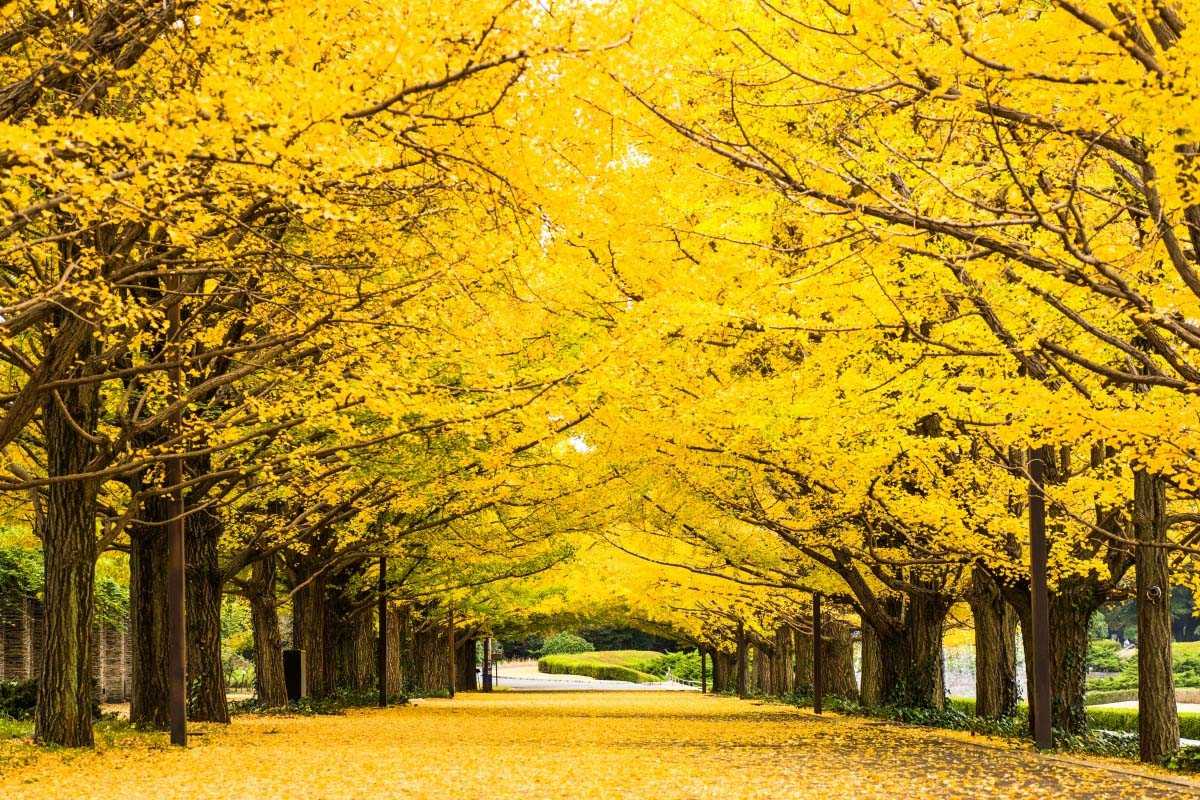
Showa Kinen Park: Tachikawa’s Celebrated Park for Ginkgo and Maples
Showa Kinen Park in Tachikawa, Tokyo, is vast and famous in autumn for its ginkgo and maples. Its paths and lawns are wide open, suited to a walk of half a day or more.
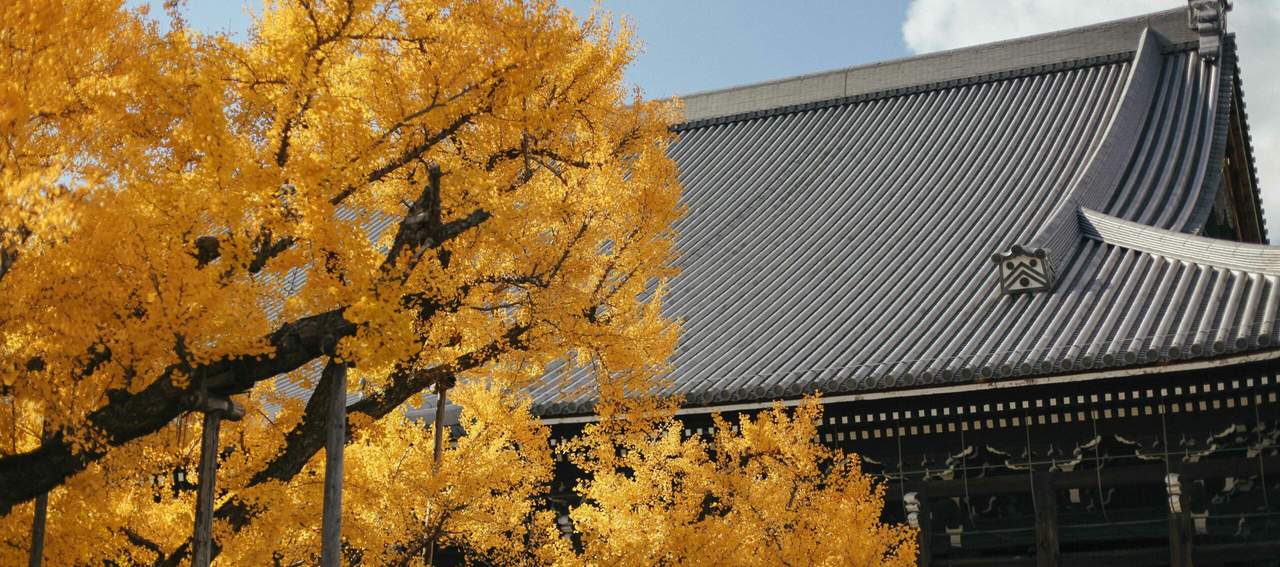
The Great Ginkgo Before Nishi Hongwanji’s Goeido Gate: The 400-Year-Old ‘Upside-Down Ginkgo’
The great ginkgo in front of the Goeido Gate is more than 400 years old and is called the Sakasa Icho (‘upside-down ginkgo’) for the unusual way it grows. Nishi Hongwanji is the head temple of the Jodo Shinshu Hongwanji-ha, and the grounds are free to visit, with the gates opening at 5:30 and closing at 17:00.
Peak color usually runs from late November to early December, and this year’s forecast has Kyoto turning yellow around November 27.
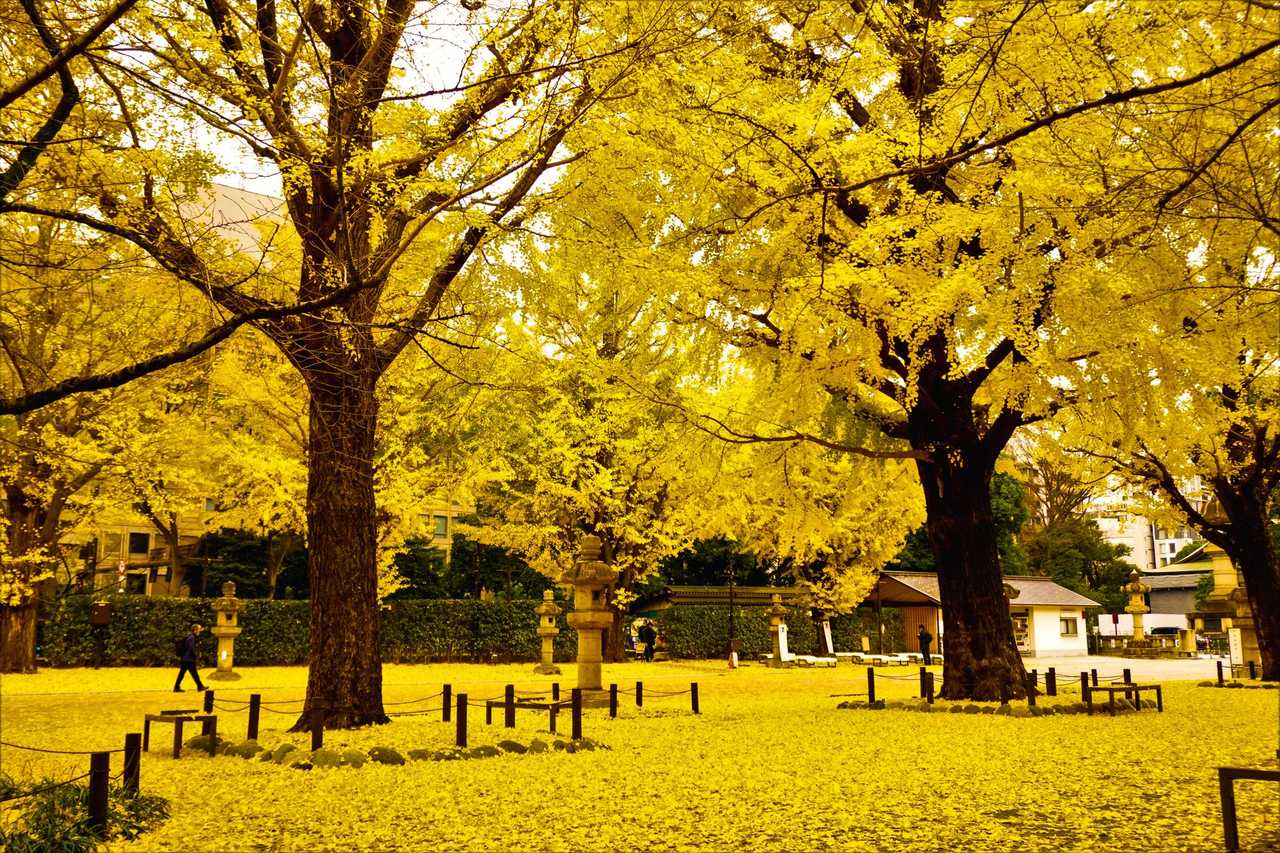
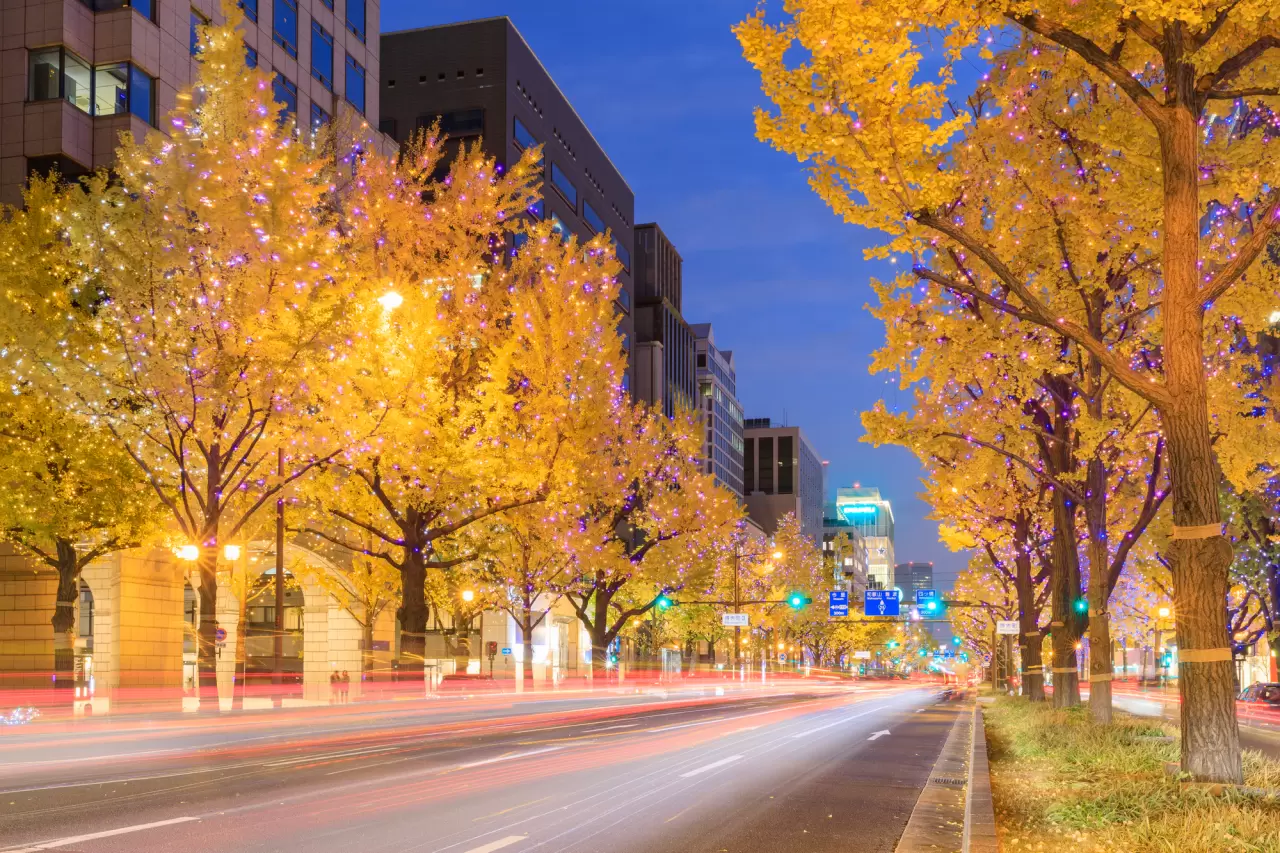
Midosuji Ginkgo Avenue: A Boulevard of Yellow Leaves in Central Osaka
The Midosuji ginkgo avenue is Osaka’s signature yellow-leaf spot, reachable on foot from around JR Osaka Station, Kitashinchi Station or Namba Station. This year’s forecast has Osaka turning yellow around November 24, earlier than Tokyo and Kyoto.
It is crowded in late November, so fit it into a gap between shopping or city walks.
What Do Japan’s Ginkgo Spots Cost? Admission and Tours
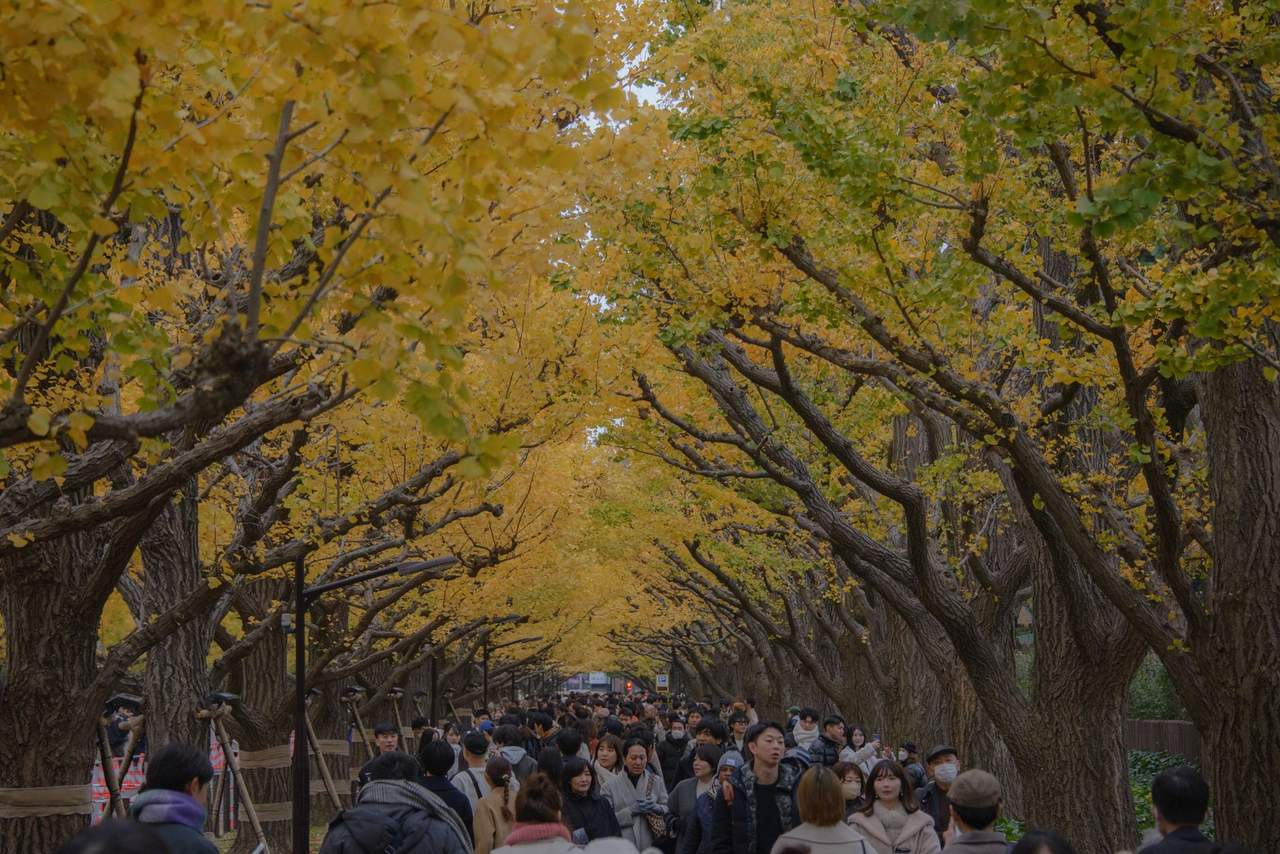
Most ginkgo spots are free or cheap to enter, but some gardens, temples and evening illuminations charge extra. Prices and visitor information for several main spots are below. Prices and opening hours may change, so check the official site again before you go.
Hokkaido University Ginkgo Avenue: Sapporo’s Yellow-Leaf Boulevard, Free on Campus
The Hokkaido University ginkgo avenue runs west from the Kita-13-Jo Gate for about 380 meters, with about 70 ginkgo trees along both sides of the road. Entry to the campus is free, and it is about a 4-minute walk from Kita-Juni-Jo Station on the Namboku subway line. General vehicles are not allowed on campus, so stay out of the roadway while viewing.
Peak color usually falls from late October to early November; the 2026 forecast has Sapporo turning yellow around November 3, so aim for early November.
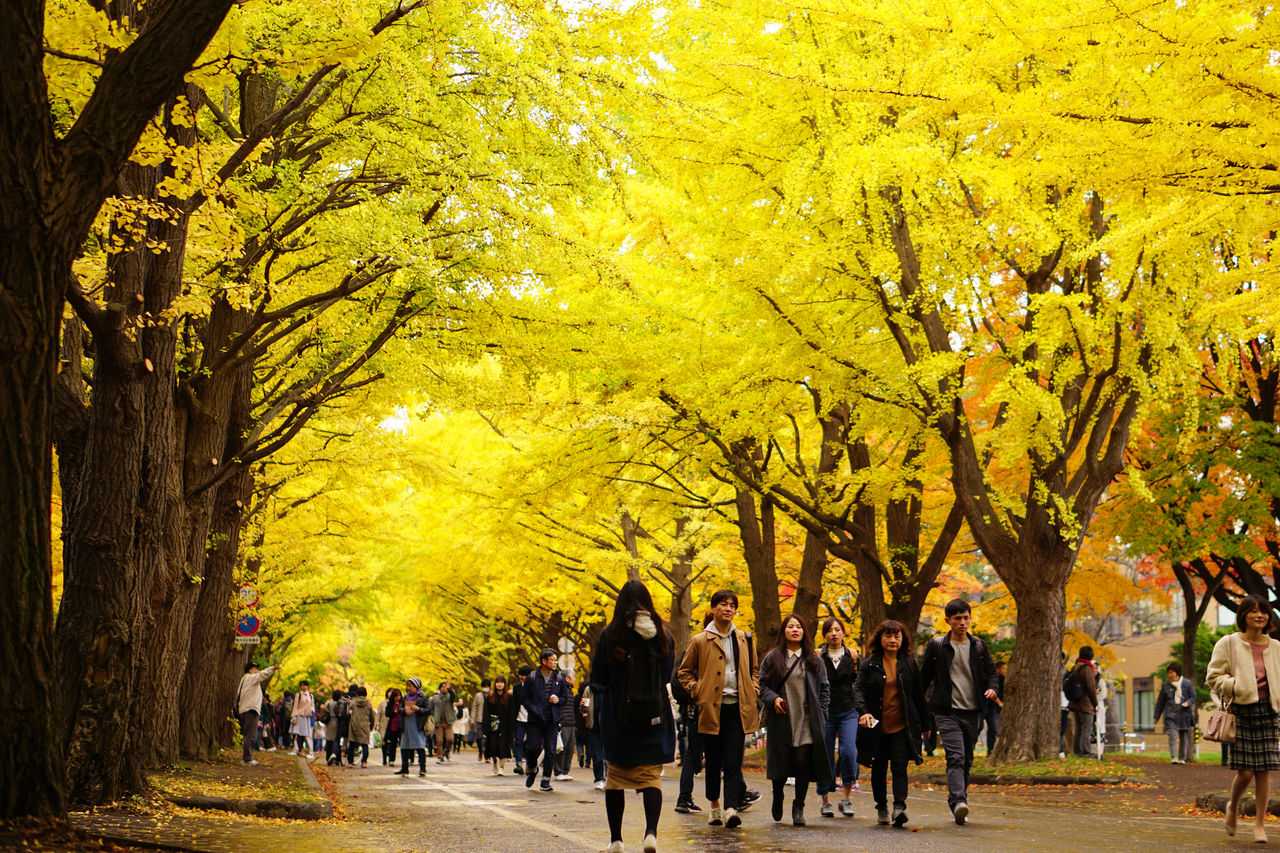
Meiji Jingu Gaien Ginkgo Avenue: Free Tokyo Views, but Watch for Construction and Crowds
The Meiji Jingu Gaien ginkgo avenue is Tokyo’s signature yellow-leaf spot, free on ordinary days for strolling and photos. Peak color usually runs mid-November to early December; the 2026 forecast has Tokyo turning yellow around November 26. Last year’s evening illumination ran November 22 to 30; 2026 dates are not yet announced, so watch for official information.
The Meiji Memorial Picture Gallery is currently undergoing seismic reinforcement and conservation work, with scaffolding expected until around the end of May 2027, which will affect the view. For inquiries, contact the Meiji Jingu Gaien General Affairs Department at 03-3401-0312.
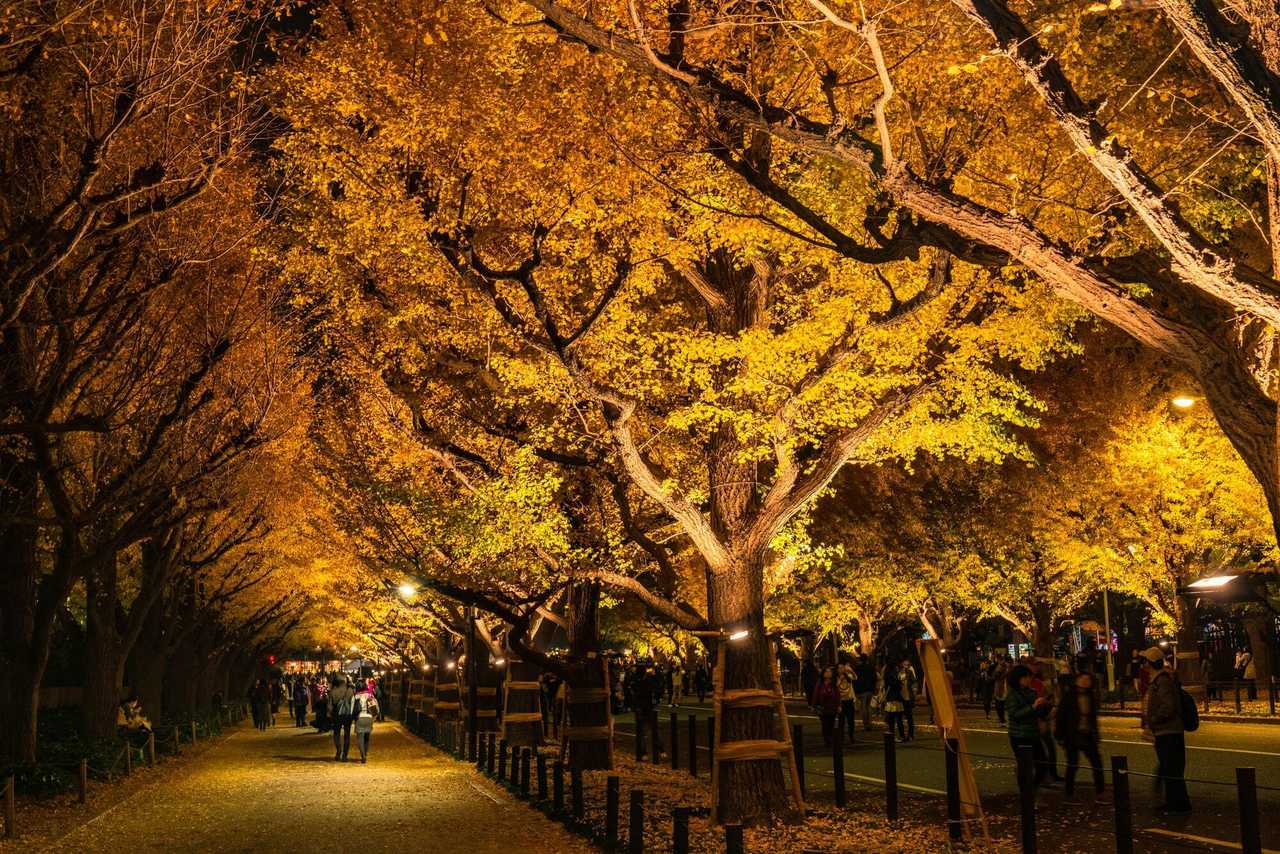
Showa Kinen Park Yellow and Red Leaves Festival: Paid Entry in Tachikawa, Tokyo
Showa Kinen Park’s 2026 Yellow and Red Leaves Festival runs from Thursday, October 29 to Sunday, November 29. Admission is ¥450 for adults and ¥210 for ages 65 and over, and free for junior high school students and younger. Evening viewing of the Japanese Garden needs a separate viewing ticket.
The park is large enough for a half-day to full-day visit; from JR Tachikawa Station, walk or take a bus.
The Great Ginkgo Before Nishi Hongwanji’s Goeido Gate: Kyoto’s Free-to-Visit ‘Upside-Down Ginkgo’
The great ginkgo in front of Nishi Hongwanji’s Goeido Gate is over 400 years old and is called the Sakasa Icho (‘upside-down ginkgo’) for the unusual way it grows. The grounds are free to visit, with gates open from 5:30 to 17:00. Peak color usually runs from late November to early December, and the 2026 forecast has Kyoto turning yellow around November 27.
The temple is in Shimogyo Ward, Kyoto, and easy to reach.
Midosuji Ginkgo Avenue: Free Urban Yellow Leaves in Osaka
The Midosuji ginkgo avenue is Osaka’s signature yellow-leaf spot, free to walk. It is within walking distance of JR Osaka Station, Kitashinchi Station and Namba Station. The 2026 forecast has Osaka reaching peak yellow around November 24, making it a popular ginkgo outing in Kansai.
It gets crowded in peak season, so avoid weekend middays; photos are easier in the early morning or late afternoon.
Linking Japan Ginkgo Trips and Where to Stay


Combining Kyoto and Osaka: Ginkgo Peaks Just 3 Days Apart
By this year’s forecast, Osaka turns yellow around November 24 and Kyoto around November 27, about 3 days apart, so the two fit easily into one trip back to back. Kyoto and Osaka are about 30 minutes apart by JR.
With Kyoto as your base, see the ginkgo at Nishi Hongwanji and add a day trip to Osaka for the ginkgo on Midosuji.
Further Reading: Ginkgo Spots Around Japan


FAQ
Q: When does ginkgo start turning yellow in Japan in 2026?
According to Japan Meteorological Corporation’s second forecast, ginkgo turns yellow around November 3 in Sapporo, around November 17 in Nagoya, around November 24 in Osaka, around November 26 in Tokyo, around November 27 in Kyoto, around November 28 in Fukuoka and around November 29 in Sendai.
Q: How much is admission to Showa Kinen Park?
During the Yellow and Red Leaves Festival, admission is ¥450 for adults and ¥210 for ages 65 and over, and free for junior high school students and younger; evening entry to the Japanese Garden needs a separate viewing ticket.
Q: What are the opening hours for the great ginkgo at Nishi Hongwanji?
Nishi Hongwanji’s gates open at 5:30 and close at 17:00, and the grounds are free to visit. The great ginkgo in front of the Goeido Gate usually peaks from late November to early December.
Q: How long does the ginkgo viewing season last?
Ginkgo takes about 2 to 3 weeks from turning yellow to dropping, and the best golden period is often 7 to 10 days. Strong wind or heavy rain makes the leaves fall quickly, so look up current leaf conditions a week before you go.
Q: When is Tokyo’s ginkgo at its best?
Tokyo is forecast to turn yellow around November 26. Meiji Jingu Gaien usually peaks from mid-November to early December, and the viewing period often lasts into early December.
Q: What should I watch out for with fallen ginkgo?
Fallen ginkgo nuts smell strongly and are hard to scrape off your soles once stepped on, and ground covered in fallen leaves gets slippery when wet. Stay out of the roadway when taking photos, and non-slip shoes make it safer.